Shopping Cart

GREUBEL FORSEY UNVEILS HAND MADE 2: THE ULTIMATE EXPRESSION OF TRUE HAND WATCHMAKING

JANUARY 21 2025    |    Novelties

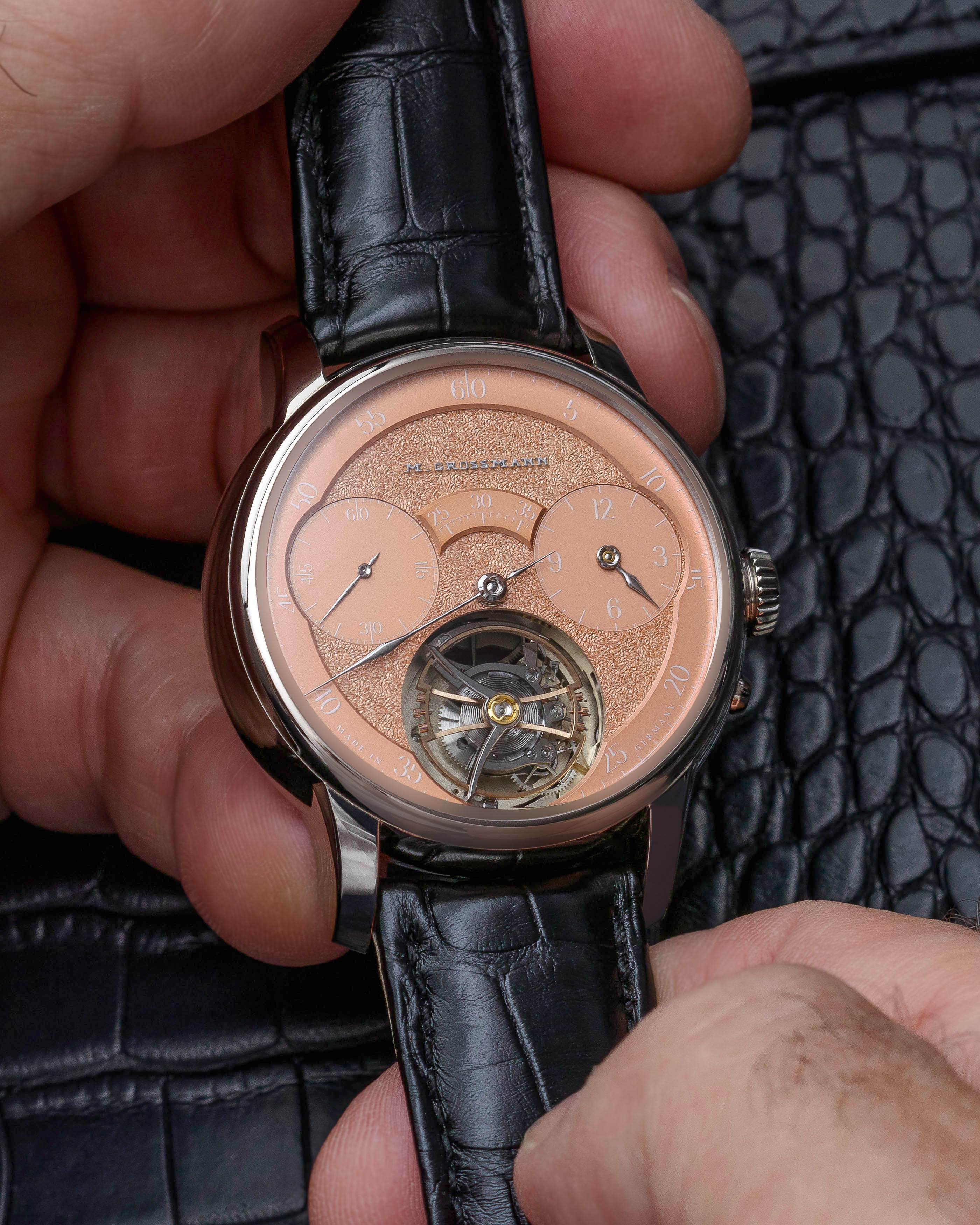
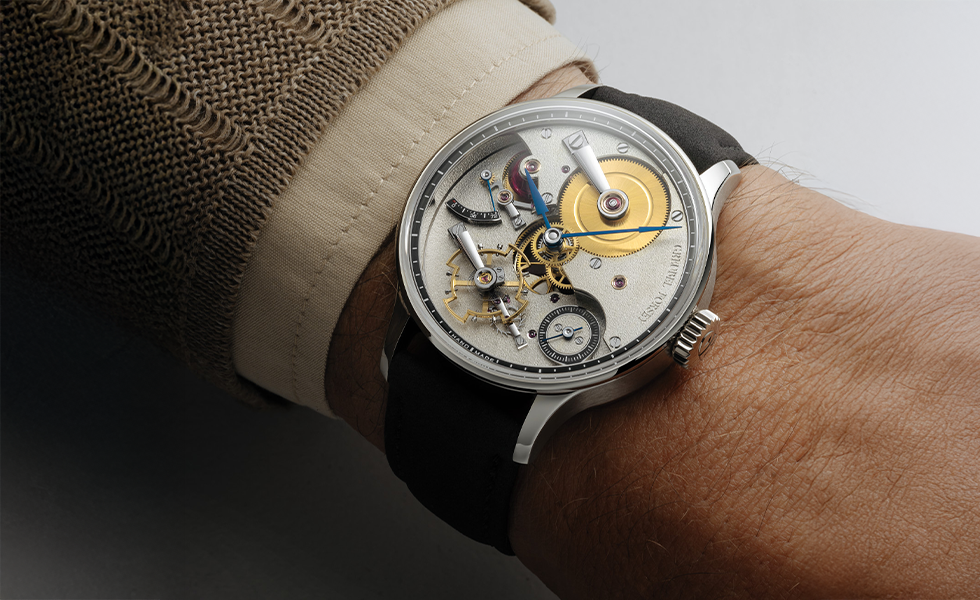
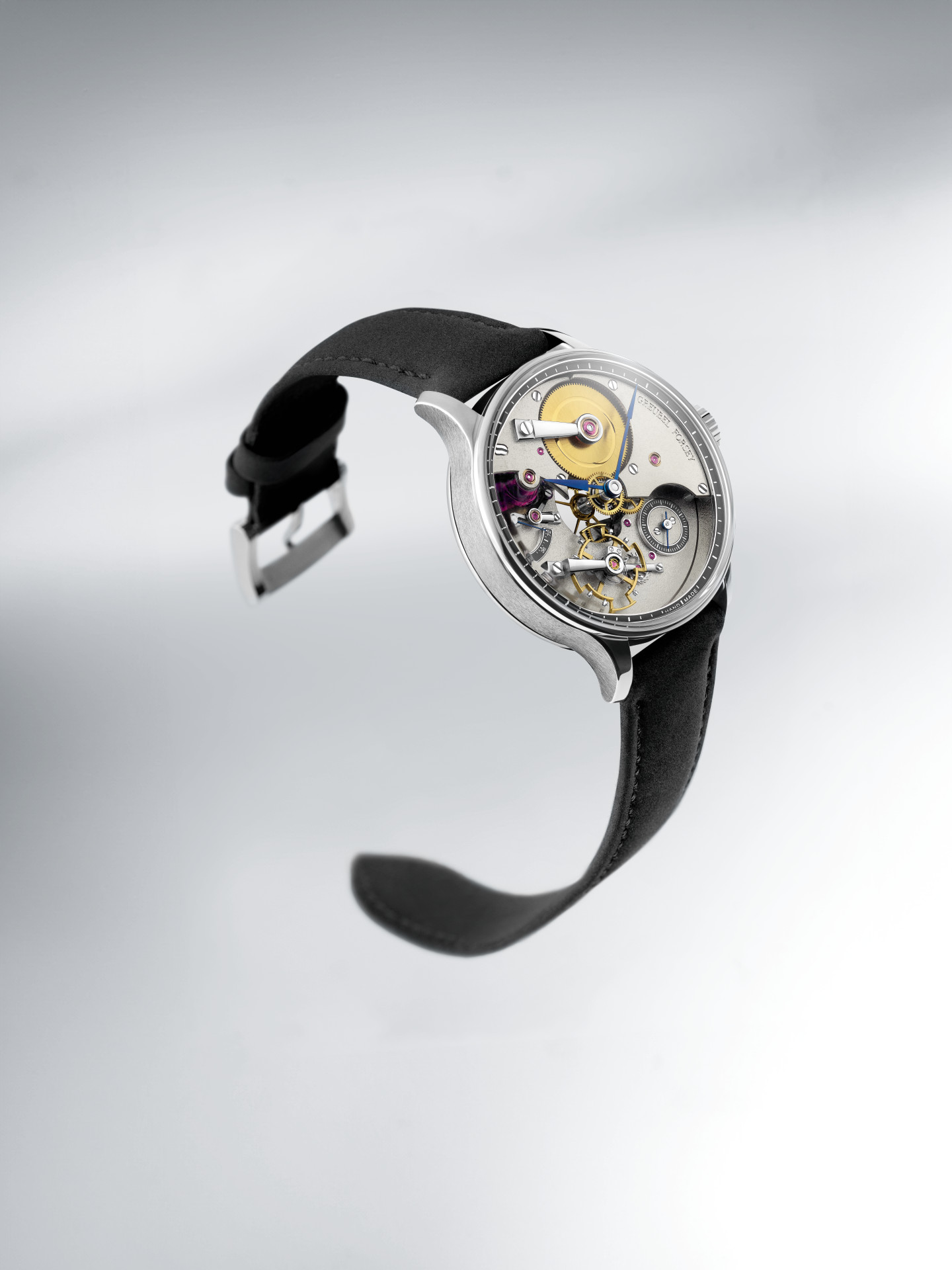
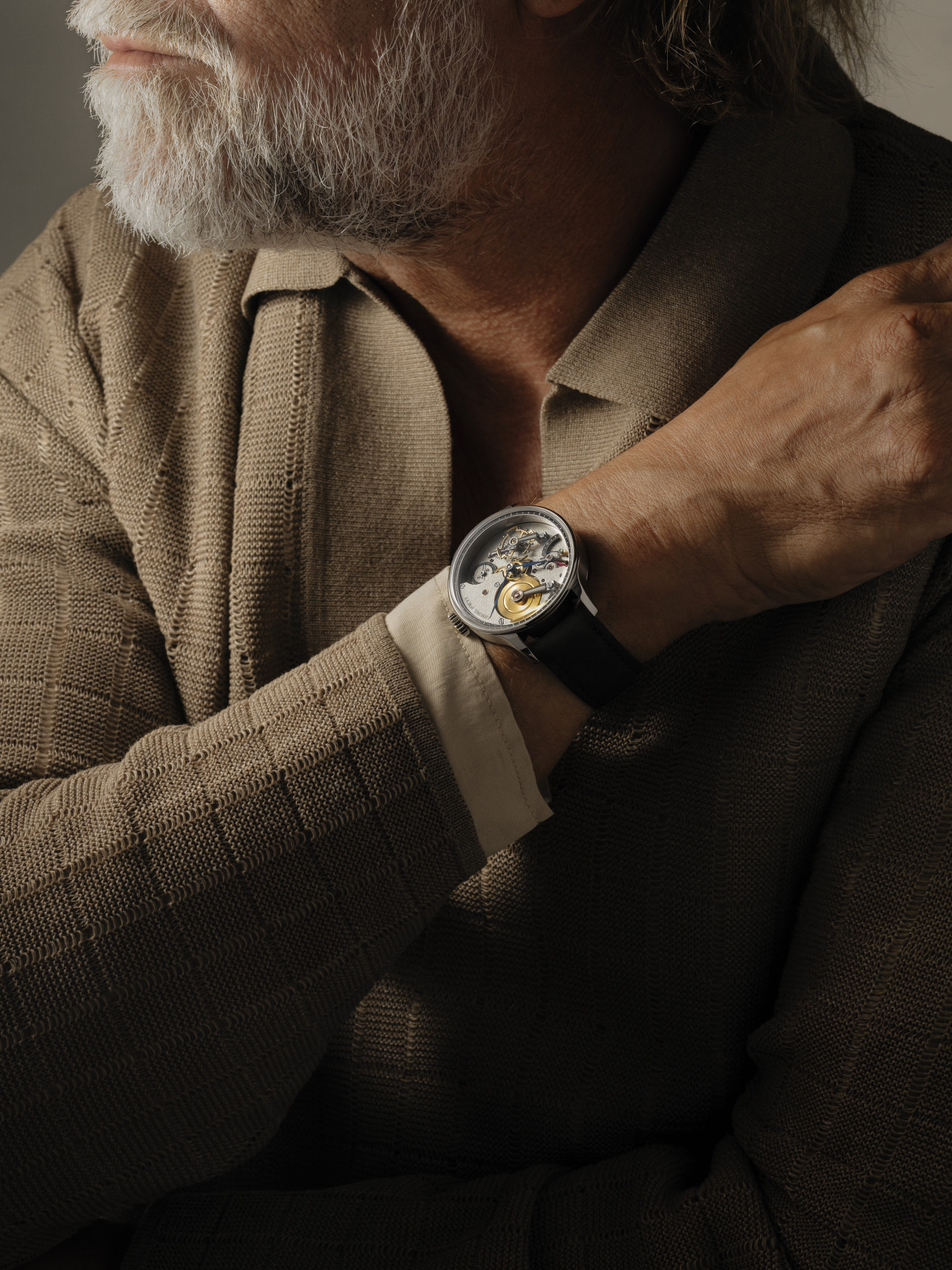
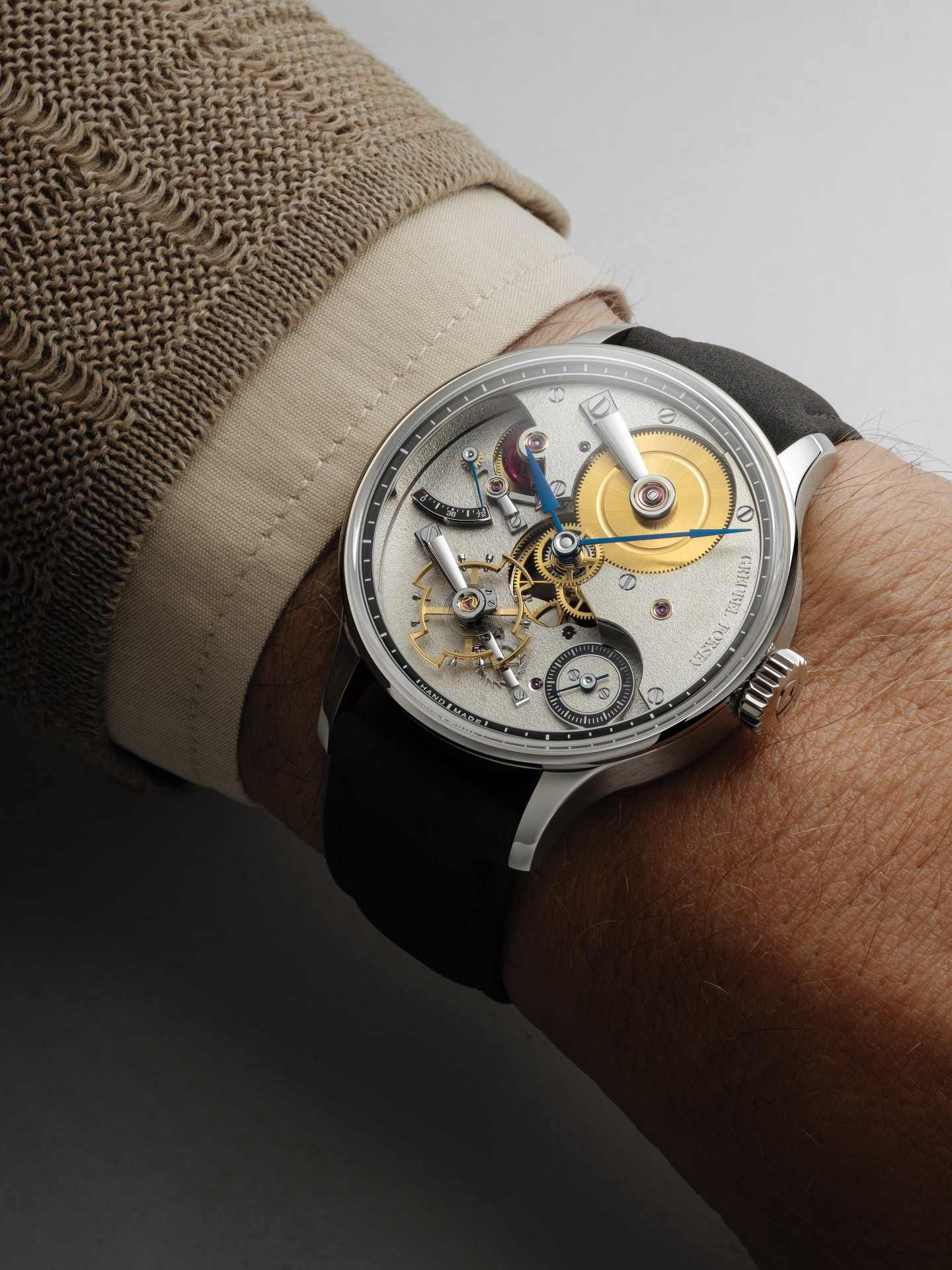
Hand Made 2 embodies the ultimate pursuit of hand watchmaking. Every component, whether visible or hidden, is created, finished, and assembled by hand with unprecedented rigor. Over 5,000 hours are required to complete the 270 components of this four handed 40.9mm timepiece, 96% of which are entirely handmade. Only two to three such timepieces can be crafted each year, our commitment to the highest level of craftsmanship.
 

In a highly mechanised industry where the concept of "hand made" is often opaque, Greubel Forsey stands out with a transparent and very strict definition, showcasing exactly what "hand made" truly means to reach its standards.

WHAT HAND MADE MEANS TO GREUBEL FORSEY
For Greubel Forsey, "hand made" entails:
  1. All components, except five – sapphire crystals, case gaskets, spring bars, mainspring, and most jewels – are crafted by hand using traditional tools such as a precision lathe, a jig-borer, or a pantograph. A major milestone of the Hand Made 2 is the creation of a handcrafted conical jewel for the power reserve indicator, advancing handcraftsmanship even further.
  2. Each component is manually machined with tolerances of just a few microns, achieving a precision comparable to modern CNC machines.
  3. Every component, whether visible or hidden, is meticulously finished by hand.
  4. Each timepiece is assembled entirely by hand by a single watchmaker.


HAND MADE 2: PUSHING THE LIMITS
Distinctly Greubel Forsey yet revolutionary, Hand Made 2 pushes technical and aesthetic boundaries. Its large conical jewel symbolises this pursuit. In its workshop, Greubel Forsey preserves rare skills, develops unique expertise, and passes it on to future generations with an inexhaustible passion for innovation.
 

MASTERING THE BALANCE SPRING
Since 2012, Greubel Forsey has been rediscov¬ering traditional techniques for crafting balance springs, a key component for timekeeping pre¬cision. Each spring is made from a carefully selected alloy for its unique properties and individually adjusted by an expert watchmaker. This complex process, including coiling, cutting, and manually adjusting terminal curves, ensures perfect synchronisation with the balance wheel.
 

TIMELESS AESTHETICS AND EXCEPTIONAL RARITY
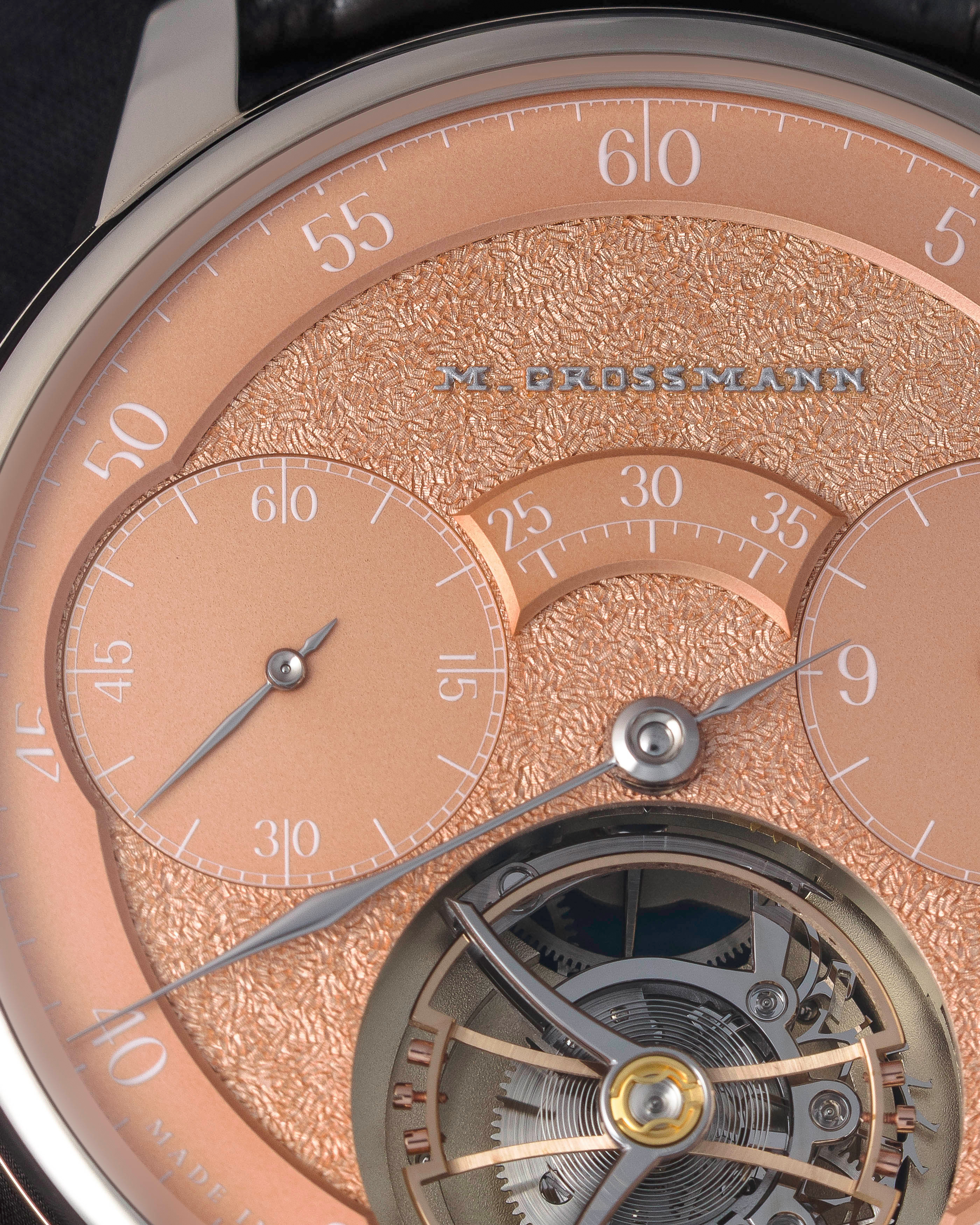
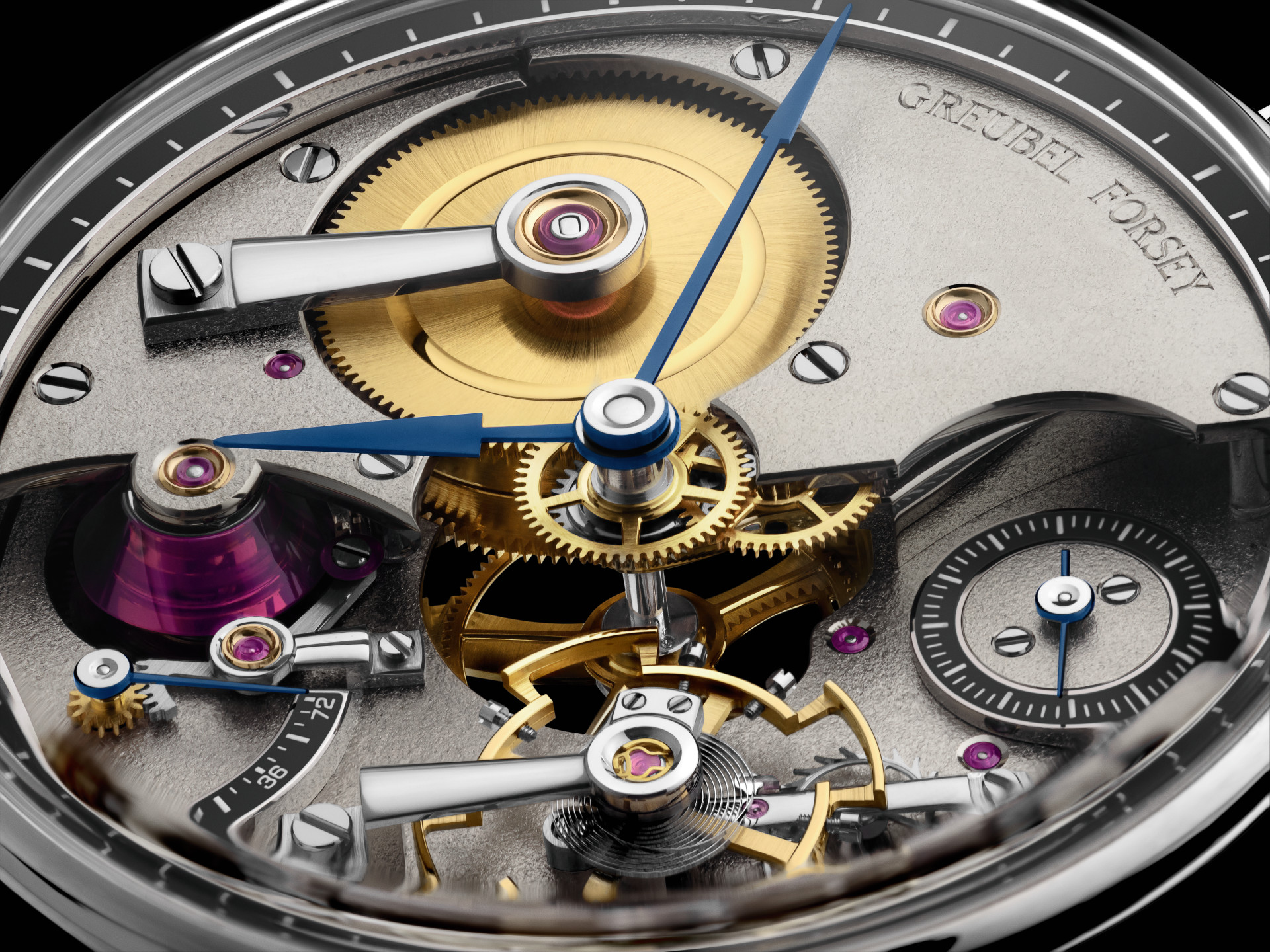
Hand Made 2 combines 18th-century elegance with Greubel Forsey’s signature modern innovation. The barrel and balance bridges create remarkable harmony, each enhanced by five artisanal finishes: frosted, black-polished, straight-grained, polished flanks and bevels, and the polished chamfers ac¬cented by olive-domed jewels set in gold chatons.

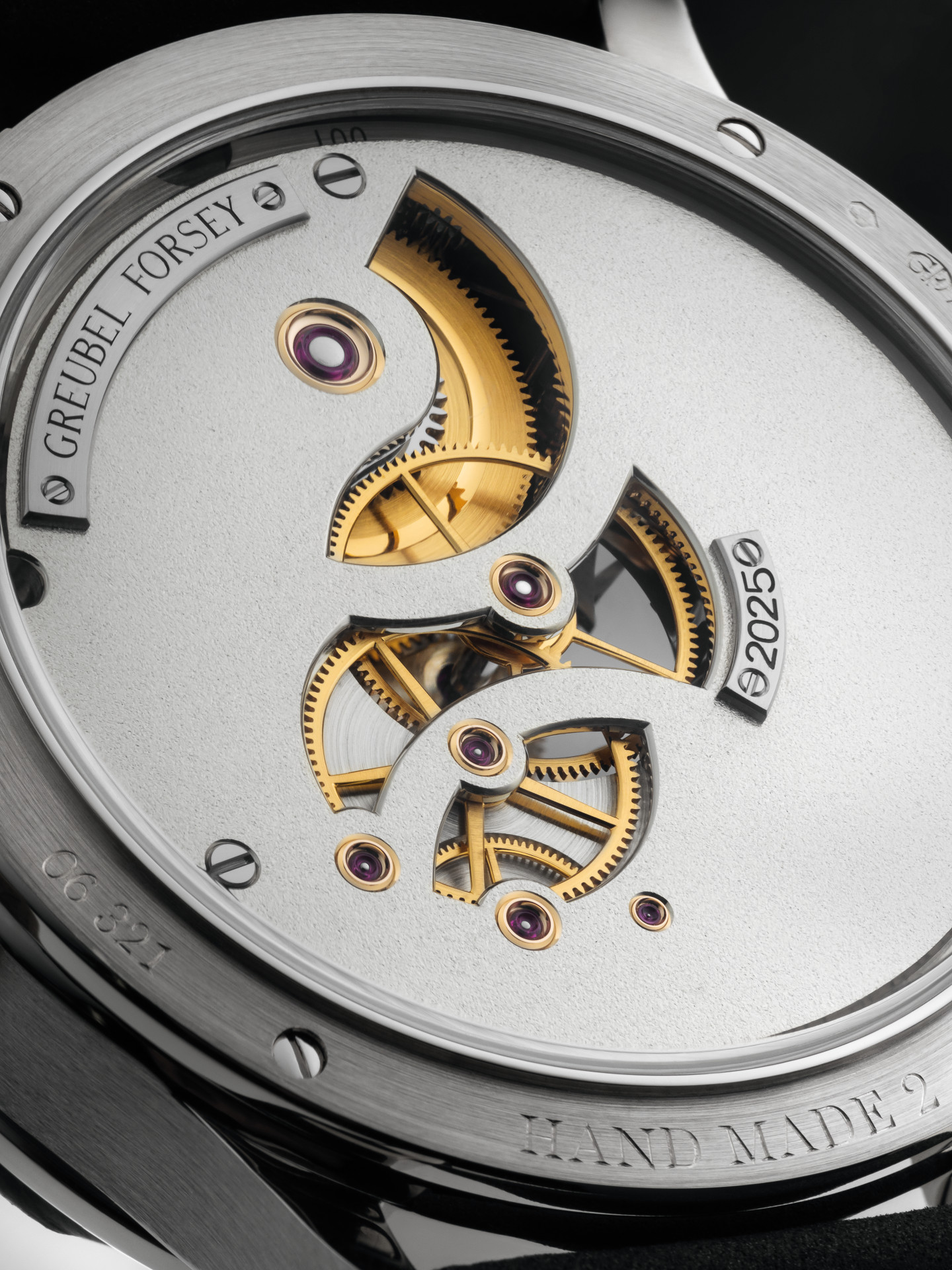
The hand-frosted German silver contrasts beautifully with the Grand Feu enamel dials for the hours, small seconds, and power reserve. Blued steel hands, deep red rubies, golden reflections of wheels and barrels, and the bright edges of polished steel bridges bring a vibrant chromatic depth to every component. Beneath a thin bezel, the architectural movement opens up to the ob¬server, offering a unique perspective throughout the timepiece. The case back extends this harmony, revealing a perfectly coherent mechanism where every detail reflects extraordinary handcrafts¬manship. The Hand Made 2 is not merely a watch; it is an invitation to admire excellence through a mechanical work of art.
 

EXCEPTIONAL RARITY
Each year, Greubel Forsey’s Hand Made workshop can complete only two to three Hand Made 2 time¬pieces, making it one of the rarest and most ex¬clusive creations from the Greubel Forsey Atelier.



Related Articles

APRIL 08 2026    |    Watches and Wonders 2026

Tinkler 1958: Precision at a Quarter Turn

A faithful tribute to the original model, the Tinkler 1958 repeater celebrates Angelus’s rich heritage of striking watches. Driven by a self-winding quarter-repeater movement, this double limited edition, available in gold or steel, continues the tradition of measuring instruments that built the manufacture’s reputation. From its establishment in 1891, the name Angelus has been synonymous with the chiming of a bell, a legacy reinforced by one of the Maison's first patents for a silent strike governor in 1896. Since then, repeater mechanisms have remained at the heart of Angelus collections, even being adapted into Braille-repeating watches for blinded soldiers during the First World War.

Inspired by this glorious history, Angelus is reissuing one of its rarest and most refined models: the Tinkler, based on the original 1958 edition. In 1958, Angelus filed a patent for a striking wristwatch, which was immediately followed by the original Tinkler—a pioneer of water-resistant, self-winding quarter-repeater watches. The new 38-mm case charms with a decidedly 1950s aesthetic that is clean, understated, and elegant. At 9 o’clock, the crown is balanced by a pusher that activates the quarter repeater, serving as a functional and historical hallmark of this legendary model.

The Tinkler 1958 edition is driven by the new Angelus A600 calibre, a mechanical self-winding movement that beats at 4Hz and offers a 70-hour power reserve. On request, the pusher at 9 o’clock triggers a sequence where each hour is marked by a clear strike on the first gong, followed by a double strike on two gongs to signal each quarter hour. The movement's finishing demonstrates the watchmaker's extreme attention to detail, featuring a snail-finished main plate, palladium-plated bridges adorned with Côtes de Genève, and a tungsten sunburst oscillating weight.

This new release is part of the La Fabrique line, where Angelus continues its legacy as a maker of specialty watches designed for specific activities or professional uses. The Tinkler 1958 is limited to 15 pieces in 18-carat yellow gold and 25 pieces in stainless steel, each paired with an alligator flank leather strap—ink blue for the gold version and saddle brown for the steel. Combining a modernist-style numeral 12 with exclamation-shaped hour markers at the quarter positions, the watch serves as a modern embodiment of a daring yet functional tradition.

View Watch Gallery  
Image 1  Image 2 Image 3  Image 4       
View More
MARCH 25 2026    |    Novelties

SÄNTIS BY STREHLER - The world on your wrist

Three years ago, independent watchmaker Andreas Strehler launched his new brand, Strehler, to present his philosophy and craftsmanship in a more accessible form. The first model, Sirna, was designed as an essential time‑only watch that distilled his precision, expertise, and uncompromising finishing. The second model, Säntis, takes the brand naturally into the realm of complications. Like Sirna, which was named after the town Sirnach, Säntis draws its name from the mountain near Strehler’s workshop, the highest peak of the Appenzell Alps.

World Time Concept & Crown Operation
Responding to a collector’s request and inspired by his earlier Sauterelle Heure Mondiale, Strehler created a world time watch that remains elegant, intuitive, and deeply personal. Säntis uses a Cottier‑style world time display operated entirely by a single three‑position crown—preserving design purity and simplicity. The 40 mm medical‑grade stainless‑steel case blends refinement with ergonomics and stays below 10 mm thick even with the added mechanism.

Titanium Dial & Time Zone Display
The titanium dial features a sculptural three‑dimensional texture, individually machined, engraved, and hand‑polished. Its pattern is adapted from a design created with Eric Giroud for Sirna. Surrounding it, the 24‑hour ring marks day and night and rotates once per day, aligning with a fixed city ring listing 24 time zones. Central European Time is indicated by “Strehler” rather than a city, and DST‑observing cities are marked with a sun symbol. Both the city disc and 24‑hour disc use luminous printing, with additional luminous dots along the minute track.

Colour Options, Hands & Movement
The titanium dial features a sculptural three‑dimensional texture, individually machined, engraved, and hand‑polished. Its pattern is adapted from a design created with Eric Giroud for Sirna. Surrounding it, the 24‑hour ring marks day and night and rotates once per day, aligning with a fixed city ring listing 24 time zones. Central European Time is indicated by “Strehler” rather than a city, and DST‑observing cities are marked with a sun symbol. Both the city disc and 24‑hour disc use luminous printing, with additional luminous dots along the minute track.

Strap, Presentation & Limited Production
The Säntis comes with a subtly grained brown calfskin strap with contrasting off‑white stitching, and other colours are available upon request. Its steel pin buckle is crafted in‑house, echoing the case’s lines. The watch is delivered in a beechwood box with a cognac leather travel pouch. While not limited, production is naturally restricted due to the fully in‑house manufacturing of cases, dials, hands, and movements, resulting in only 30–50 watches per year shared between Sirna and Säntis.

View Watch Gallery  
  Image 1 Image 3  Image 4  Image 5    
View More
MARCH 24 2025    |    Watches and Wonders 2025

Constant Force Tourbillon 11, yellow gold edition - A celebration of watchmaking ingenuity

The 41.5 mm diameter Constant Force Tourbillon 11 watch in 18-carat yellow gold, released by Arnold & Son as a limited edition of 11, is driven by a hand-wound mechanical movement. Equipped with two barrels to give a 100-hour power reserve, this timepiece was entirely developed and built at the manufacture in La Chaux-de-Fonds. It is fitted with a constant force mechanism visible on the enamel dial and is regulated by a tourbillon that can be seen on the back. The architecture of this calibre is inspired by that of the timekeeping instrument driven by the first tourbillon created by Abraham-Louis Breguet in 1808, based on a chronometer movement designed by John Arnold. This first tourbillon regulator, now in the British Museum, was given to John Roger Arnold by the Paris-based watchmaker in honour of his scientific collaboration and friendship with his father. The Constant Force Tourbillon 11 timepiece, designed to mark the end of the 260th anniversary celebrations of John Arnold’s legacy, pays tribute to the watchmaker’s ingenuity and his close association with Abraham-Louis Breguet.

The greatest watchmakers of the Age of Enlightenment often knew each other. Some of them exchanged views and appreciated each other despite language barriers and political obstacles. And this was the case with John Arnold and Abraham-Louis Breguet. These two watchmakers, undoubtedly the most productive of the second half of the 18th century, forged a friendship that nothing could shake, not even the throes of war between the two countries or the French Revolution. Aware of their respective talents, during Abraham-Louis Breguet’s frequent trips to London between 1789 and 1791, they shared their views and knowledge of the principles of timekeeping, furthering the science of timekeeping, which in their eyes definitely knew no frontiers.

View More
ENDLESS DISCOVERY IN YOUR INBOX
Join our mailing list to receive insider updates on our latest collections, invites to private events, and other personalized offerings.