Shopping Cart

Greubel Forsey unveils its 10th fundamental invention

NOVEMBER 01 2024    |    Novelties

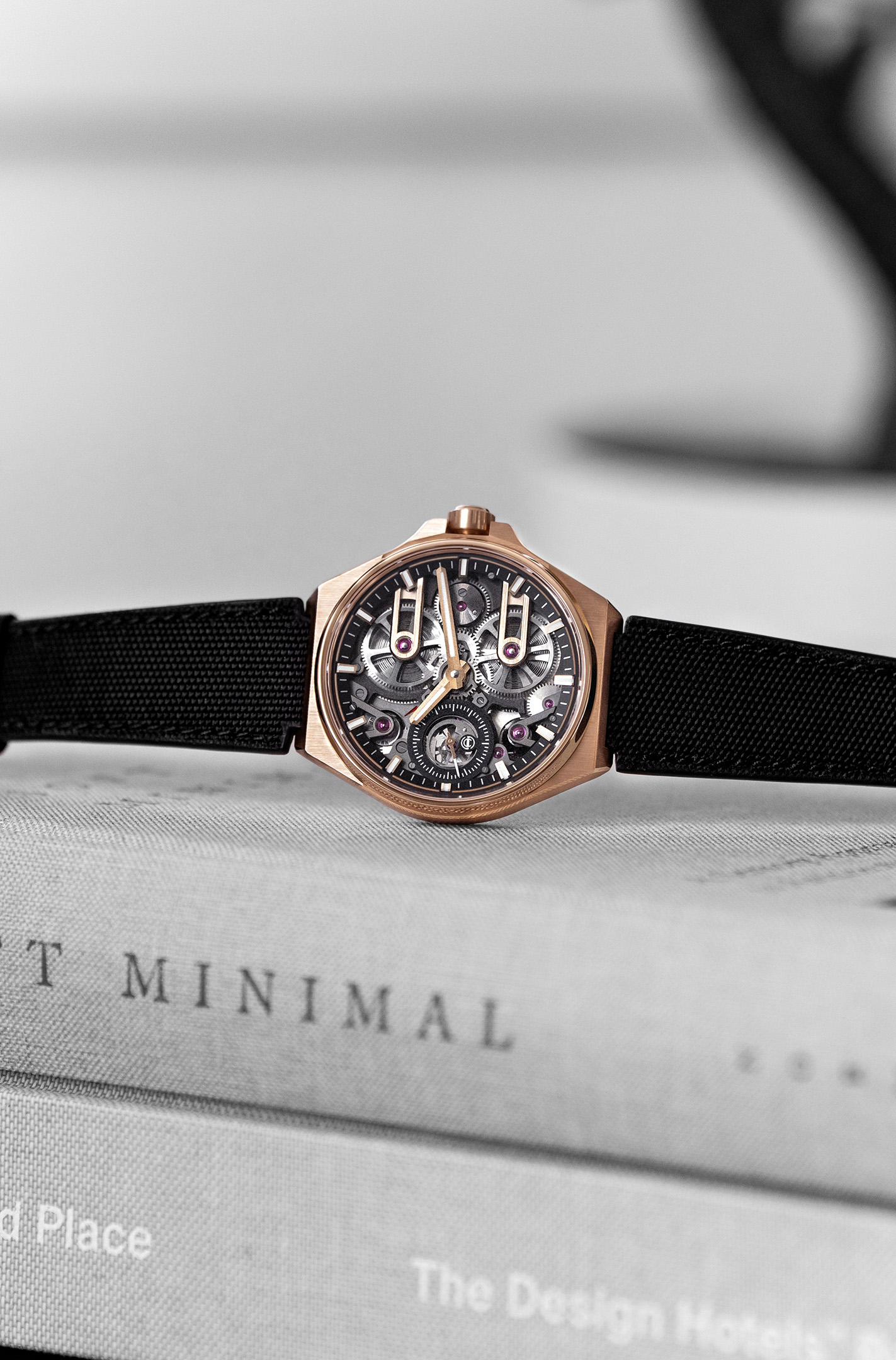
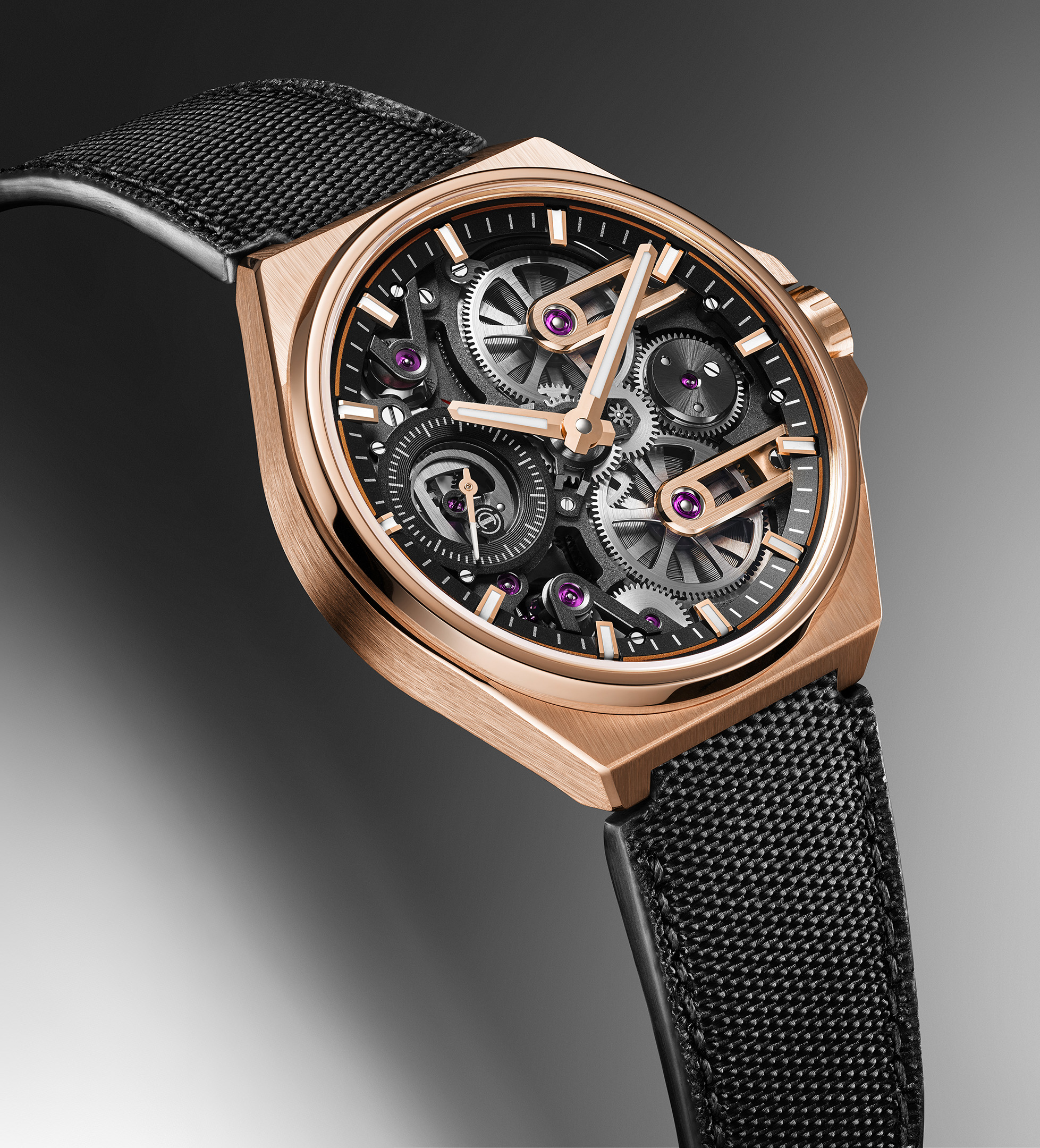
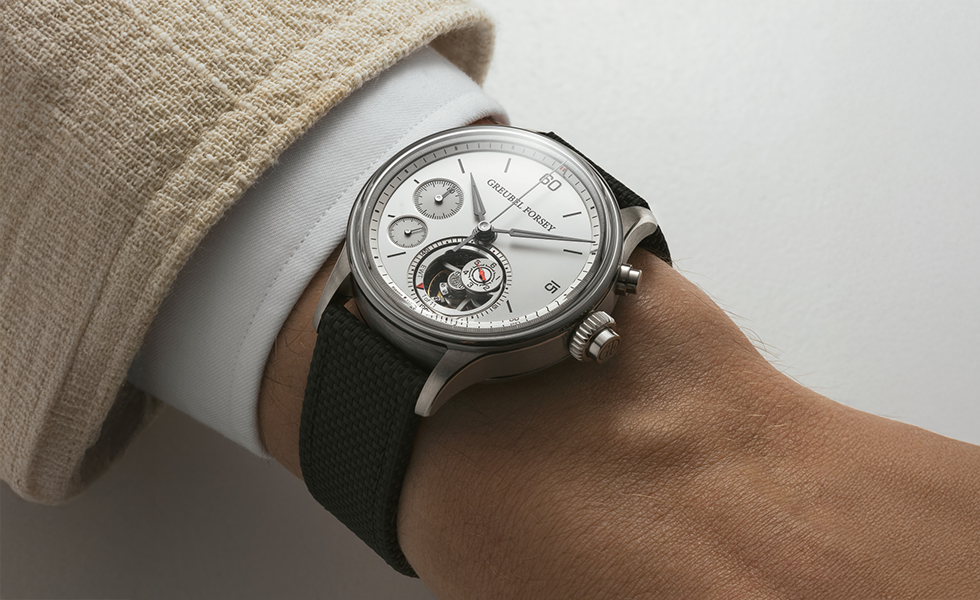
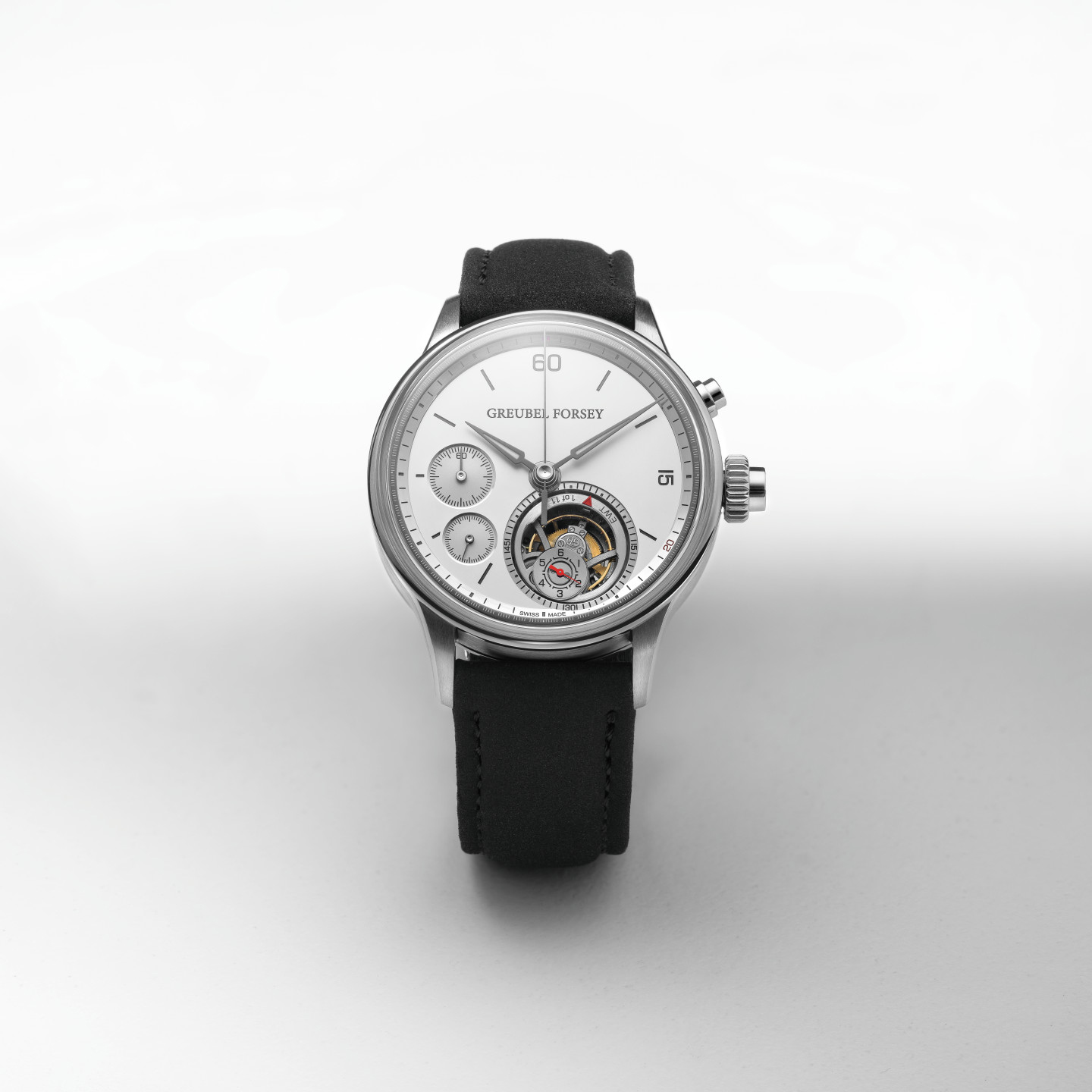
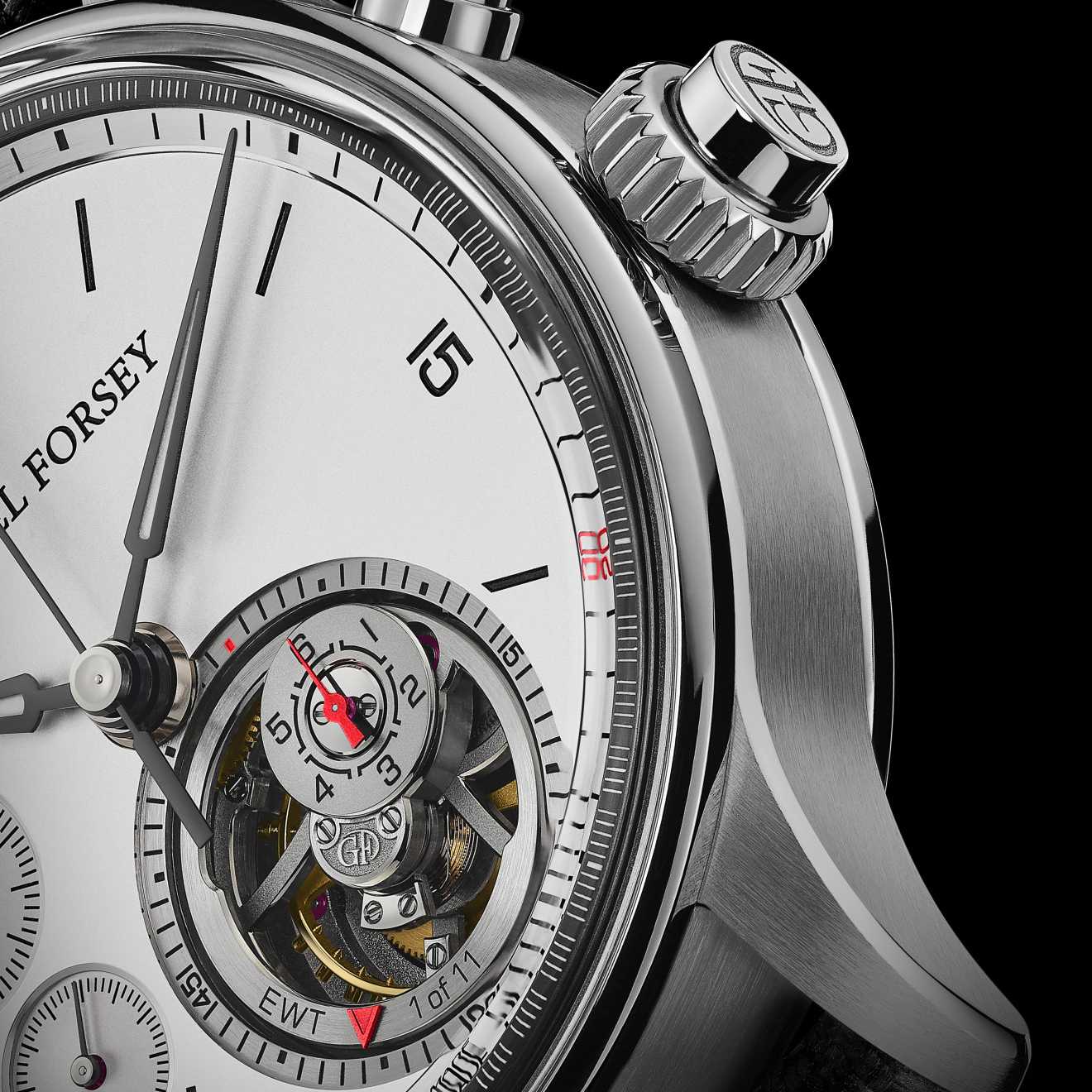
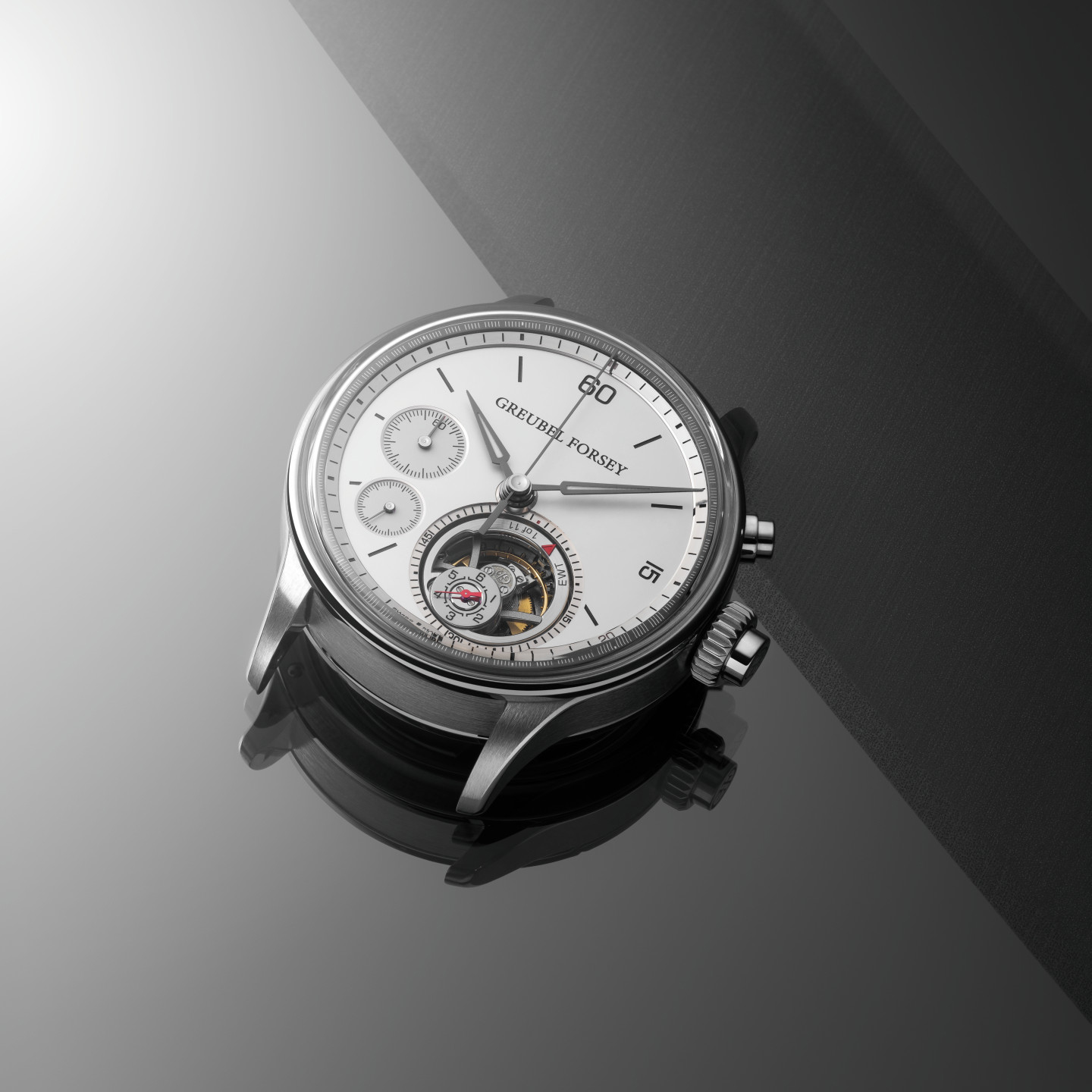
To celebrate the 20th anniversary (2004-2024), Greubel Forsey presents its 10th Fundamental Invention: the Nano Foudroyante EWT. The mechanism’s energy is managed at the nanojoule scale, significantly reducing the number of components and the overall dimensions. The result is a 37.9mm timepiece that combines the world’s first perpetual Nano Foudroyante with Greubel Forsey’s first flying tourbillon and manual wind flyback. This timepiece, set in a white gold and tantalum case, will be limited to just 11 pieces.
 

Legacy of innovation
The first Fundamental Invention by Robert Greubel and Stephen Forsey was launched in 2004, marking the Atelier’s commitment to research and invention. For over 20 years, this focus has been at the heart of all Greubel Forsey’s Fundamental Inventions and timepieces. Today, Greubel Forsey’s research is even more fundamental, aiming to completely rethink the approach to the conception of a timepiece. This endeavor demonstrates a major technological leap, comparable to the transition from tower clocks to wristwatches.

Originally, horological instruments were large and public. Over time, they became transportable (table clocks, marine chronometers), then portable with pocket watches, and finally wearable with wristwatches. This evolution reaches its peak today with nanomechanics—a revolution Greubel Forsey is pioneering. Thus, Greubel Forsey intro-duces its 10th invention: the Nano Foudroyante. This new Fundamental Invention is the most technologically disruptive—not only for Greubel Forsey but also for the universe of mechanical watchmaking.
 

Nanomechanics: a new horizon
What is nanomechanics? It is a realm beyond the miniaturization of components to the nanometric scale. When we talk about nanomechanics, we’re talking about controlling energy on a nanojoule scale within a mechanical movement. This revolution in energy management within a caliber allows for a drastic reduction in both energy consumption and the number of components.
 

A revolutionized mechanism
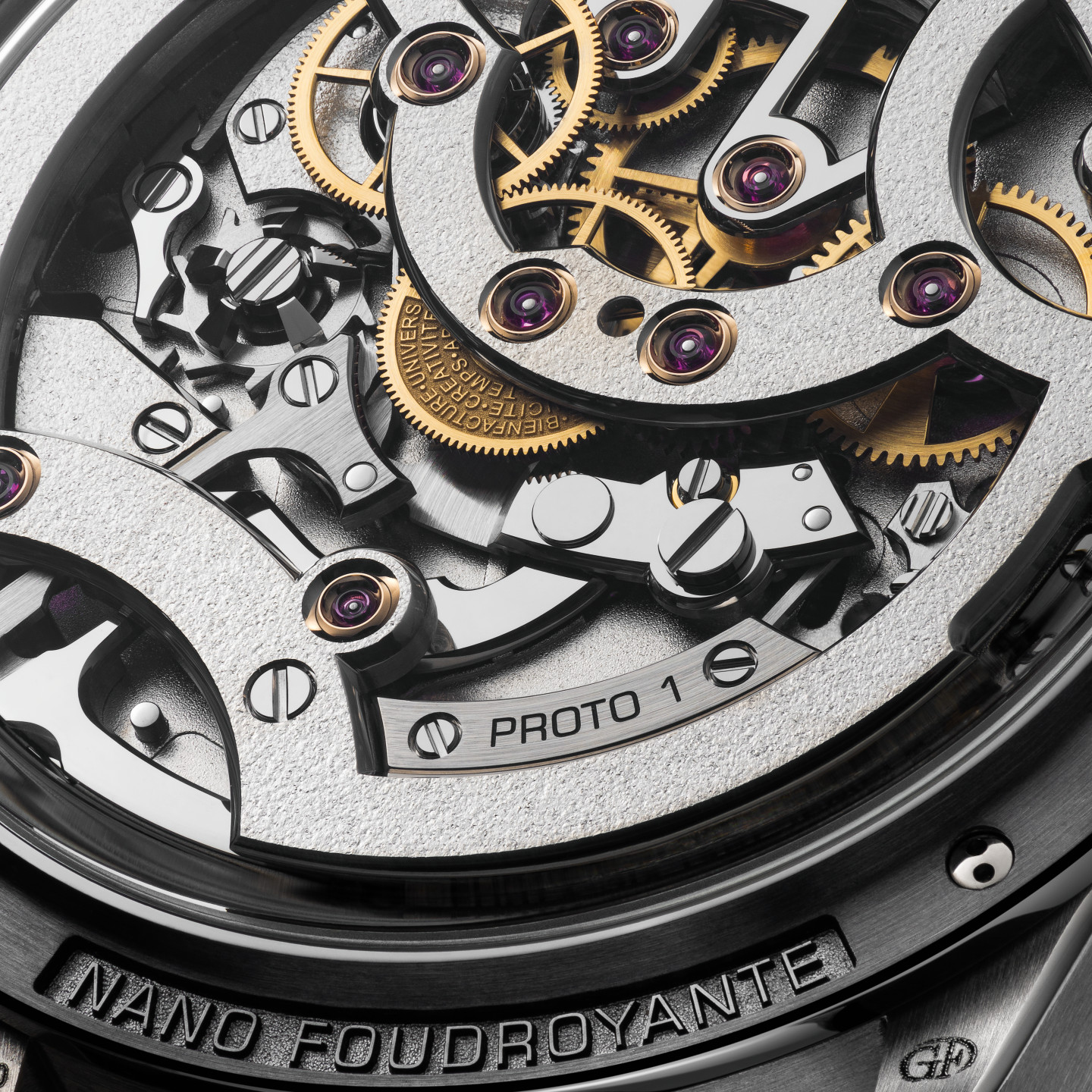
To demonstrate the feasibility of nanomechanics, Greubel Forsey has reinvented the foudroyante second. Its hand completes one revolution per second, dividing it into segments according to the movement’s frequency. In this Nano Foudroyante, each oscillation of the 3Hz balance wheel produces two beats, totaling six beats per second, allowing the hand to divide the second into six distinct segments. This is an energy-intensive complication by nature. However, by managing energy on a nanojoule scale, Greubel Forsey has radically rethought its design and construction. Compared to a traditional foudroyante that consumes 30μJ (microjoules) per jump, the Nano Foudroyante operates with only 16nJ (nanojoules) per jump, reducing energy consumption by a factor of 1,800. The mechanism’s volume is therefore reduced by 90%. Here, the focus is not just on measuring fractions of a second but as a proof of concept for a completely new approach to watchmaking, which is why this Nano Foudroyante was chosen to be a perpetual display.

It eliminates the entire gear train required in a traditional foudroyante to divide the second, as the information is sourced directly, distributing and managing the energy from the movement through a minimal number of low-inertia wheels. Fewer components mean less volume: this Nano Foudroyante EWT is very compact, with 428 components, and the movement measures no more than 31mm in diameter within a 37.9mm case (the smallest ever built by Greubel Forsey).
 

Horology at its peak
There’s more: true to Greubel Forsey’s passion for the tourbillon, this Nano Foudroyante is integrated within a flying tourbillon—the first ever made by Greubel Forsey. Finally, an additional innovation: although this flying tourbillon rotates constantly, the Nano Foudroyante’s dial remains permanently aligned towards twelve o’clock for optimal readability. Together with the flyback, these three features complete Greubel Forsey's 10th Fundamental Invention: a Nano Foudroyante, set within a flying tourbillon, with an oriented reading axis.

This is just the foundation and not the end result: this 10th Invention is powered by a manual-winding flyback movement. This complication presented by Greubel Forsey, includes column-wheel control within the strong architectural design and exceptional finishing, a signature of Greubel Forsey.
 

A limited edition masterpiece
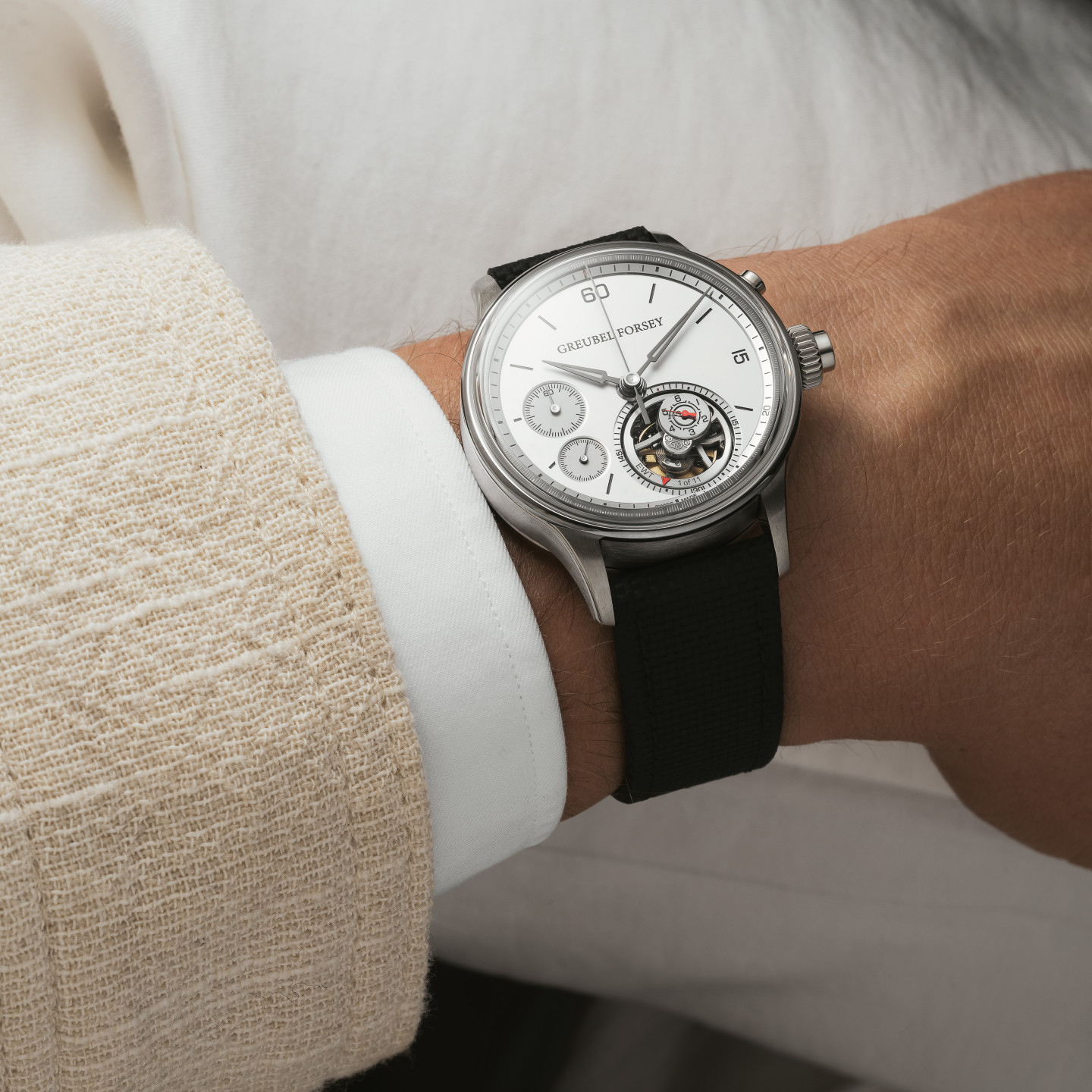
The timepiece will be made in a limited edition of just 11 pieces in this inaugural, refined version, emphasizing its disruptive technical character and highlighting the personality of a timepiece brilliantly conceived in the EWT (Experimental Watch Technology) laboratory.

The white gold case offers an additional surprise, with a bezel and back crafted from tantalum—a first for Greubel Forsey, who have never used this material before. Known for its gray-blue sheen and complexity in machining and finishing (with a melting point above 3000°C), tantalum requires rare expertise. The Atelier also preserves its essential aesthetic signatures, including polished relief engravings of “Nano Foudroyante” and “Greubel Forsey” on a hand-hammered background, hand-satin-finished white gold, and a highly architectural movement. This masterpiece displays the movement around its column wheel with rare 3D monobloc geometry, visible through the back.

The timepiece is engraved with “2004 – 2024” and “20th Anniversary” to mark this milestone.
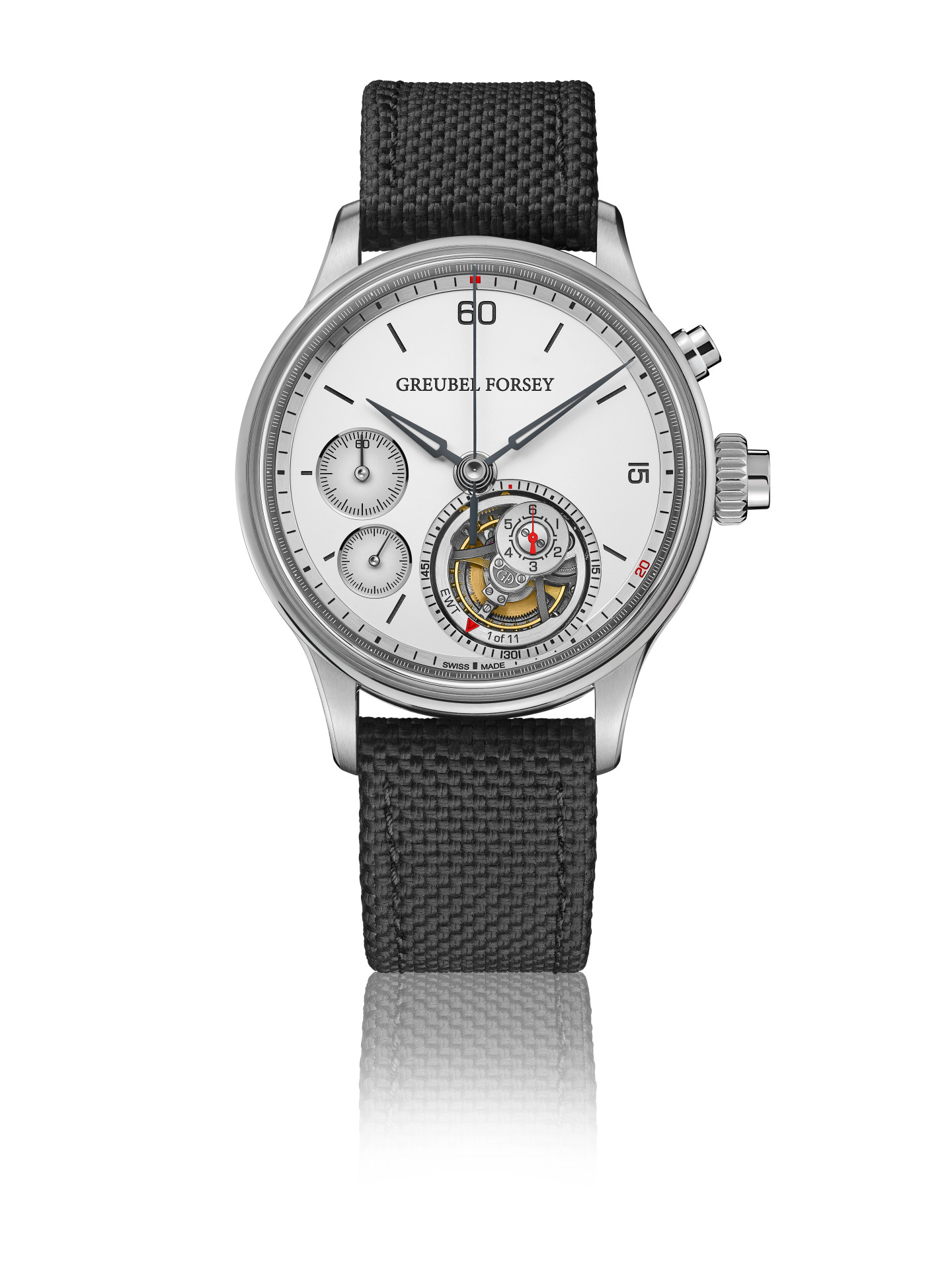
 

Nano Foudroyante EWT

Technical Specifications


Hand-wound movement with 2 patents
Flying tourbillon with Nano Foudroyante, hours and minutes, small seconds, 60-second tourbillon rotation, 60-minute counter, Flyback function
11 pieces Limited edition
 
MOVEMENT
NUMBER OF PARTS
Movement: 428 parts
Tourbillon cage: 142 parts
 
NUMBER OF JEWELS
42
Olived-domed jewels in gold chatons
 
CHRONOMETRIC POWER RESERVE
One full day, with chronograph engaged
 
FREQUENCY
21’600 vibrations/hour
 
TOURBILLON
Flying Tourbillon with embedded Nano Foudroyante mechanism
Foudroyante dial, constant vertical indication
Titanium cage bridges, circlar-grained, polished bevelling, straight-grained flands with engraved GF logo
 
EXTERIOR
CASE
Tantalum and white gold with high domed synthetic sapphire crystal
Tantalum hand-polished bezel, transparent tantalum back
White gold caseband with hand-finished straight-graining
 
CASE DIMENSIONS
Diameter: 37,90mm
Height: 10,49mm
 
WATER RESISTANCE OF THE CASE
Water-resistant 3atm - 30m - 100ft
(standard NIHS 92-20/SN ISO 22810:2010)
 
DIAL SIDE
Multi-level in gold, rhodium-coloured, engraved and black lacquered hour-ring and minute-circle with a visual opening for the tourbillon
Small seconds and chronograph minutes counter in gold, polished bevel
Water resistance: 50m/5atm/160ft
Crown for winding and time-setting at 3 o’clock
Foudroyante, frosted, fractions of seconds engraved and black lacquered
 
STRAP AND CLASP
Non-animal material, hand-sewn
White gold pin buckle, hand-engraved GF logo


Related Articles

OCTOBER 16 2025    |    Novelties

Moritz Grossmann Unveils TOURBILLON Titanium and TOURBILLON Tremblage: Tradition Meets Modernity

The tourbillon has long been regarded as one of the most fascinating complications in the history of watchmaking. Moritz Grossmann now reinterprets this horological icon with two extraordinary creations: TOURBILLON Titanium and TOURBILLON Tremblage. These timepieces embody the manufactory’s philosophy of blending traditional craftsmanship with contemporary aesthetics.

The TOURBILLON Titanium combines the technical sophistication of a flying three-minute tourbillon with the modern appeal of a titanium case. Its solid silver dial, adorned with a fine grain d’orge guilloche pattern, reflects the artistry of hand-guided engraving techniques. The result is a watch that is both lightweight and visually striking, offering a perfect balance of durability and elegance.

The TOURBILLON Tremblage, on the other hand, celebrates the beauty of historical handcraft. Its warm rose-toned dial is meticulously engraved using the traditional tremblage technique, creating a unique matte texture that softens light and enhances depth. Paired with a white gold case, this model exudes timeless sophistication while showcasing the manufactory’s dedication to artisanal excellence.

Both models are powered by the hand-wound calibre 103.0, featuring a flying three-minute tourbillon and patented innovations for precision timekeeping. Every component is finished by hand, from the engraved plates to the polished screws set in gold chatons, reflecting the highest standards of Glashütte watchmaking. These creations are more than timepieces—they are works of art that unite heritage and modernity in perfect harmony.

View Watch Gallery
Image 1 Image 2Image 3 Image 4Image 5
View More
JANUARY 19 2026    |    Novelties

DANIEL ROTH Unveils the Extra Plat Rose Gold Skeleton

A contemporary expression of classical proportion, revealing the architecture of high watchmaking
 

DANIEL ROTH presents the Extra Plat Rose Gold Skeleton, a new interpretation of one of the Maison’s most emblematic creations. Remaining faithful to the proportions and restrained elegance of the Extra Plat, this latest iteration introduces skeletonisation for the first time in the brand’s modern revival, allowing the inner architecture of the watch to take centre stage.

Conceived in the spirit of La Montre Objet d’Art, the Extra Plat Rose Gold Skeleton preserves the calm geometry of the double‑ellipse case while offering a transparent view into the movement, transforming technical construction into a visual and artistic experience.

The Extra Plat: A signature revisited
Simplicity, when executed with absolute precision, has long been central to the identity of DANIEL ROTH. During the early years of his independent career, Mr. Roth considered the Extra Plat a complication in its own right, favouring it for the technical discipline required to achieve true thinness and perfect proportion.

Defined by its double‑ellipse case and balanced architecture, the Extra Plat became a cornerstone of the Maison’s aesthetic vocabulary in the early 1990s. While Daniel Roth produced skeletonised versions of select complications during that period, the Extra Plat itself was never skeletonised. This new creation therefore marks a respectful yet meaningful evolution, expanding the expressive range of the Extra Plat while remaining faithful to its original spirit.

The DR002SR calibre: a skeletonised rose gold heart
At the centre of the Extra Plat Rose Gold Skeleton is the new manually wound calibre DR002SR, developed and manufactured entirely at La Fabrique du Temps Louis Vuitton under the supervision of master watchmakers Michel Navas and Enrico Barbasini.

Based on the DR002, the DR002SR has been re‑engineered from the ground up specifically for skeletonisation. The bridges and plates have been reshaped to maximise openness and visual clarity, while preserving structural rigidity and chronometric performance. Crafted in solid 18k 5N rose gold, the movement mirrors the warmth of the case and provides an ideal canvas for traditional hand finishing.


Transparency in motion
Skeletonisation is an exercise in reduction and balance. With the DR002SR, DANIEL ROTH brings this principle to its highest expression. The calibre reveals a wealth of hand‑executed details, including numerous hand‑polished internal angles, black‑polished steel components, and meticulously bevelled bridges—finishes that can only be achieved by skilled artisans and never by machine.

Despite its openworked construction, the DR002SR retains a power reserve of 65 hours and a frequency of 4 Hz, underscoring the Maison’s commitment to both technical integrity and timeless aesthetics.


Slim proportions, uncompromised structure
Housed in a 38.6 × 35.5 mm double‑ellipse case crafted in 18k rose gold, the Extra Plat Rose Gold Skeleton measures just 6.9 mm in thickness. This exceptional slenderness ensures that the watch remains true to the Extra Plat philosophy of discreet elegance and effortless wearability.

Produced in extremely limited numbers each year, the Extra Plat Rose Gold Skeleton is intended for collectors who value traditional high watchmaking expressed with clarity, restraint, and depth.

View Watch Gallery
Image 1 Image 2Image 2Image 2Image 2
View More
FEBRUARY 24 2026    |    Novelties

Chronoswiss Reimagines a Modern Classic with the New Lunar Chronograph Aurora

Chronoswiss introduces the Lunar Chronograph Aurora, a contemporary evolution of one of the brand’s most enduring icons. Since its debut in 1999, the Lunar Chronograph has symbolized Chronoswiss’s ability to blend classical Swiss watchmaking with an independent, expressive spirit. The new Aurora edition carries this legacy forward through a captivating reinterpretation rooted in light, color, and mechanical harmony.

At the heart of the transformation is its fully CVD‑coated dial, which shifts fluidly from deep green to vivid blue as light moves across its surface. Inspired by the ethereal glow of the aurora borealis, this chromatic effect gives the watch a quietly dramatic presence, making every glance feel like a changing atmospheric phenomenon. Balanced chronograph counters, a central analog date, and a poetic moon phase at 3 o’clock come together to form a composition that remains faithful to the model’s architectural heritage while embracing a distinctly modern personality.

The polished stainless‑steel case retains iconic design elements that have defined Chronoswiss for decades, including the onion crown and screwed lugs—details that reinforce the watch’s lineage and mechanical authenticity. Paired with a contemporary grey nubuck leather strap, the Lunar Chronograph Aurora combines classical provenance with renewed visual energy, offering collectors a sophisticated yet forward‑looking chronograph that bridges past and present with effortless elegance.

View Watch Gallery  
Image 1  Image 2  Image 3  Image 4
View More
APRIL 07 2026    |    Watches and Wonders 2026

The HM Pietersite: A Tribute to the Spirit of Exploration and the Art of the Ultra-Thin

Arnold & Son presents two new evocative versions of its ultra-thin HM model, featuring dials crafted from Namibian pietersite. Often called the "stone of storms," this decorative mineral belongs to the chalcedony family and was first discovered by Sid Pieters in the early 1960s. Each unique dial displays delicate, swirling patterns that recall the turbulent skies and foaming waves of Cornwall, the English birthplace of founder John Arnold. This design pays tribute to the ingenuity of the legendary watchmaker while celebrating the spirit of those who maintain their course in a challenging world.

The designation "HM" was intentionally chosen to reflect the watch's focus on displaying only hours and minutes, while simultaneously serving as a historical nod to the British Royal Navy. In naval tradition, HM stands for "His or Her Majesty’s," a title that appeared in the 17th century and was later formalized as HMS. By transposing this reference to watchmaking, Arnold & Son connects the precision of modern horology with England's maritime history, specifically the era when John Arnold’s marine chronometers enabled the exploration of new lands.

Encased in a choice of 18-carat red gold or stainless steel, the HM Pietersite is a masterpiece of elegance and restraint. The case measures a refined 39.5 mm in diameter with a remarkably slim profile of just 7.82 mm. To complement the dreamlike, diaphanous patterns of the pietersite dial, the timepiece is paired with a matte ink-blue alligator leather strap and a traditional pin buckle crafted from the same metal as the case. These limited editions are produced in extremely small quantities, with only 8 pieces available in red gold and 18 in steel.

At the heart of this timepiece lies the ultra-thin, in-house A&S1001 manual-winding calibre. Visible through a sapphire crystal case back, the movement is a showcase of luxury finishing, featuring a rhodium-plated main plate with circular graining and bridges adorned with radiating Côtes de Genève. Despite its slender height of only 2.70 mm, the movement offers exceptional performance with a generous 90-hour power reserve. Every detail, from the snail-finished wheels to the blued screws with polished heads, reflects the most exacting standards of Swiss watchmaking.

View Watch Gallery  
Image 1  Image 2 Image 3  Image 4       
View More
MARCH 17 2026    |    Novelties

Reinventing the Rhythm of Time: Dominique Renaud Presents the Pulse60

Haute Horlogerie Dominique Renaud (HHDR) marks its official debut with the launch of the Pulse60, unveiled in preview at the Time To Watches fair in Geneva (April 14–19, 2026). This first creation of the new Dominique Renaud brand introduces a radical approach to low‑frequency mechanical watchmaking and expresses the purest form of Renaud’s watchmaking philosophy.

A Vision Rooted in First Principles
Dominique Renaud, co‑founder of the legendary Renaud & Papi manufacture and creator of numerous landmark complications, returns with a renewed focus on foundational movement principles. Guided by the maxim “form ever follows function,” his work embraces clarity, purity and a minimalist, self‑evident aesthetic.
The establishment of HHDR in Tolochenaz brings together a team of watchmakers, designers and engineers in a collaborative, idea‑driven environment. HHDR is conceived as a living laboratory — a place where experimentation, shared expertise and long‑term exploration shape new forms of contemporary horology.

Pulse60 — A New Mechanical Language
At the heart of the Pulse60 is the newly developed BUA2024 movement, which embraces an ultra‑low 1 Hz frequency — just one oscillation per second, echoing the natural rhythm of the human heart. This approach reduces escapement shocks and disturbances, transforming time measurement into a slower, more embodied rhythm.


To master this low frequency, the movement features a monumental 20 mm high‑inertia balance wheel, inspired by marine chronometers. Its large moment of inertia stabilizes the rate by absorbing minute variations in energy and motion.

Dominique Renaud has also completely reimagined the regulating organ, allowing amplitude greater than 360° without knocking, with a theoretical range reaching approximately 700°. This unprecedented freedom greatly improves static rate stability by allowing the balance to follow its own natural dynamics over a longer portion of its oscillation.


A Design That Expresses Its Mechanics
The Pulse60’s innovative mechanics are reflected in its seamless, fluid architecture:

- A domed crystal with no bezel
- Lug‑less construction and integrated strap
- Three‑part case structure
- Diamond‑cut or guilloché dial details
- A patented offset regulation system placed outside the balance wheel, offering a completely unobstructed view of the slow‑beating 1 Hz oscillator

The display includes an hour‑minute dial at 12 o’clock, a natural dead half‑second at 9 o’clock, and a torque indicator at 3 o’clock. The caseback reveals a minimalist composition of circular and linear forms, framing the openworked escapement line and double‑roller assembly.

View Watch Gallery  
  Image 2 Image 3  Image 4  Image 5    
View More
OCTOBER 17 2025    |    Novelties

Armin Strom Unveils Mirrored Force Resonance Zeitgeist 1665 – A Tribute to Horological History

Armin Strom unveils the Mirrored Force Resonance Zeitgeist 1665, a creative interpretation of what a Resonance wristwatch might have looked like centuries ago. This timepiece combines historical horology with modern innovation, celebrating the brand’s milestone achievement of stable and resilient Resonance.

The Zeitgeist features a stainless steel case measuring 43 mm in diameter, paired with an 18K white gold dial in an off-center design. Inside beats the Armin Strom Manufacture Caliber ARF21_ZG, a manual-winding movement with twin-seconds and flyback functionality, offering an impressive 80-hour power reserve. Limited to just 25 pieces worldwide, this exceptional creation pays tribute to the centuries-long pursuit of chronometric consistency, a challenge first explored by Christiaan Huygens in 1665. Armin Strom solved the Resonance Fragility Problem in 2016, making this phenomenon practical for wristwatches.


View Watch Gallery
Image 1   
View More
ENDLESS DISCOVERY IN YOUR INBOX
Join our mailing list to receive insider updates on our latest collections, invites to private events, and other personalized offerings.