Shopping Cart

Greubel Forsey Redefines Haute Horlogerie with the New GMT Balancier Convexe

JUNE 05 2025    |    Novelties

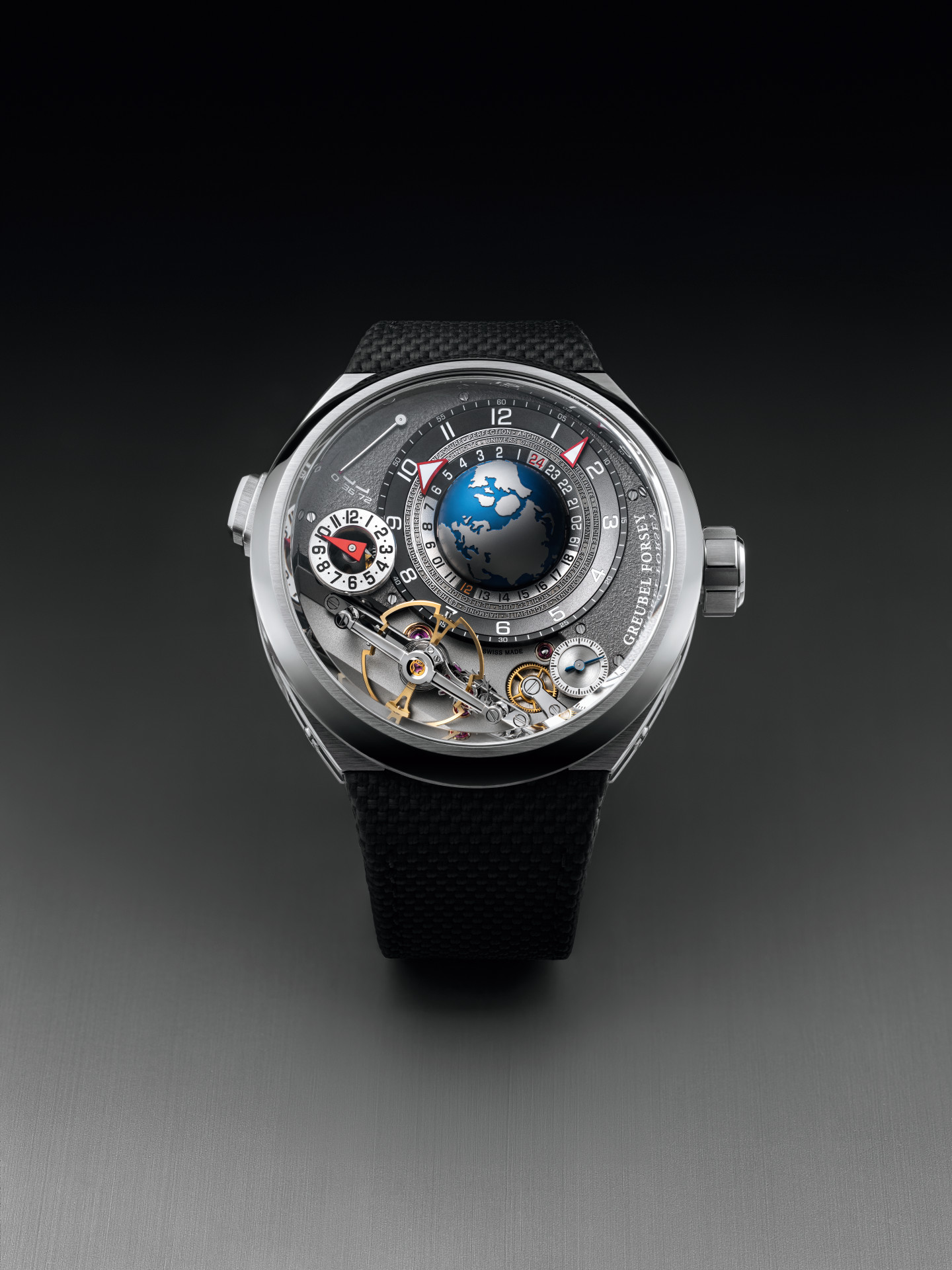
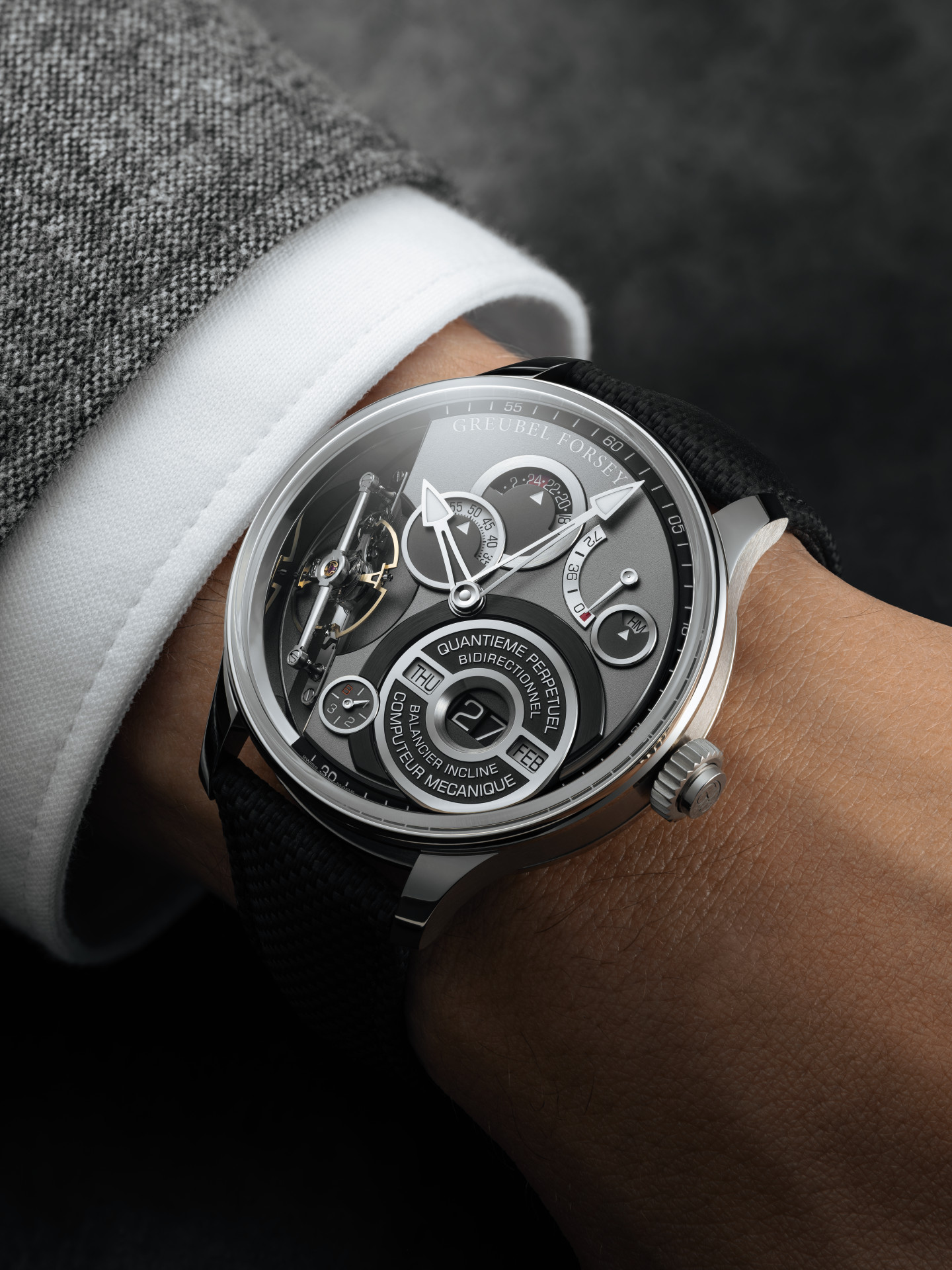
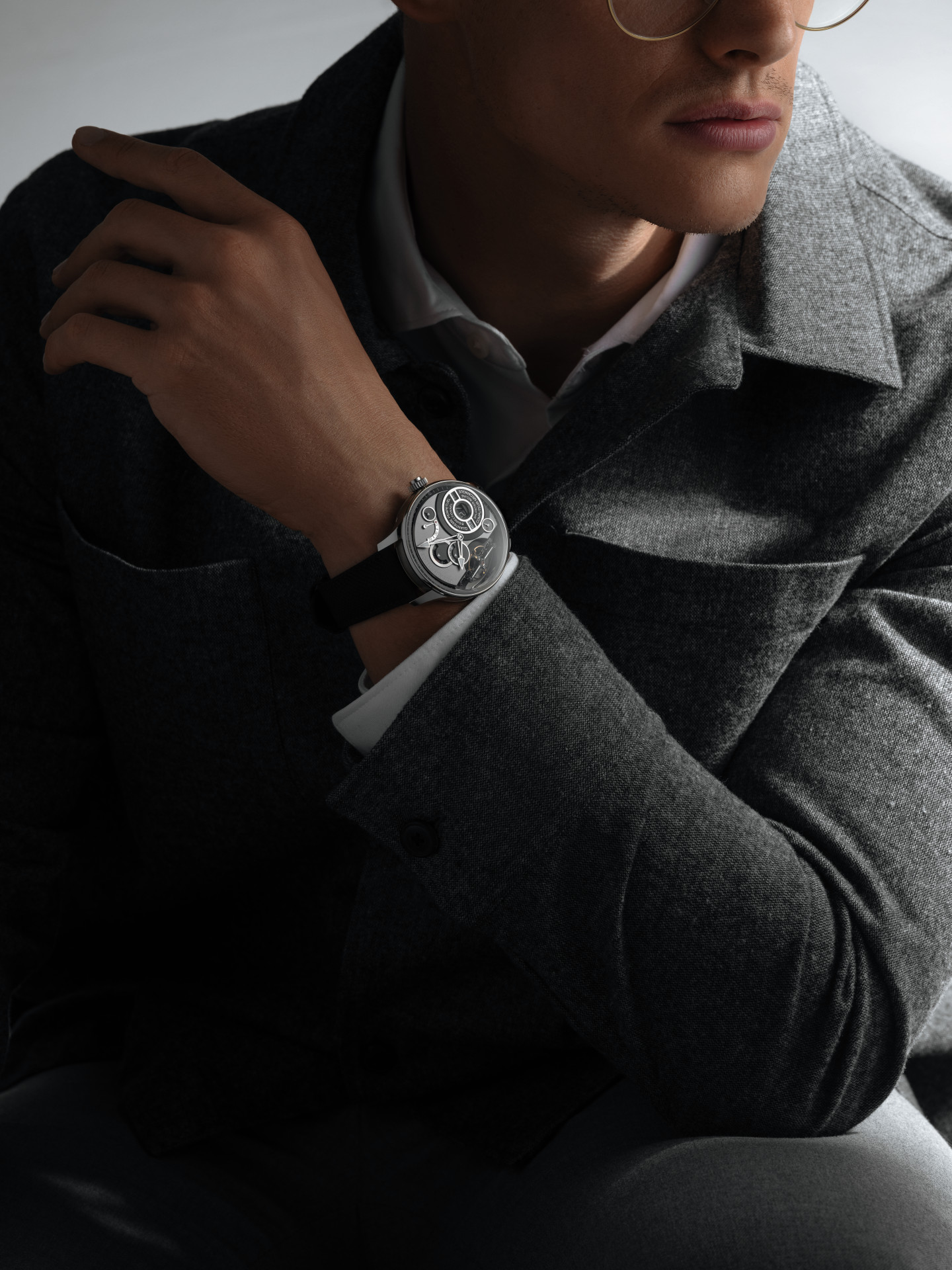
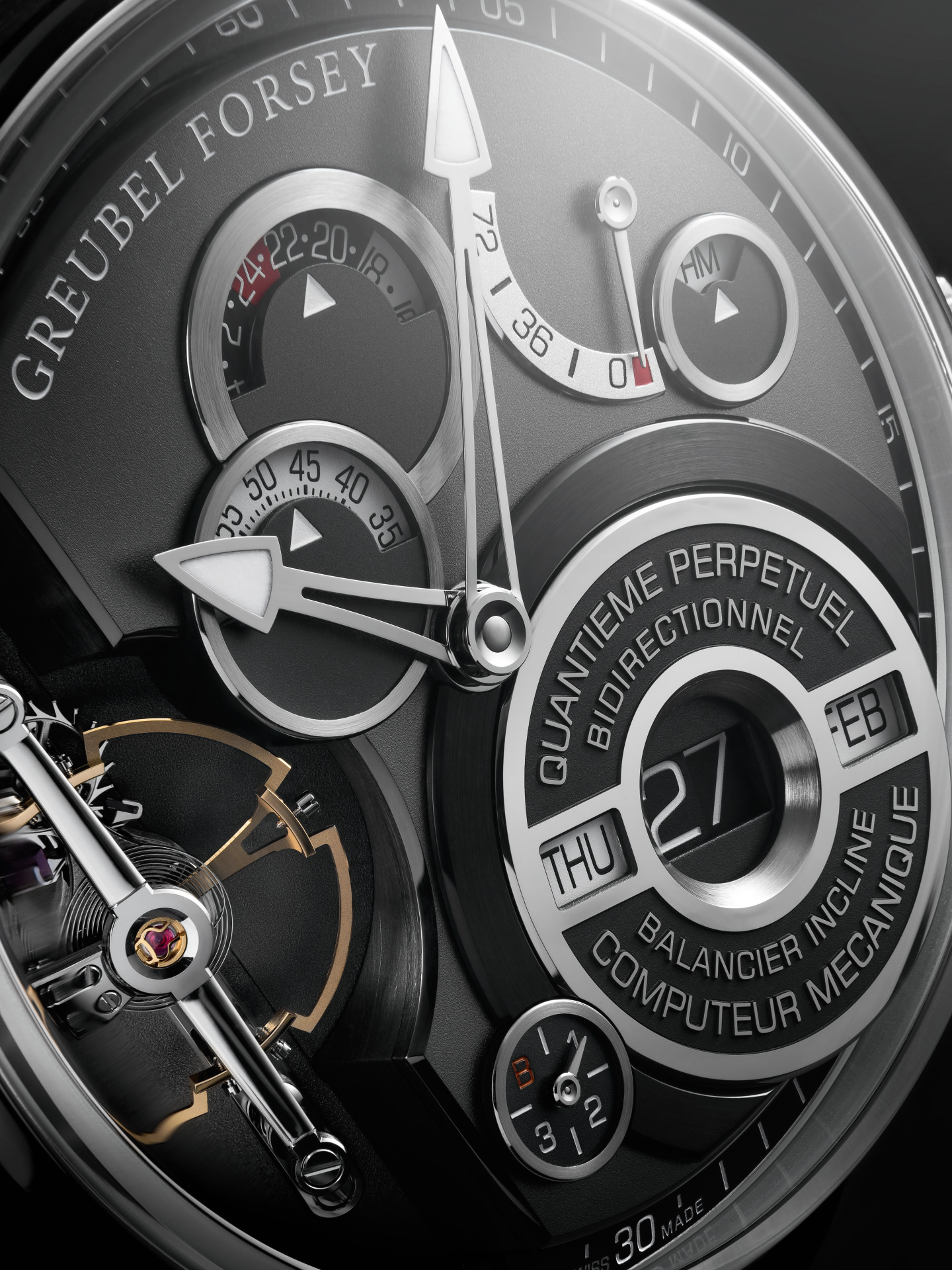
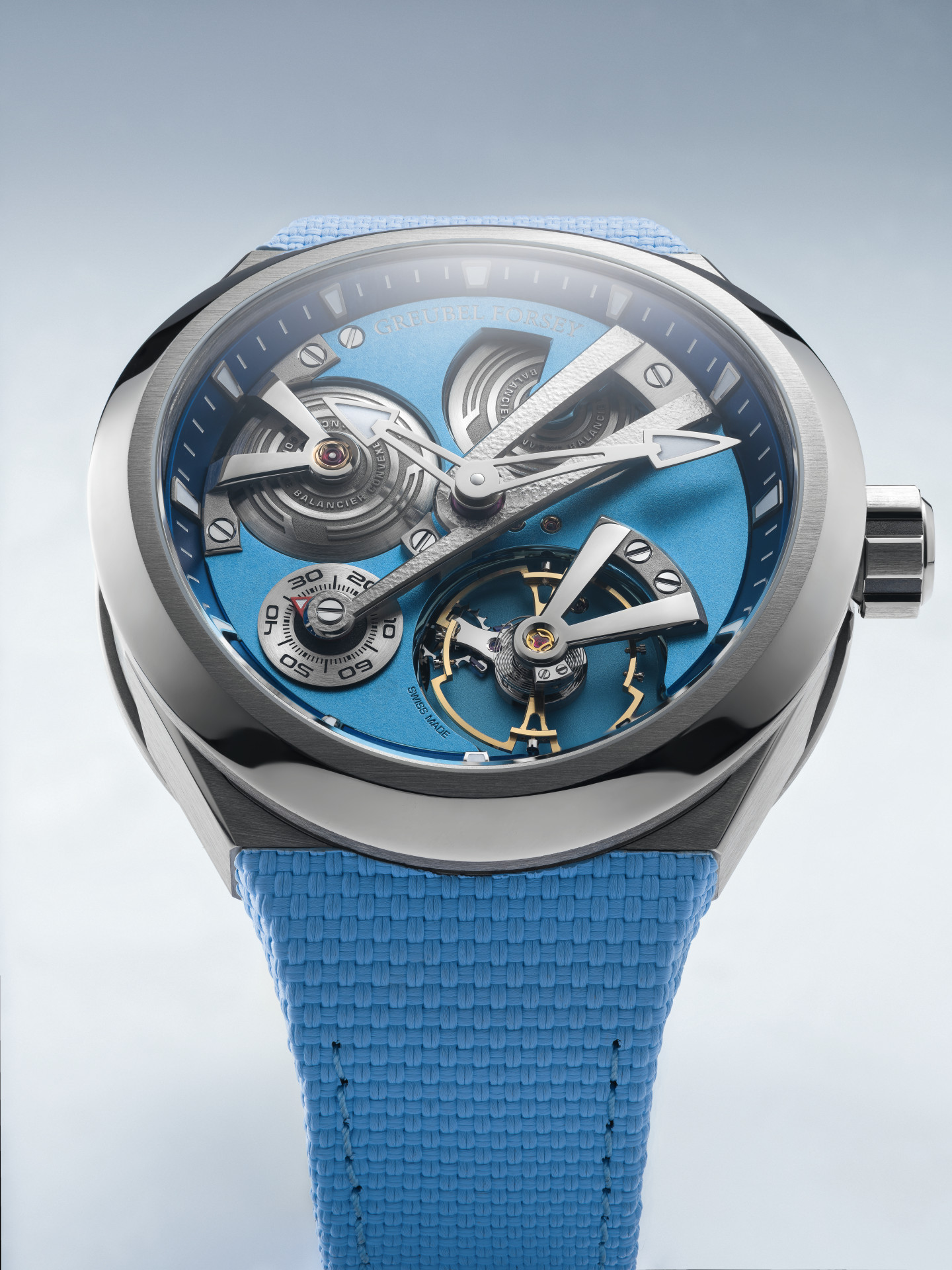
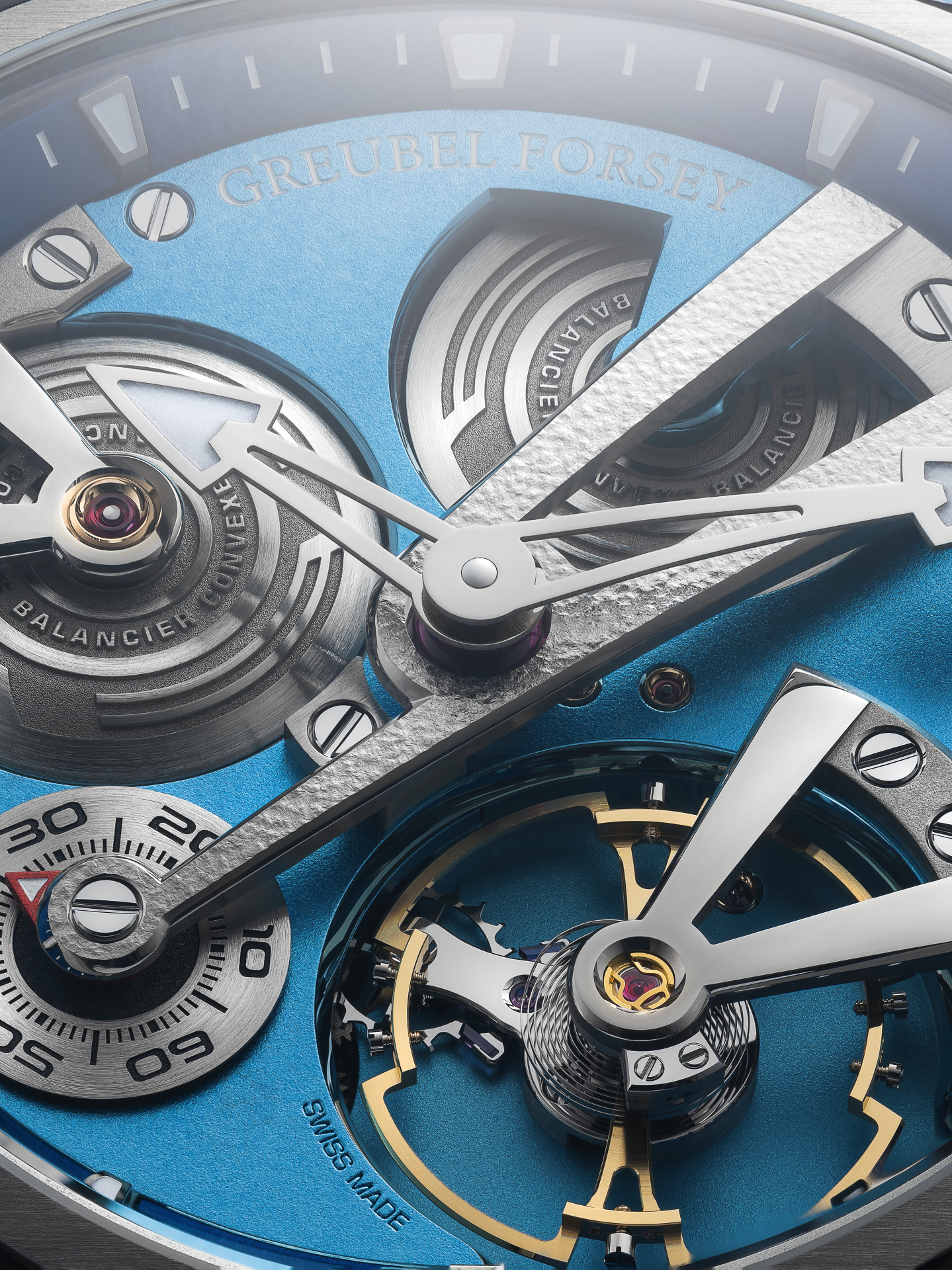
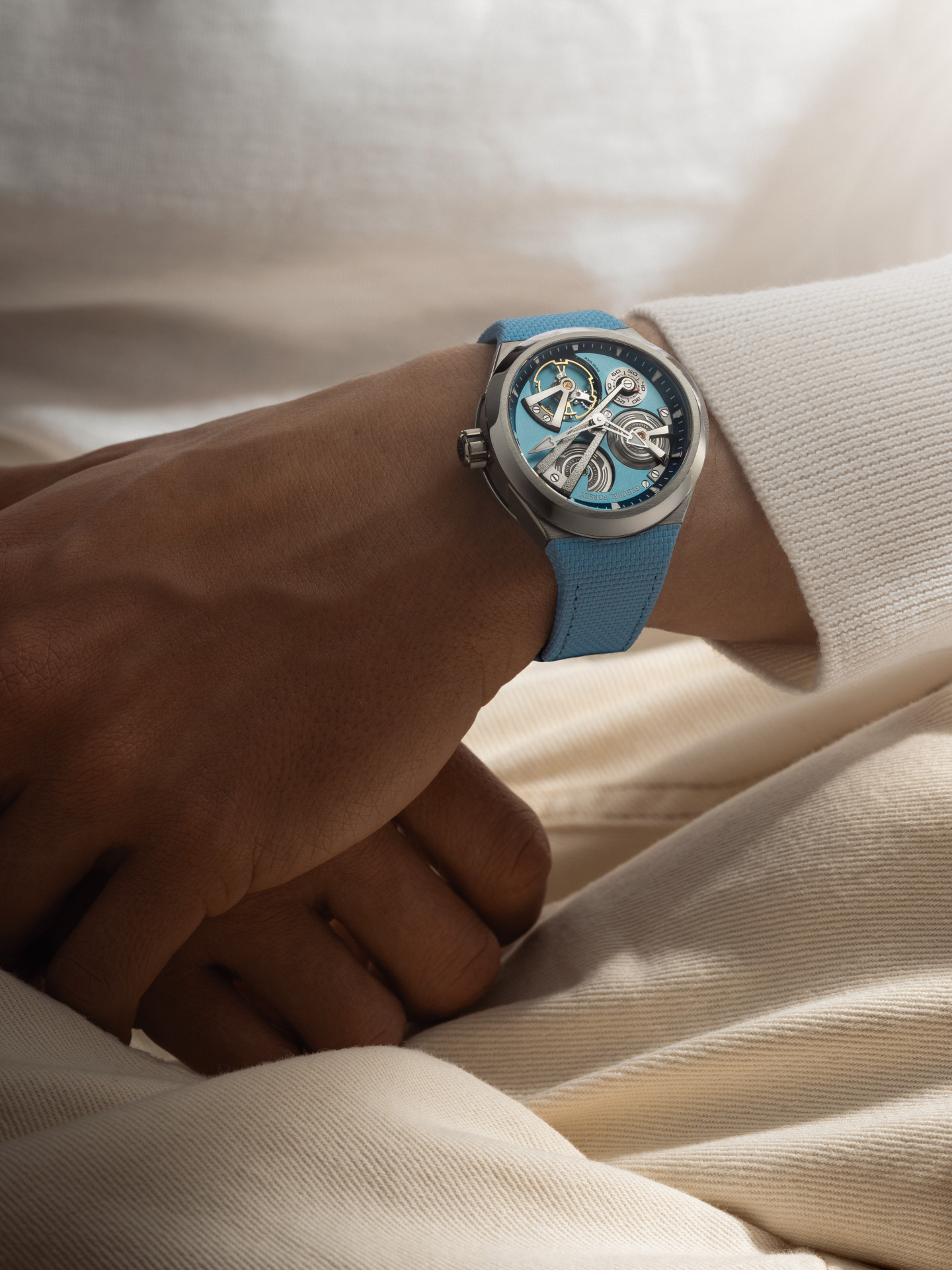
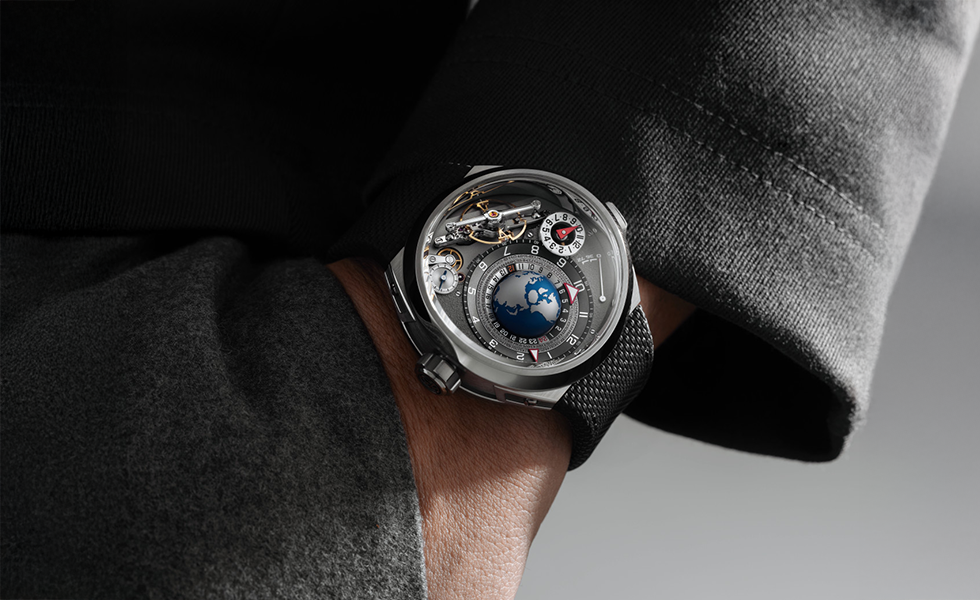
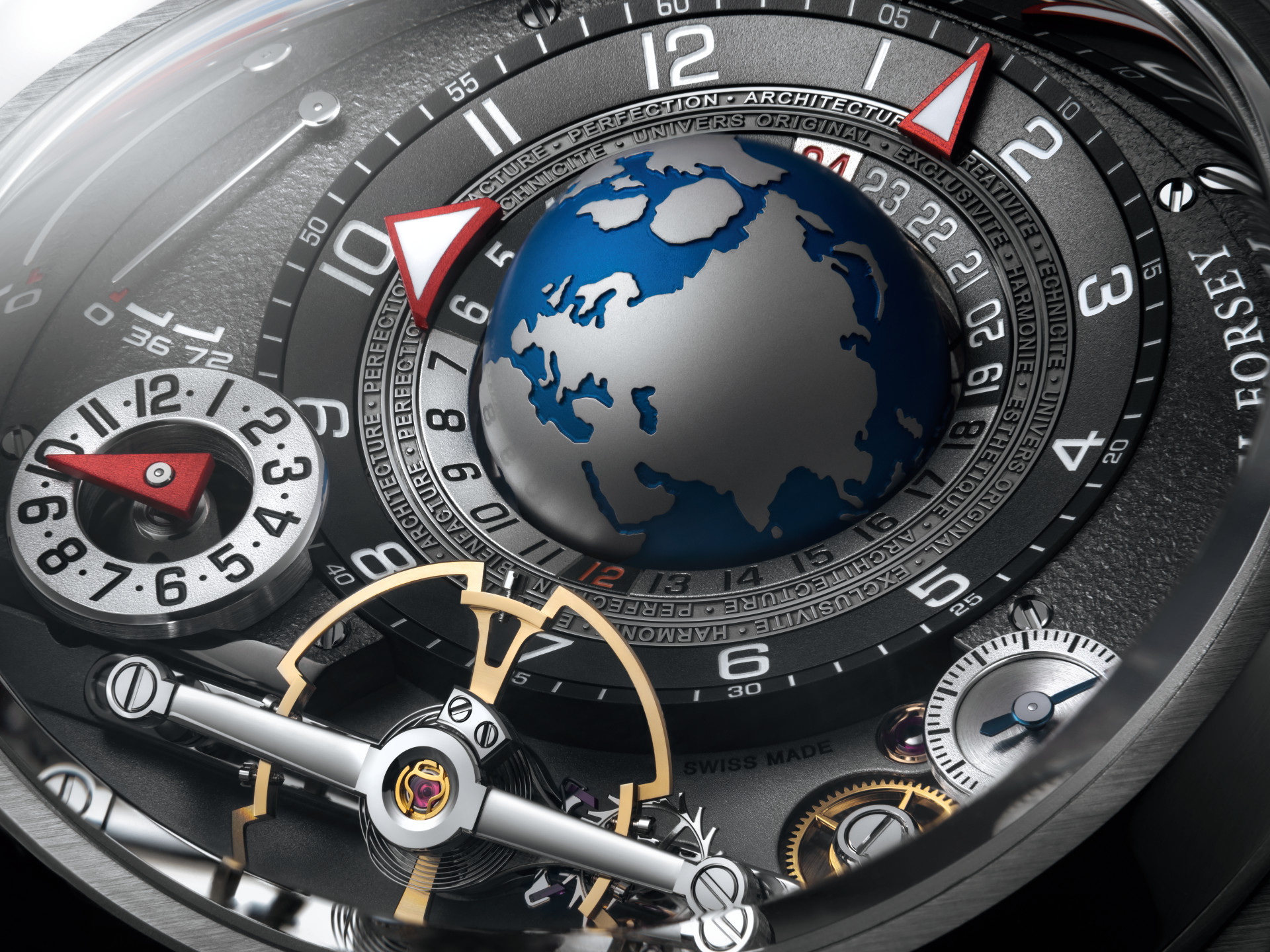
Greubel Forsey unveils its new GMT Balancier Convexe. As the Earth takes centre stage within a newly reimagined amphitheatre, the hours, minutes, seconds, second time zone, and universal time indications become both companions and spectators to its quiet revolution.

The new GMT Balancier Convexe replaces its predecessor entirely – not as a variation, but as a complete reinterpretation. With a redesigned case, an integrated power reserve, and enhanced ergonomics, it becomes the purest expression of our GMT complication to date – and the only GMT model in our current collection.

A refined evolution
– Titanium Convexe case now more compact at 42.90 mm for improved wearability.
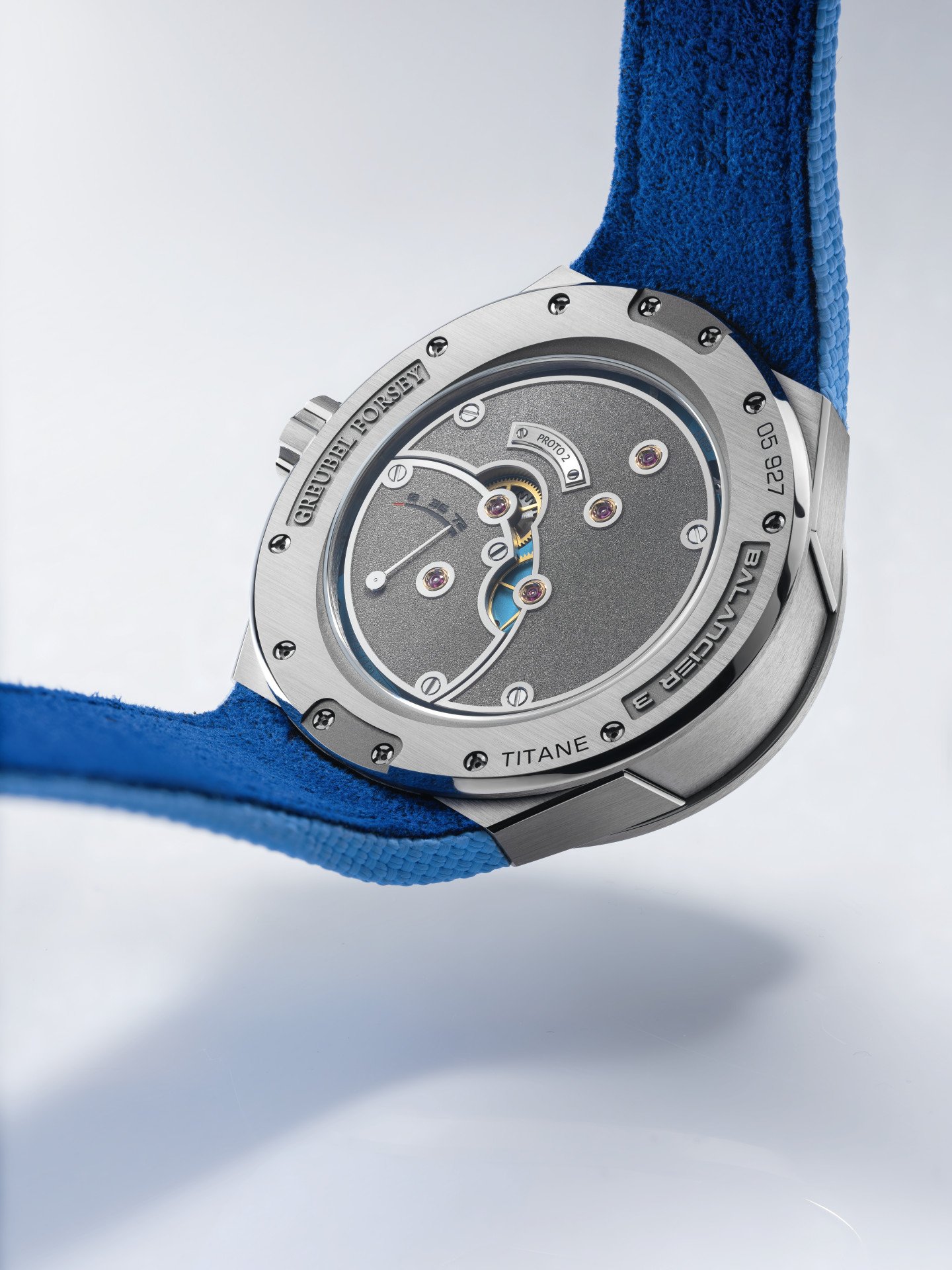
– New 72-hour power reserve indicator seamlessly integrated into the dial.

Technical enhancements
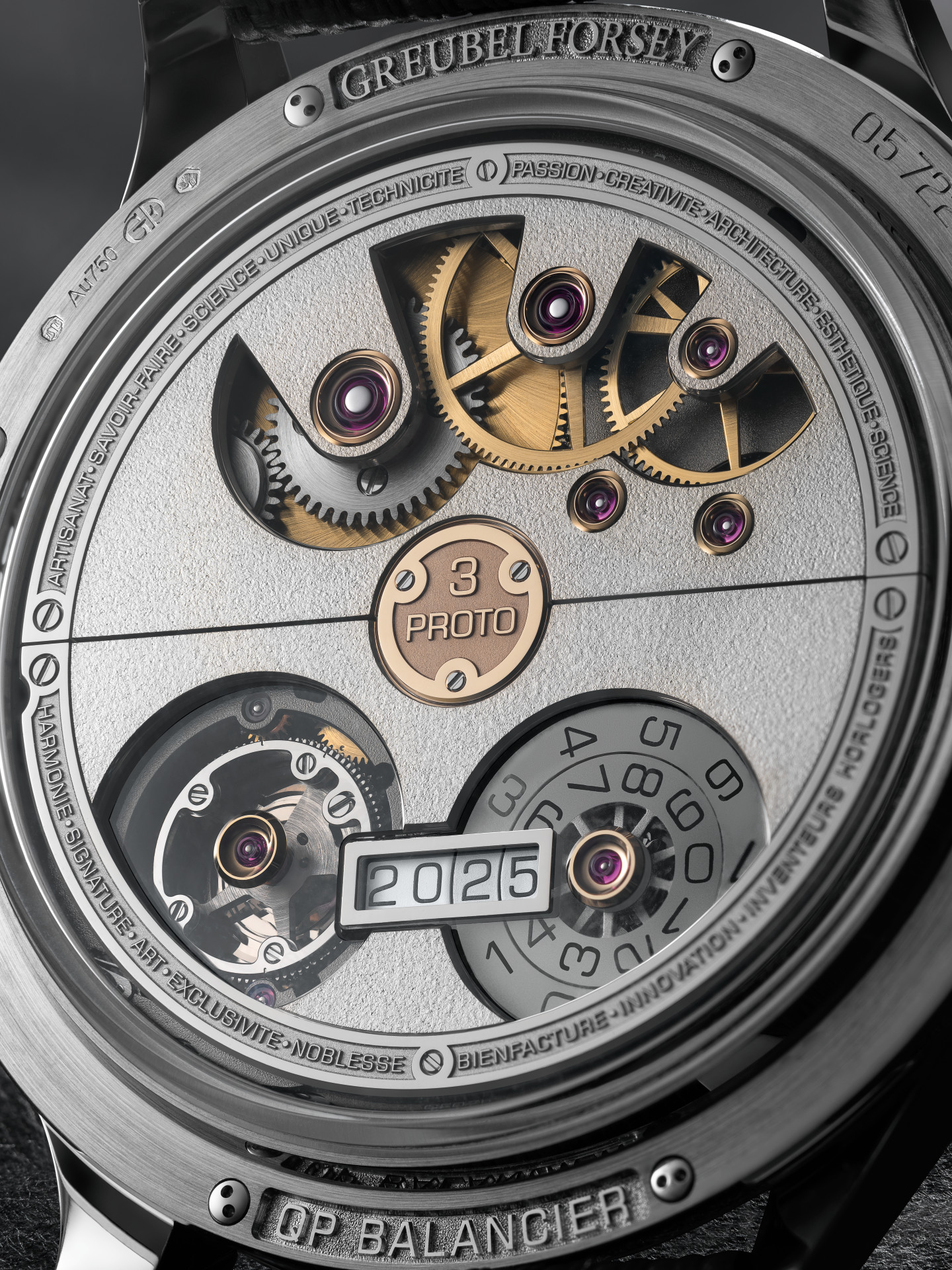
– 496 components, 73 more than its predecessor.
– Inclined escapement suspended beneath polished steel bridge.
– Real-time rotating globe in layered amphitheatre.
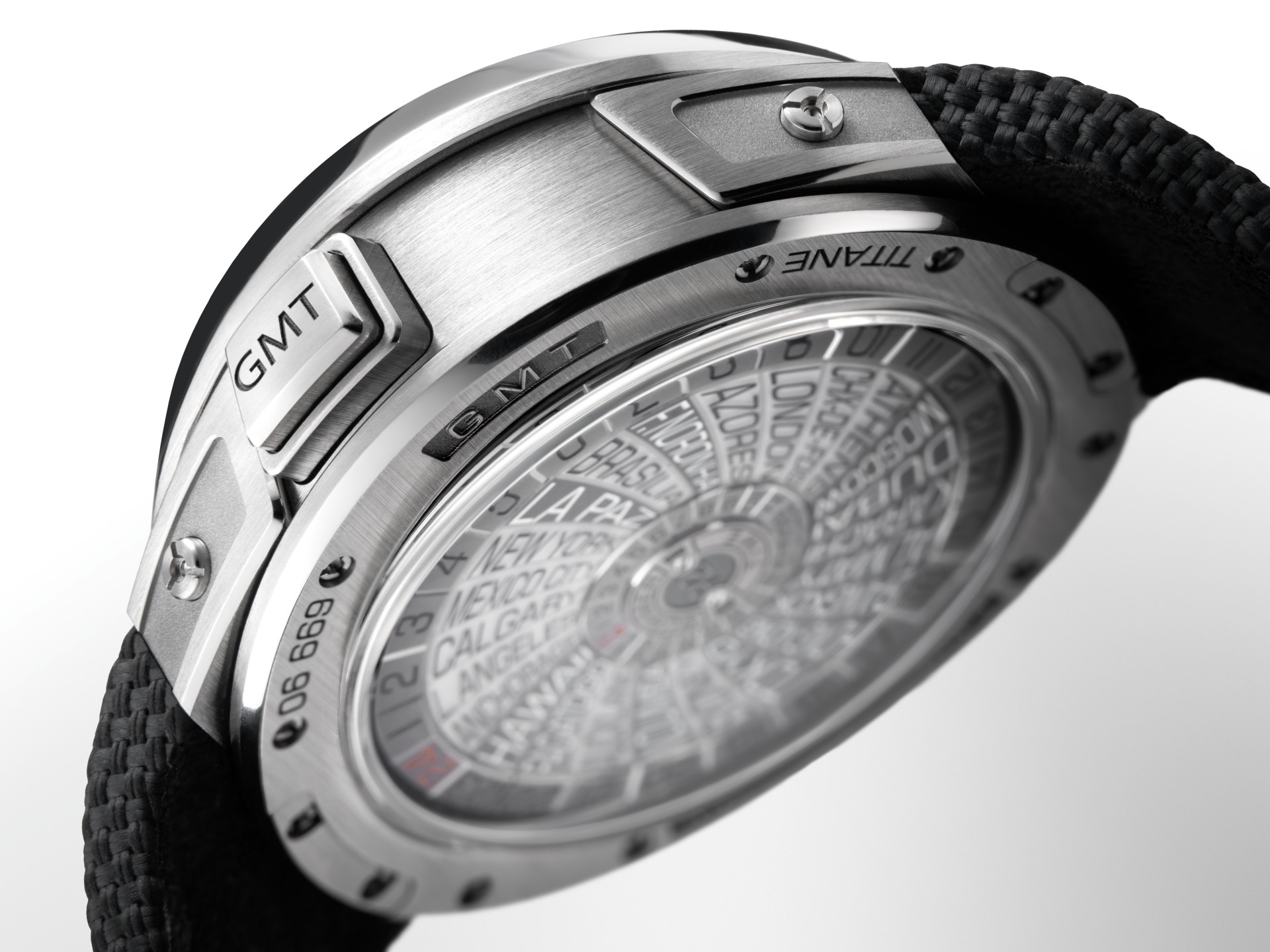
– Sapphire disc on caseback with 24 cities, La Chaux-de-Fonds replaces Paris.

Exclusivity
– Limited to 22 pieces worldwide.
View Watch Gallery
Image 1 Image 2

Greubel Forsey GMT Balancier Convexe

Greubel Forsey GMT Balancier Convexe

Technical Specifications

Functions Hours, minutes, small seconds, second time zone (GMT), rotating terrestrial globe with universal time, day/night indicator, engraved sapphire disc with cities of 24 time zones, summer/winter time, 72-hour power reserve indicator, 30° inclined balance wheel system
Movement Dimensions Overall diameter: 37.80mm
Thickness: 13.80mm
Number of Parts Movement: 496 parts
Escapement platform: 59 parts
Number of Jewels 72
Olived-domed jewels in gold chatons
Power Reserve 72 hours
Barrels Two series-coupled fast-rotating barrels (1 turn in 3.2 hours), one with slipping spring
Balance Wheel In-house variable-inertia with 6 gold mean-time screws (12.60mm diameter)
Frequency 21,600 vibrations/hour
Case Dimensions Caseband diameter: 42.90mm
Bezel diameter: 44.90mm
Case height: 15.10mm
Height on sapphire crystals: 17.60mm
Water Resistance 5 ATM / 50m / 164ft (NIHS 92-20 / ISO 22810:2010)
Strap Options Hand-sewn textured rubber or rubber with text in relief
Optional: 3-row titanium bracelet with folding clasp

Related Articles

NOVEMBER 19 2025    |    Novelties

gérald genta Introduces Gentissima Oursin 41 with Meteorite Dials

gérald genta continues its legacy of audacious elegance with the launch of two new references in the Gentissima Oursin collection: Blue Meteorite and Green Meteorite. These timepieces mark a bold evolution of the iconic design first imagined by Mr. Gérald Genta in 1994, inspired by the delicate yet resilient form of the sea urchin.

A Design Born from Nature and the Cosmos
The Gentissima Oursin 41 features a 41mm sandblasted Grade 5 titanium case, meticulously set with 234 white gold beads, echoing the organic geometry of the sea urchin. At its heart lies a dial carved from a fragment of meteorite—a material born from the stars—making each watch a unique, one-of-one creation. The natural crystalline structure of meteorite ensures that no two dials are alike, offering collectors a truly rare expression of artistry.

Sporty-Chic Meets Haute Horlogerie
Combining rubber straps and titanium architecture with luxurious gold accents, the Gentissima Oursin 41 is designed for everyday wearability without compromising sophistication. A curved sapphire crystal, faceted with a subtle octagonal profile, protects the dial and enhances its dynamic character. Gold hands filled with Super-LumiNova featuring a pink hue—a tribute to Mr. Genta’s favorite color—ensure legibility and elegance.

Mechanical Excellence
Inside beats the Zenith Elite GG-005 automatic movement, boasting a 50-hour power reserve, 4 Hz frequency, and an 18K yellow gold oscillating mass, visible through a sapphire caseback. With 50m water resistance and a comfortable rubber strap, this timepiece is as practical as it is artistic.


View Watch Gallery
Image 1 Image 2Image 3 Image 4Image 4Image 4
View More
NOVEMBER 11 2025    |    Novelties

Moritz Grossmann Presents the PERPETUAL CALENDAR

To celebrate 17 years since its rebirth in 2008, Moritz Grossmann unveils a horological milestone: the PERPETUAL CALENDAR. This grand complication embodies the brand's philosophy of timeless precision, combining traditional craftsmanship with modern innovation.

The PERPETUAL CALENDAR is engineered to automatically account for the varying lengths of months and leap years, requiring no manual correction until the year 2100. This makes it one of the most technically demanding and revered complications in fine watchmaking.

The dial is a study in symmetry and clarity. A full 1–31 date scale encircles the dial, with a cup-shaped indicator framing the current date. The month and weekday are displayed on subdials at 3 and 9 o'clock, decorated with Azurage finishing. Leap year and day/night indicators are integrated into the subdials. At 12 o'clock, a poetic moon phase display features a mother-of-pearl moon gliding across a goldstone sky.

At the heart of the watch is the newly developed Calibre 101.13, a hand-wound movement based on the 100.1 calibre with an added perpetual calendar module. It comprises 401 components — 211 for the calendar module and 190 for the base movement. The movement features optimised stopwork, an integrated manual winder, and an escape wheel bearing in the barrel bridge. The finishing adheres to traditional Glashütte standards, with untreated German silver plates, raised gold chatons, and hand-engraved details.

All calendar functions can be adjusted via recessed correctors on the case, operated with a dedicated tool. A sum corrector allows for quick synchronization of all indicators after periods of inactivity.

The PERPETUAL CALENDAR is available in three elegant variants: rose gold with argenté dial (Ref. MG-003906), rose gold with anthracite dial (Ref. MG-003907), and platinum with argenté/anthracite dial (Ref. MG-003904). Each model is paired with a hand-stitched dark brown alligator leather strap and a matching prong buckle.

Moritz Grossmann continues to honour its namesake's 19th-century legacy with a commitment to "Schönstes deutsches Handwerk" — the finest German craftsmanship. The PERPETUAL CALENDAR is a testament to this enduring vision, offering collectors a timepiece that is as poetic as it is precise.


View Watch Gallery
Image 1 Image 2Image 3 Image 4
View More
MARCH 24 2025    |    Watches and Wonders 2025

Constant Force Tourbillon 11, yellow gold edition - A celebration of watchmaking ingenuity

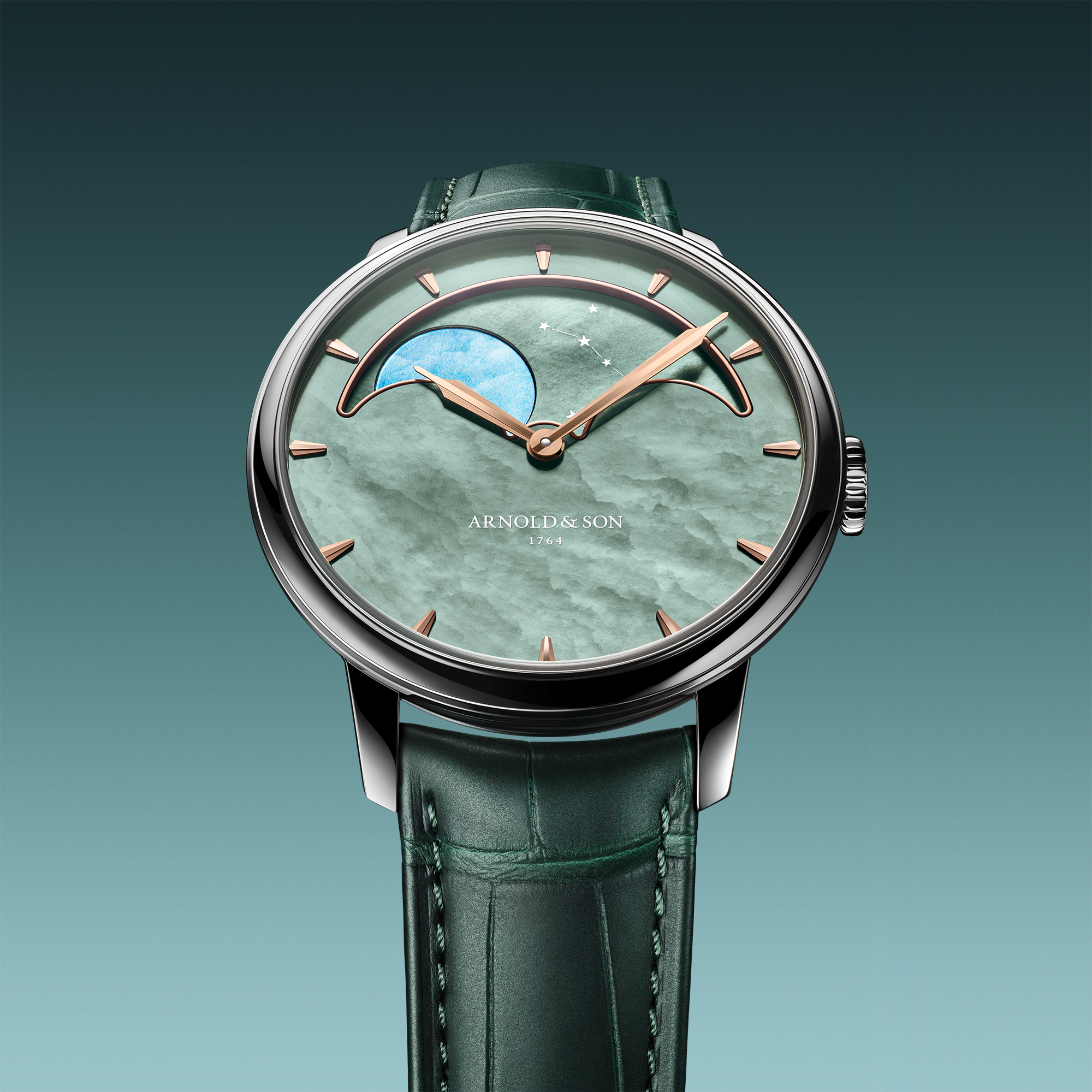
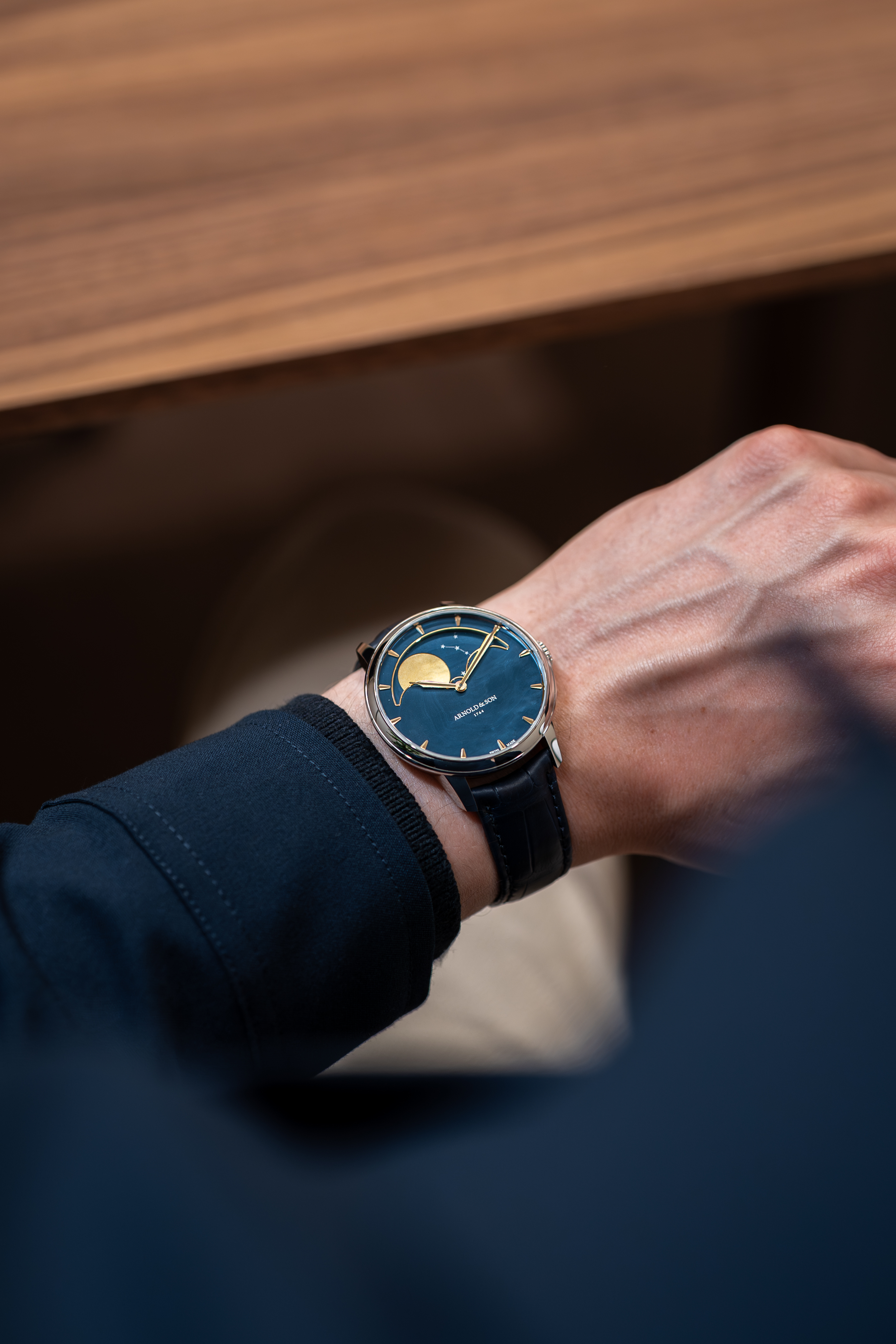
The 41.5 mm diameter Constant Force Tourbillon 11 watch in 18-carat yellow gold, released by Arnold & Son as a limited edition of 11, is driven by a hand-wound mechanical movement. Equipped with two barrels to give a 100-hour power reserve, this timepiece was entirely developed and built at the manufacture in La Chaux-de-Fonds. It is fitted with a constant force mechanism visible on the enamel dial and is regulated by a tourbillon that can be seen on the back. The architecture of this calibre is inspired by that of the timekeeping instrument driven by the first tourbillon created by Abraham-Louis Breguet in 1808, based on a chronometer movement designed by John Arnold. This first tourbillon regulator, now in the British Museum, was given to John Roger Arnold by the Paris-based watchmaker in honour of his scientific collaboration and friendship with his father. The Constant Force Tourbillon 11 timepiece, designed to mark the end of the 260th anniversary celebrations of John Arnold’s legacy, pays tribute to the watchmaker’s ingenuity and his close association with Abraham-Louis Breguet.

The greatest watchmakers of the Age of Enlightenment often knew each other. Some of them exchanged views and appreciated each other despite language barriers and political obstacles. And this was the case with John Arnold and Abraham-Louis Breguet. These two watchmakers, undoubtedly the most productive of the second half of the 18th century, forged a friendship that nothing could shake, not even the throes of war between the two countries or the French Revolution. Aware of their respective talents, during Abraham-Louis Breguet’s frequent trips to London between 1789 and 1791, they shared their views and knowledge of the principles of timekeeping, furthering the science of timekeeping, which in their eyes definitely knew no frontiers.

View More
ENDLESS DISCOVERY IN YOUR INBOX
Join our mailing list to receive insider updates on our latest collections, invites to private events, and other personalized offerings.