Shopping Cart

Opus Dakar Sundown: A Two-Tone Symphony of Desert Sunset and Fine Skeletonized Horology

JULY 03 2026    |    Novelties

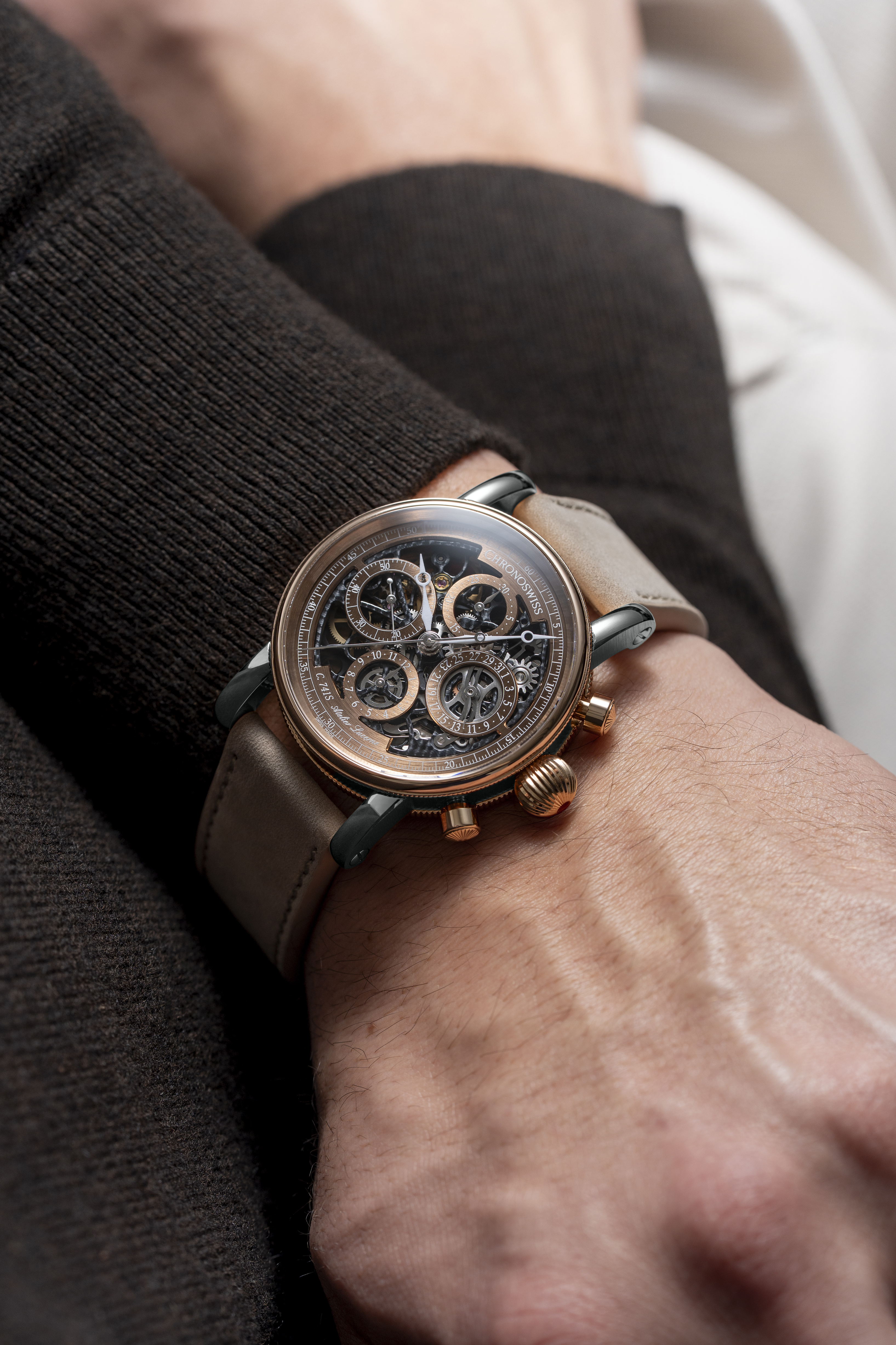
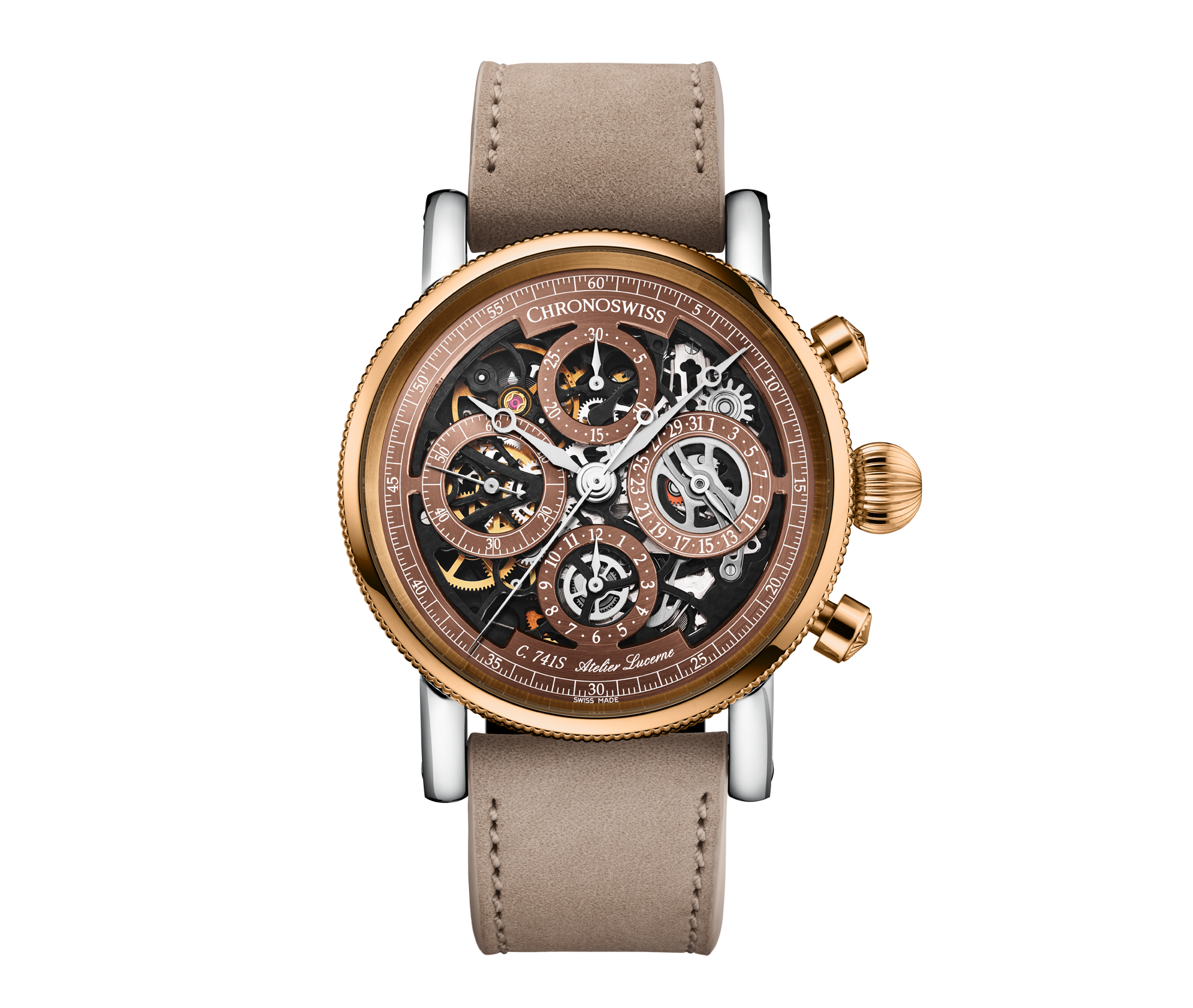
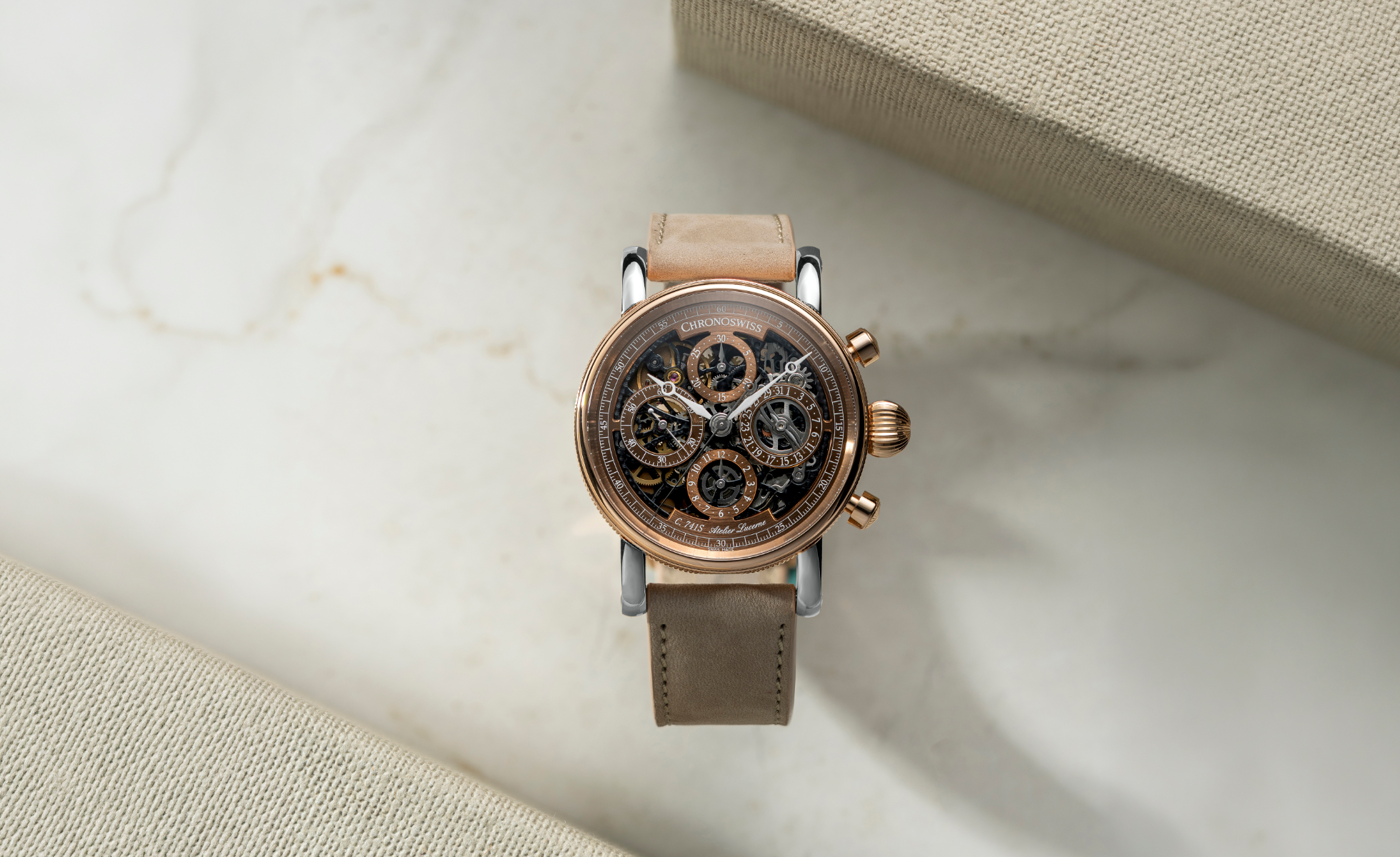
Chronoswiss has officially introduced the Opus Dakar Sundown, a striking new interpretation of the celebrated Opus Dakar that captures the fleeting magic of sunset over the desert. Housed in a distinctive 41mm two-tone case crafted from stainless steel and 18ct red gold, the timepiece masterfully blends the rugged spirit of adventure with refined luxury. The warm glow of precious metal flows seamlessly into the robust steel construction, mirroring the final golden rays dancing across endless dunes. This ultimate celebration of contrasts is beautifully completed by a sand-colored nubuck leather strap that evokes the warm tones of sunlit, weathered terrain.

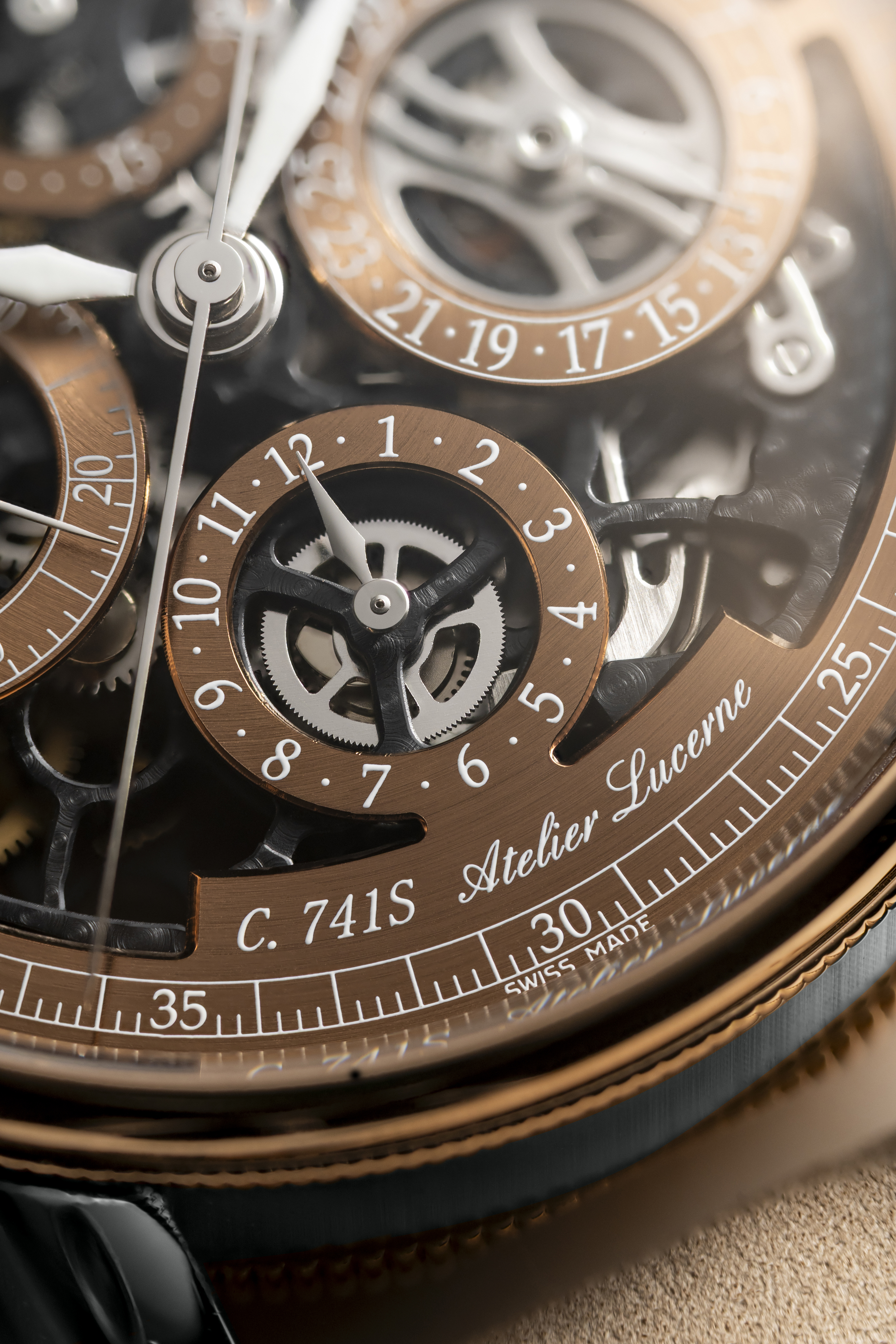
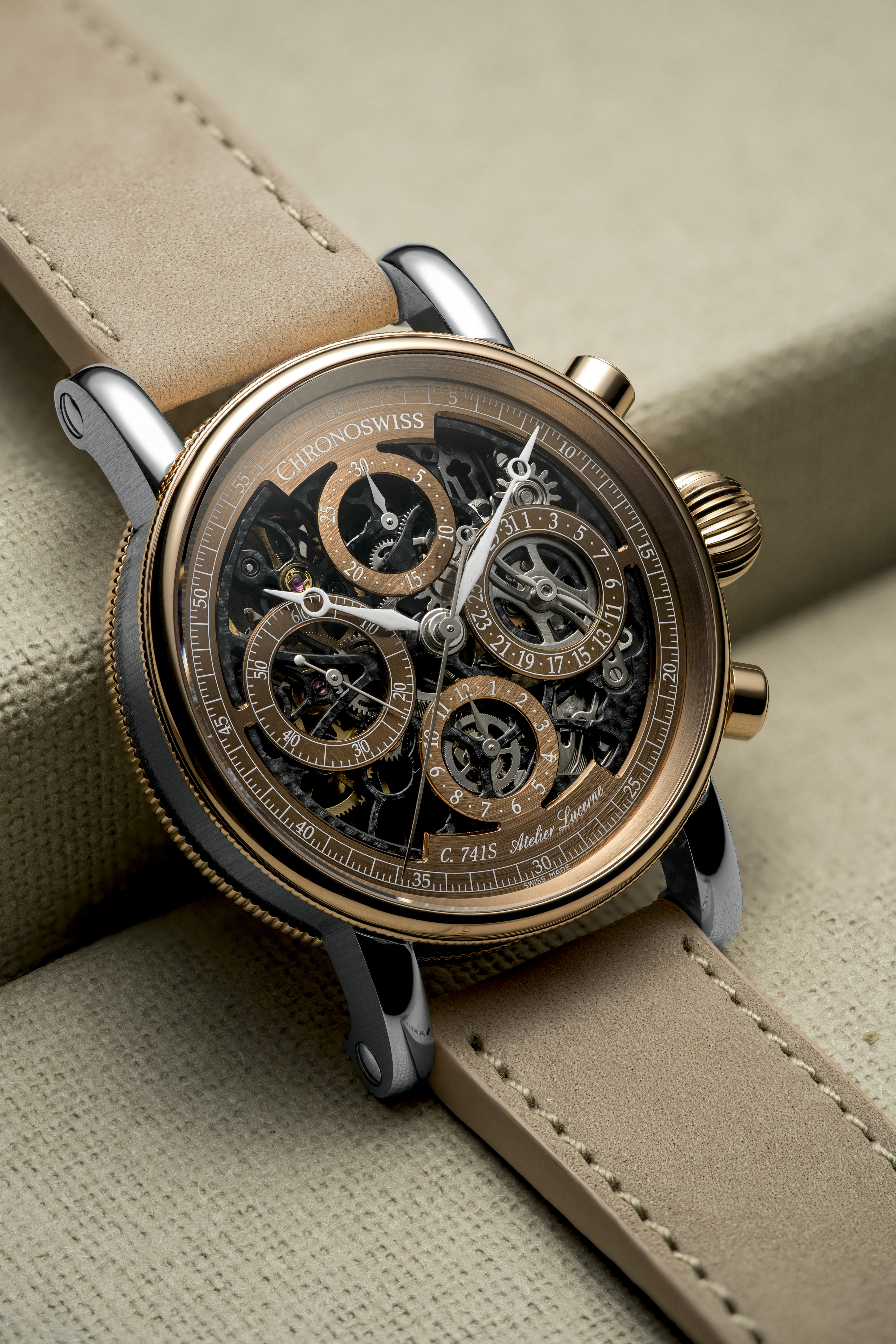
At the heart of the watch beats the Chronoswiss Manufacture Caliber C.741S, a fully skeletonized automatic chronograph movement that transforms every measurement of time into a visual spectacle. Designed for legibility and visual complexity, the central chronograph seconds hand sweeps the openworked dial in harmony with a 30-minute counter at 12 o'clock and a 12-hour counter at 6 o'clock. A running small seconds display at 9 o'clock provides a constant indication of the movement's heartbeat, while a highly unique, analogue pointer date display at 3 o'clock enhances its everyday practicality.

The skeletonized, CVD-coated brown dial draws inspiration from the rich palette of the desert, where warm tones create a composition that is both timeless and adventurous. By exposing the intricate mechanics beneath the surface, every skeletonized bridge, wheel, and component directly contributes to a captivating, mechanical canvas. The hands are crafted in the elegant Breguet Losange shape and rhodium-plated to ensure striking contrast against the dark, galvanic black perlage of the base plate.

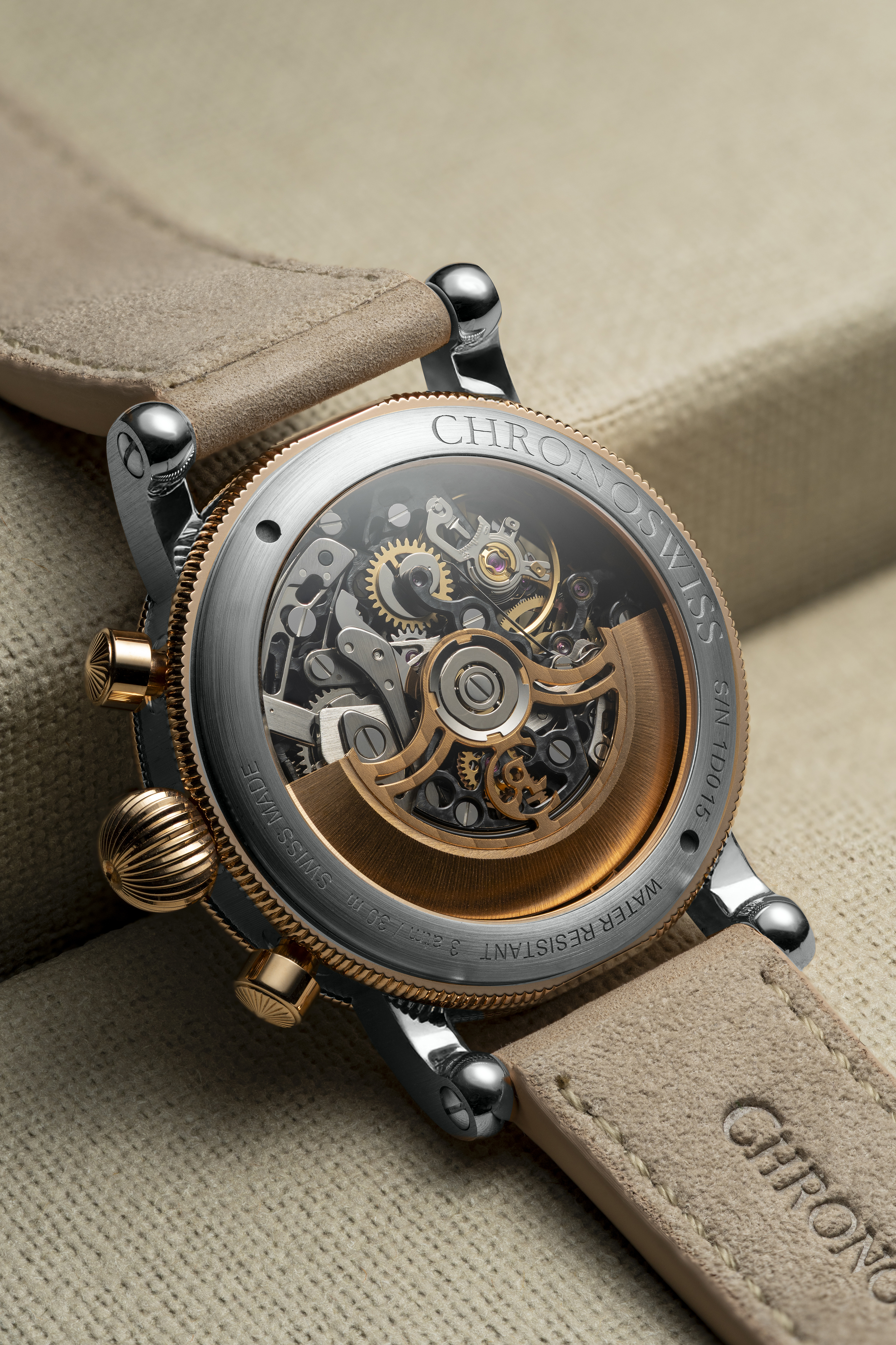
Crafted in solid 23 pieces, the 41mm case features an 18ct red gold bezel with partial knurling, a screw-down case back with a red gold coin-edge ring, and Chronoswiss’s iconic onion crown. The total weight of gold used in this exceptional construction is 21.4 grams. Offering a water resistance of 3 bar (30 meters), the watch is equipped with screw-in lugs utilizing the patented Autobloc system. For over three decades, the Opus collection has embodied the bold spirit of Chronoswiss; the Opus Dakar Sundown brilliantly reimagines this legacy, shaped by craftsmanship and illuminated by one of nature's most spectacular moments.
View Watch Gallery  
Image 1  Image 2 Image 3  Image 4       

Opus Dakar Sundown

Ref. CH-7522.1S-BR

Movement
Caliber Chronoswiss Caliber C.741S, Automatic, Skeletonized
Diameter 30 mm (13 1/4")
Height 7.90 mm
Jewels 25
Power Reserve Approx. 46 hours
Frequency 4 Hz / 28,800 A/h
Balance & Spring Glucydur, three-legged; Nivarox I balance spring
Fine Adjustment Via excenter cam
Shock Protection Incabloc
Special Features Skeletonized and gold plated rotor with Côtes de Genève, ball bearings; polished pallet lever, escape wheel, and screws; skeletonized bridges and base plate with perlage, galvanic black
Case & Exterior
Construction Solid 23-piece case construction; Stainless Steel / 18ct Red Gold; satin finish and polished
Bezel 18ct red gold bezel with partial knurling; curved, double coated anti-reflective sapphire crystal
Case Back Screw-down case back with 18ct red gold coin edge ring, satin finish and sapphire crystal
Crown & Pushers 18ct red gold onion crown; Pushers in 18ct red gold
Dimensions Ø 41 mm; Height: 14.80 mm; Screw-in lugs with patented Autobloc system
Gold Weight Total weight of Gold used: 21.4 g
Water Resistance 3 bar (30 meters)
Strap Sand-colored Nubuck leather strap
Dial & Hands
Display Sweep hours and minutes, running seconds, analogue date, sweep chronograph seconds, 30-minute counter, 12-hour counter
Dial Artistry Skeletonized, brown CVD-coated dial
Hands Breguet Losange shape, rhodium plated

Related Articles

AUGUST 19 2025    |    Novelties

Timeless Precision: Greubel Forsey’s QP Balancier Redefines the Perpetual Calendar

Greubel Forsey proudly unveils the QP Balancier, a revolutionary interpretation of the perpetual calendar that merges intuitive functionality with uncompromising chronometric performance. Limited to just 22 pieces in white gold, this timepiece represents a new pinnacle in haute horlogerie.

At the heart of the QP Balancier lies Greubel Forsey’s patented Mechanical Computer, a 25-part mechanical brain that “understands” the rules of the Gregorian calendar. This innovation allows the watch to adjust instantly in either direction, restart flawlessly after months unwound, and remain programmed until February 28, 2100—all without the need for pushers or complex crown positions.

The QP Balancier integrates 12 indications—including hours, minutes, seconds, power reserve, day, date, month, leap year, day/night, 24-hour display, calendar year, and a patented function selector—into a single crown interface. This makes it the most user-friendly perpetual calendar ever created, eliminating the need for manuals or reset tools.

Aesthetically, the watch is a study in purity and harmony. Its multi-level gold dial presents calendar information in a clear, linear format, flanked by leap year and day/night indicators. The tactile feedback during quick-correction mode offers a unique sensory connection between wearer and mechanism.

Housed in a 45.1 mm white gold case, the QP Balancier features Greubel Forsey’s signature 30° inclined balance wheel, a high-mass, variable-inertia system with gold mean-time screws. The movement comprises 612 hand-finished components, including twin fast-rotating barrels that deliver a 72-hour chronometric power reserve.

With the QP Balancier, Greubel Forsey has not only redefined the perpetual calendar—it has perfected it.
 

View Watch Gallery  
Image 1  Image 2 Image 3  Image 4  
View More
NOVEMBER 12 2025    |    Novelties

Neo Digiteur: Chronoswiss Revives the Mechanical Digital Icon

Chronoswiss proudly unveils the Neo Digiteur, a bold reinvention of an icon that first challenged convention two decades ago. Originally introduced in 2005 by founder Gerd-Rüdiger Lang, the Digiteur was a mechanical digital timepiece—a watch without hands—that defied expectations and celebrated horological artistry. Today, the Neo Digiteur returns sharper, stronger, and more modern than ever, crafted in stainless steel and infused with the pioneering spirit of its predecessor.

The design is architectural and tailored, with a rectangular case measuring 48 by 30 millimeters. Its sculptural lines are accentuated by sandblasted and polished finishes, while a reimagined onion-style crown ensures both elegance and ergonomics. At its heart lies a rare complication: a jumping hour regulator without hands. Time is displayed through three apertures—the jumping hour at twelve o’clock, digital minutes at center, and running seconds at six o’clock—creating a mechanical digital regulator that feels futuristic yet deeply analog.

Powering this display is the hand-wound Chronoswiss Caliber C.85757, beating at 3 Hz and offering a 48-hour power reserve. Developed entirely in-house, the movement features artisanal details such as hand-guilloché bridges and a sapphire crystal caseback that pays tribute to historic Fleurier calibers. Two limited editions express distinct personalities: Neo Digiteur Granit with an anthracite dial and Neo Digiteur Sand with a warm 4N sandblasted finish. Each version is limited to just 99 pieces, making the Neo Digiteur not a reproduction, but a true reinvention—a collector’s piece and a statement of mechanical artistry.

View Watch Gallery  
Image 1  Image 2  Image 3  Image 4
View More
NOVEMBER 11 2025    |    Novelties

Moritz Grossmann Presents the PERPETUAL CALENDAR

To celebrate 17 years since its rebirth in 2008, Moritz Grossmann unveils a horological milestone: the PERPETUAL CALENDAR. This grand complication embodies the brand's philosophy of timeless precision, combining traditional craftsmanship with modern innovation.

The PERPETUAL CALENDAR is engineered to automatically account for the varying lengths of months and leap years, requiring no manual correction until the year 2100. This makes it one of the most technically demanding and revered complications in fine watchmaking.

The dial is a study in symmetry and clarity. A full 1–31 date scale encircles the dial, with a cup-shaped indicator framing the current date. The month and weekday are displayed on subdials at 3 and 9 o'clock, decorated with Azurage finishing. Leap year and day/night indicators are integrated into the subdials. At 12 o'clock, a poetic moon phase display features a mother-of-pearl moon gliding across a goldstone sky.

At the heart of the watch is the newly developed Calibre 101.13, a hand-wound movement based on the 100.1 calibre with an added perpetual calendar module. It comprises 401 components — 211 for the calendar module and 190 for the base movement. The movement features optimised stopwork, an integrated manual winder, and an escape wheel bearing in the barrel bridge. The finishing adheres to traditional Glashütte standards, with untreated German silver plates, raised gold chatons, and hand-engraved details.

All calendar functions can be adjusted via recessed correctors on the case, operated with a dedicated tool. A sum corrector allows for quick synchronization of all indicators after periods of inactivity.

The PERPETUAL CALENDAR is available in three elegant variants: rose gold with argenté dial (Ref. MG-003906), rose gold with anthracite dial (Ref. MG-003907), and platinum with argenté/anthracite dial (Ref. MG-003904). Each model is paired with a hand-stitched dark brown alligator leather strap and a matching prong buckle.

Moritz Grossmann continues to honour its namesake's 19th-century legacy with a commitment to "Schönstes deutsches Handwerk" — the finest German craftsmanship. The PERPETUAL CALENDAR is a testament to this enduring vision, offering collectors a timepiece that is as poetic as it is precise.


View Watch Gallery
Image 1 Image 2Image 3 Image 4
View More
AUGUST 13 2025    |    Novelties

The Golden Era Begins: Mirrored Force Resonance in Rose Gold

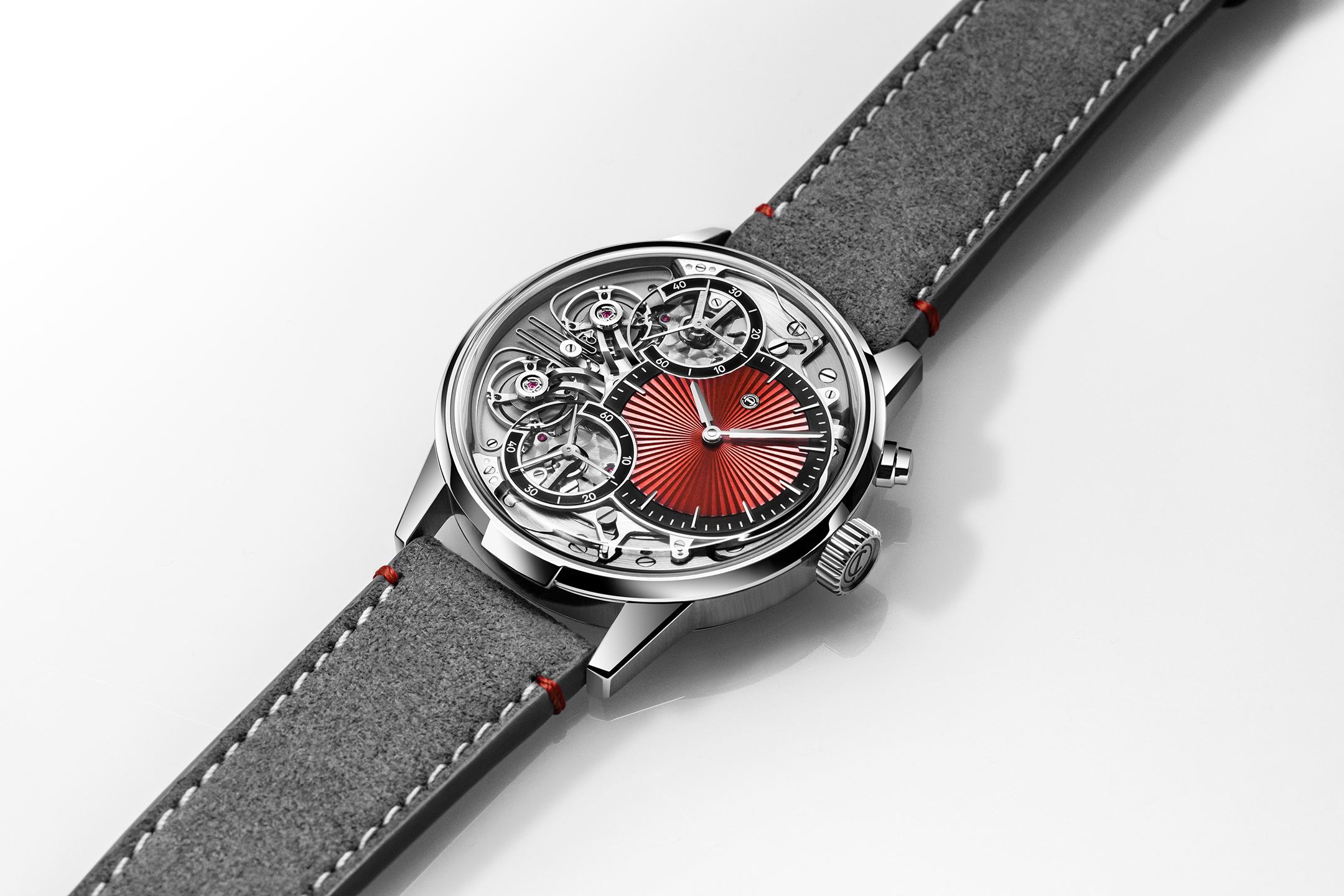
Armin Strom proudly unveils a new expression of its horological mastery with the launch of the Mirrored Force Resonance in 18K Rose Gold. This limited edition marks a significant milestone for the brand’s most iconic timepiece, blending technical innovation with timeless elegance.

A First in Rose Gold

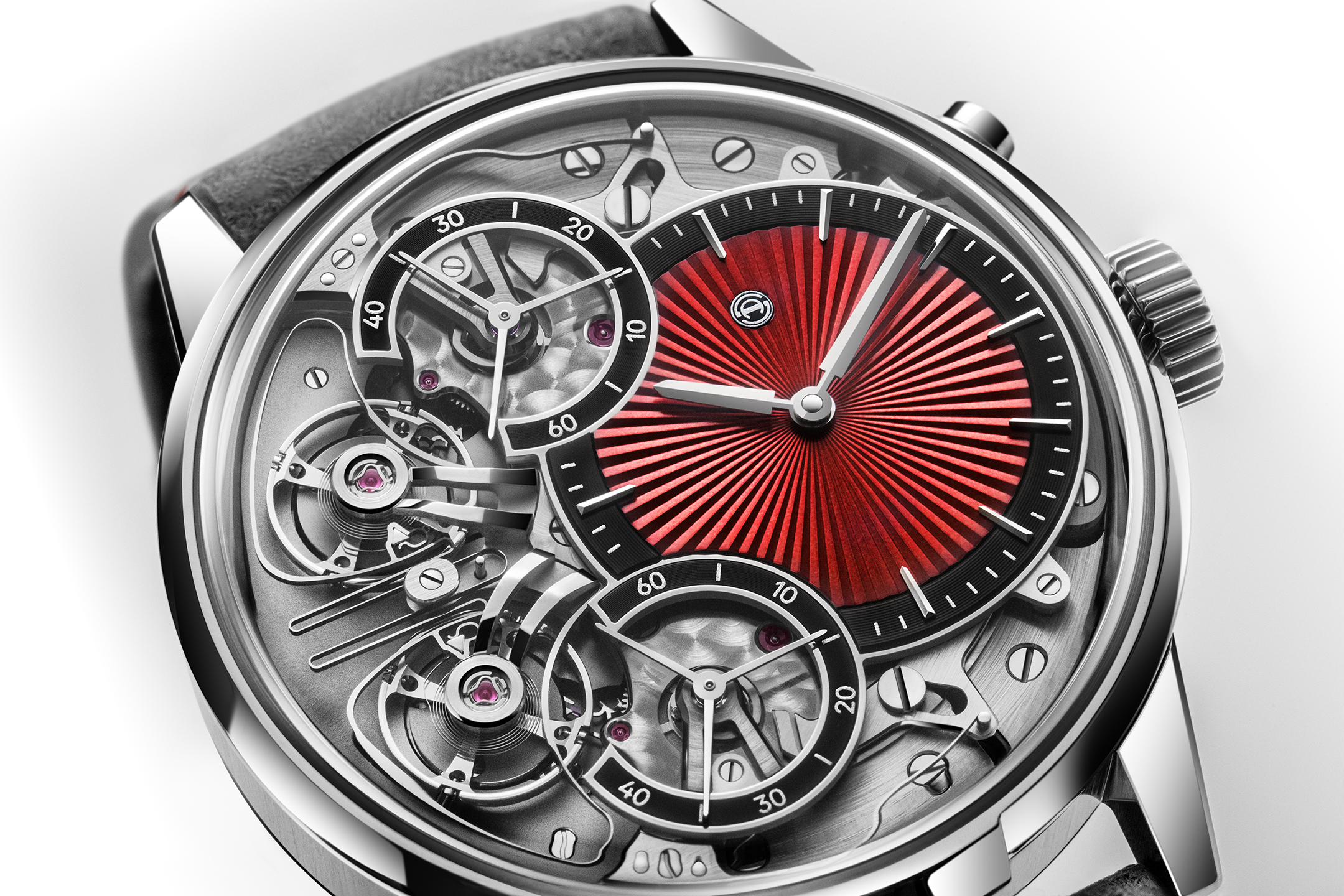
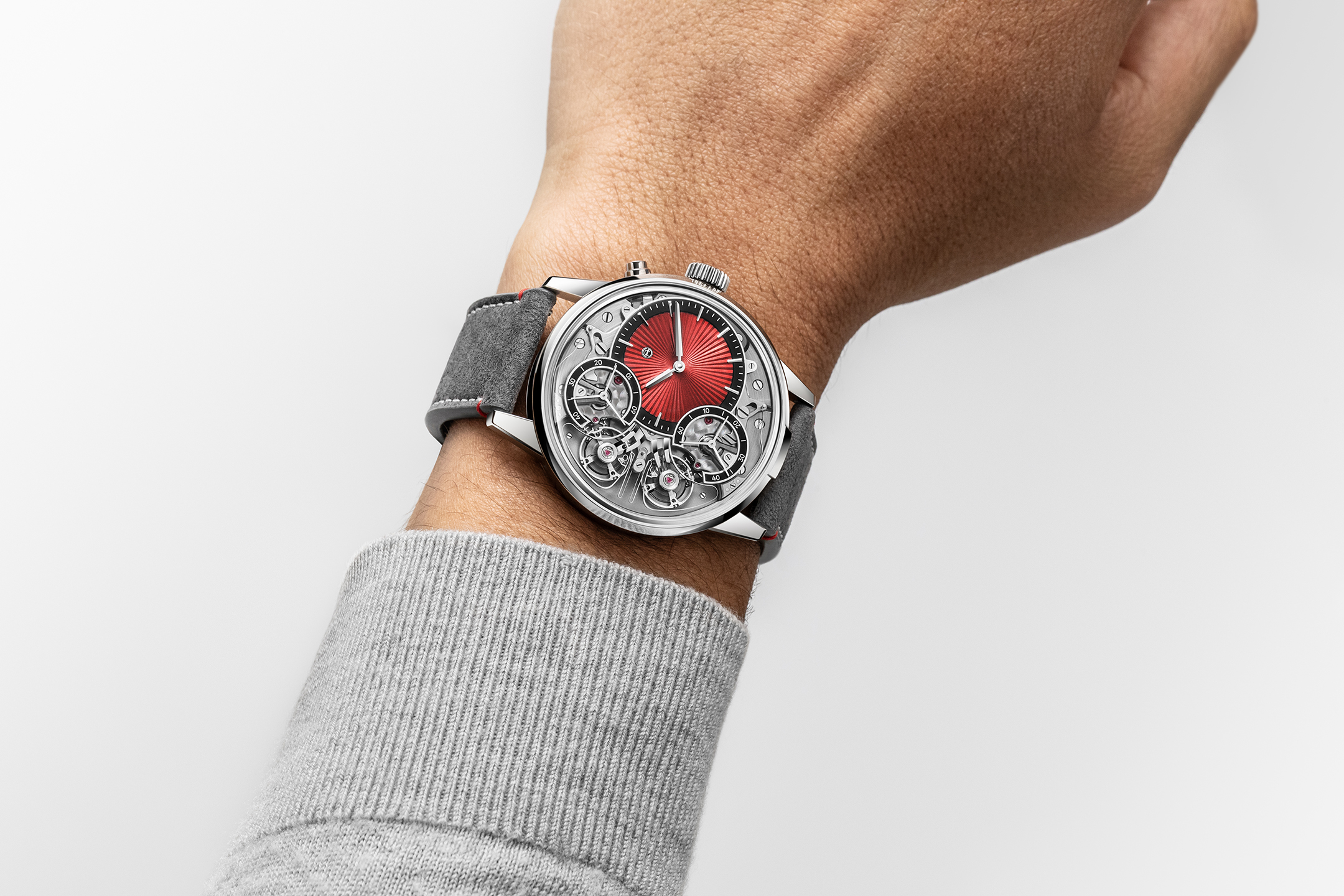
For the first time, Armin Strom’s signature case is crafted from 18K rose gold, offering a warm and luxurious aesthetic. The 43 mm case features alternating brushed and polished finishes, enhancing its sculptural presence. Beneath the sapphire crystal, a bold black off-centre dial showcases a handcrafted sunray guilloché pattern, created using a traditional rose engine lathe. A chapter ring with circular finishing adds depth and texture, while a dark grey Alcantara strap completes the refined look.

Resonance Engineered for Performance

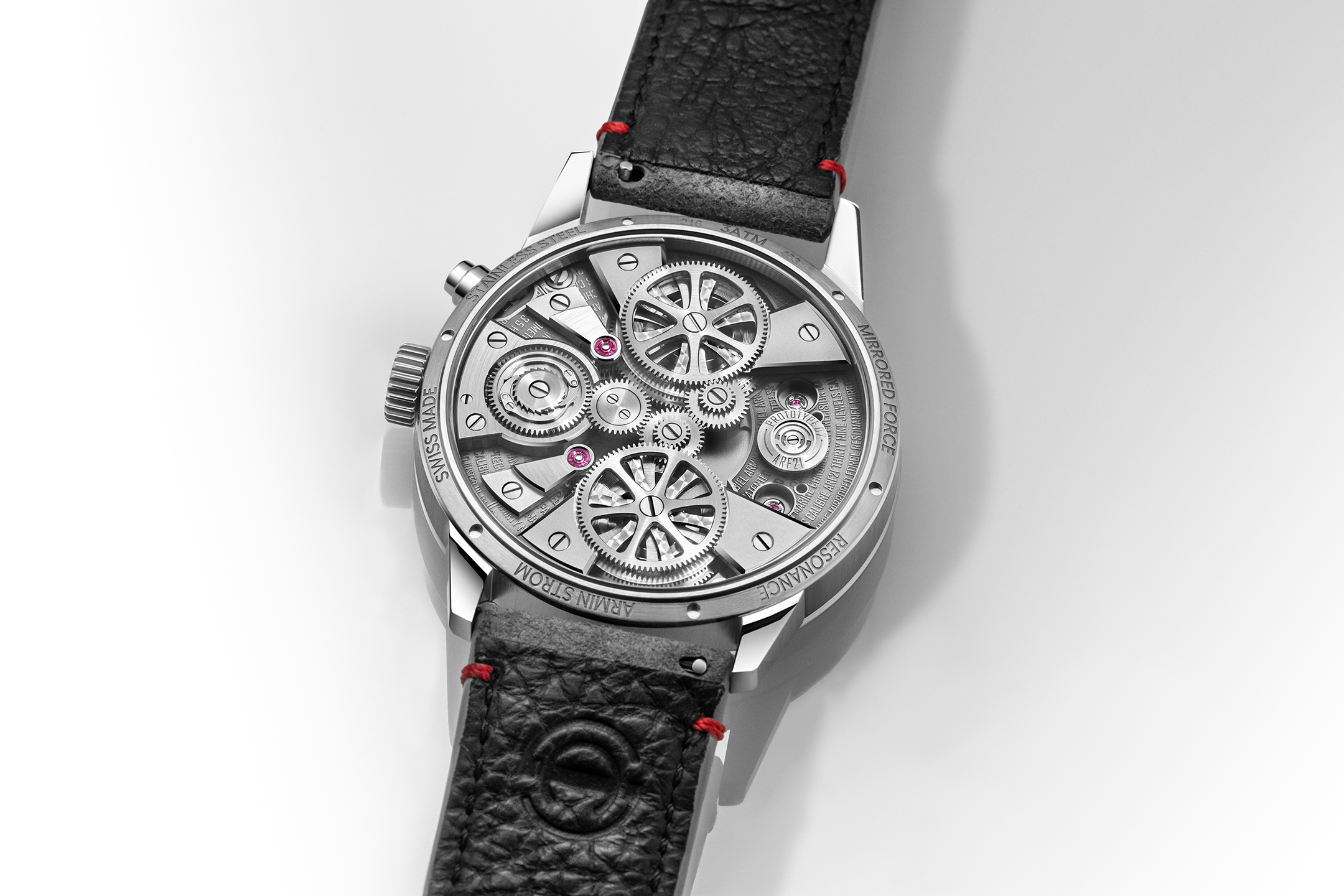
At the heart of this timepiece lies the Caliber ARF21, a manually wound movement that exemplifies Armin Strom’s pioneering work in resonance watchmaking. The patented Resonance Clutch Spring synchronizes two independent balance wheels, enhancing precision and chronometric stability. A pusher at 2 o’clock resets the twin seconds counters, offering a visual demonstration of the resonance mechanism’s accuracy.

Craftsmanship Without Compromise

Every surface of the movement is meticulously hand-finished, visible through sapphire crystals on both sides of the case. Techniques such as hand-beveling, black polishing, perlage, and circular graining highlight Armin Strom’s commitment to haute horology. Each watch is assembled twice to ensure mechanical integrity and flawless finishing.

Limited Edition of 15 Pieces

This exclusive release is limited to just 15 pieces, each priced at CHF 88,000. It represents a rare opportunity to own a timepiece that embodies both technical brilliance and artisanal beauty.
A Statement from Claude Greisler

“The introduction of an 18-karat rose gold case marks a significant milestone for the Mirrored Force Resonance series. This choice of material not only enhances the aesthetic appeal but also underscores our commitment to offering a diverse range of options to our clientele,” said Claude Greisler, Co-Founder and Master Watchmaker at Armin Strom.

View Watch Gallery


Image 1


Image 2  
View More
MARCH 24 2025    |    Watches and Wonders 2025

Constant Force Tourbillon 11, yellow gold edition - A celebration of watchmaking ingenuity

The 41.5 mm diameter Constant Force Tourbillon 11 watch in 18-carat yellow gold, released by Arnold & Son as a limited edition of 11, is driven by a hand-wound mechanical movement. Equipped with two barrels to give a 100-hour power reserve, this timepiece was entirely developed and built at the manufacture in La Chaux-de-Fonds. It is fitted with a constant force mechanism visible on the enamel dial and is regulated by a tourbillon that can be seen on the back. The architecture of this calibre is inspired by that of the timekeeping instrument driven by the first tourbillon created by Abraham-Louis Breguet in 1808, based on a chronometer movement designed by John Arnold. This first tourbillon regulator, now in the British Museum, was given to John Roger Arnold by the Paris-based watchmaker in honour of his scientific collaboration and friendship with his father. The Constant Force Tourbillon 11 timepiece, designed to mark the end of the 260th anniversary celebrations of John Arnold’s legacy, pays tribute to the watchmaker’s ingenuity and his close association with Abraham-Louis Breguet.

The greatest watchmakers of the Age of Enlightenment often knew each other. Some of them exchanged views and appreciated each other despite language barriers and political obstacles. And this was the case with John Arnold and Abraham-Louis Breguet. These two watchmakers, undoubtedly the most productive of the second half of the 18th century, forged a friendship that nothing could shake, not even the throes of war between the two countries or the French Revolution. Aware of their respective talents, during Abraham-Louis Breguet’s frequent trips to London between 1789 and 1791, they shared their views and knowledge of the principles of timekeeping, furthering the science of timekeeping, which in their eyes definitely knew no frontiers.

View More
ENDLESS DISCOVERY IN YOUR INBOX
Join our mailing list to receive insider updates on our latest collections, invites to private events, and other personalized offerings.