No data.
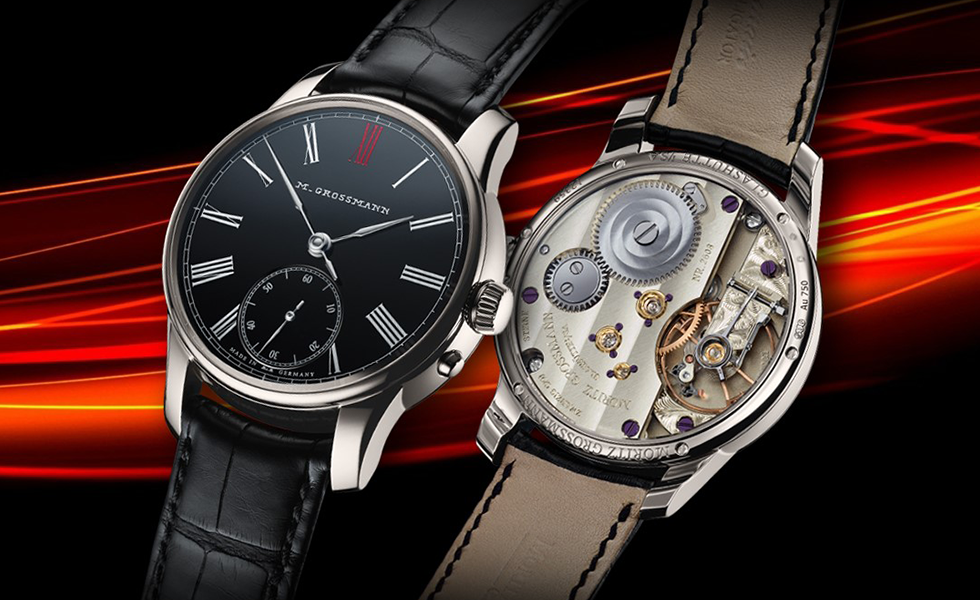
Black is the absence of light. This is the physical definition of a colour that is synonymous with classicism and elegance. At Moritz Grossmann, black is used to form stylish contrasts and also serves as a testament to the highest standards of craftsmanship. The limited-edition ENAMEL ROMAN Vintage, for example, has an enamel dial whose manufacture presents multiple challenges. With this, Moritz Grossmann has chosen the occasion of its 16th birthday to once again shine the spotlight on the expertise of the ateliers and workshops in Glashütte.
Tradition requires renewal, otherwise it remains stagnant in the past and cannot survive. This is an approach that Moritz Grossmann has embodied since 2008: the manufactory opened 16 years ago as a tribute to one of the most exceptional personalities in the history of watchmaking in Glashütte. Moritz Grossmann was an innovative watchmaker and, with the founding of the German Watchmaking School in Glashütte, influenced a generation of artisans.
His values and vision now live on in the Moritz Grossmann manufactory, which crafts a small but exquisite collection of sophisticated watches that always remain true to the standards of the man who gave the manufactory its name. Characteristics of these timepieces include exclusive manufactory movements with innovative details that are designed, made and finely decorated in-house in the company’s own workshops. The highest of standards also come into play when finishing the watches, as impressively demonstrated by the special model marking the 16th anniversary of the manufactory.
ENAMEL ROMAN Vintage: contemporary craftsmanship honouring the 16th anniversary of the manufactory
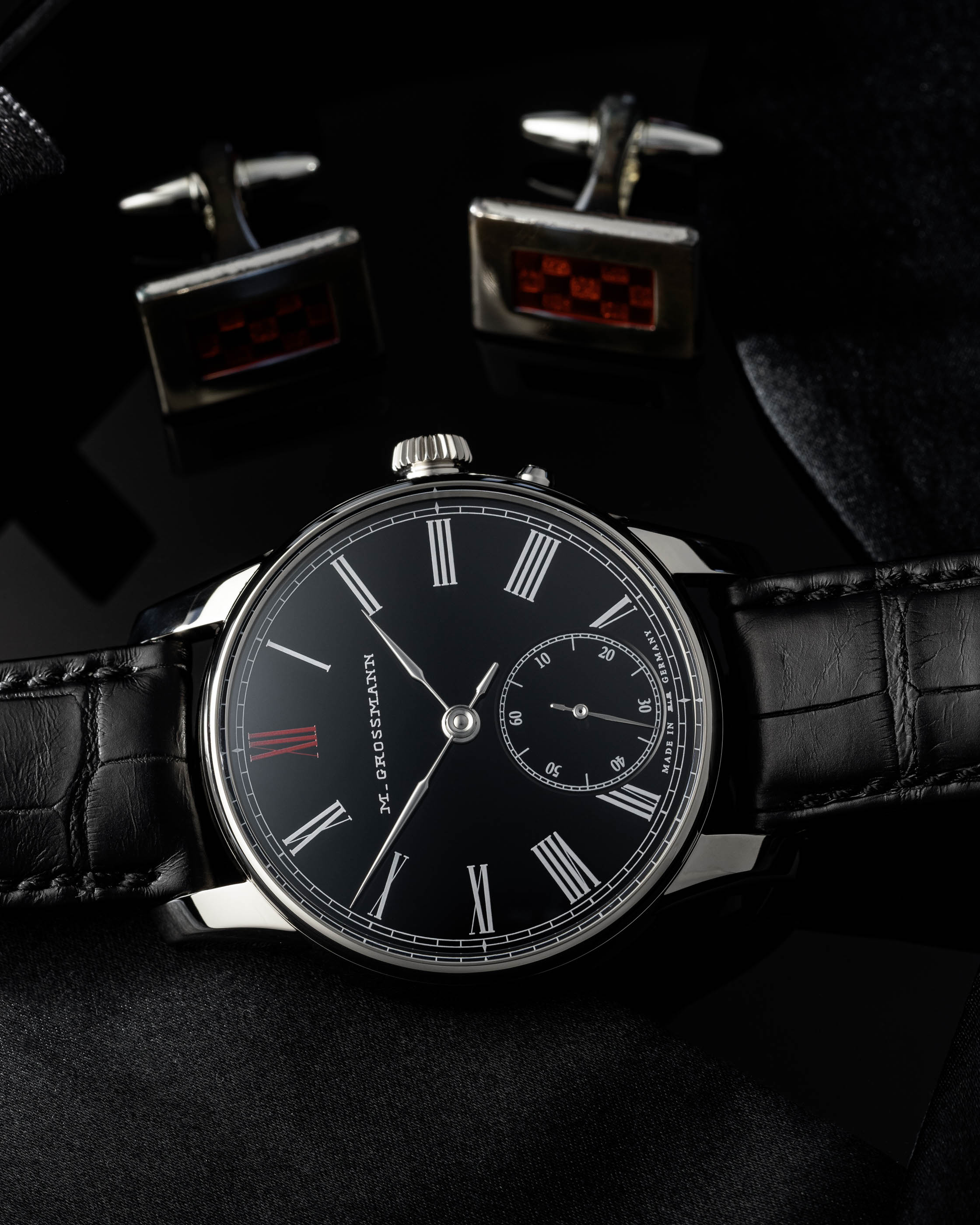
The ENAMEL ROMAN Vintage, which is limited to eight pieces, serves as a contemporary interpretation of the company's philosophy: its theme is the contrast between black, white and red, which brings the art of watchmaking as cultivated by Moritz Grossmann into the modern age.
The deep, perfect shade found on the dial draws the eye. It is rooted in the technique of enamelling, an ancient craft. The oldest known enamels date from the centuries before Christ, when artistic enamels were already being used by people in East Asia and the ancient Egyptians. Later, the art of enamelling experienced a heyday in Byzantium and also in Europe. Even early on, people marvelled at enamel because of its colourfulness, beauty and radiance, and later it was prized for its characteristics, including durability, the fact that it does not age, is smooth and has a fine yet subtle sheen.
As pocket watches started to be made, enamel gained in importance when it came to the production of dials. Its use spread to Saxony, where the art of enamelling was cultivated in gold and silversmithing. In the 17th and 18th centuries, for example, Georg Friedrich Dinglinger, a brother of the well-known Dresden court goldsmith Melchoir Dinglinger, produced some impressive works. Both artists worked under the patronage of Augustus the Strong, Elector of Saxony and King of Poland. Works of art from their workshops can today be admired at the Grünes Gewölbe in Dresden.
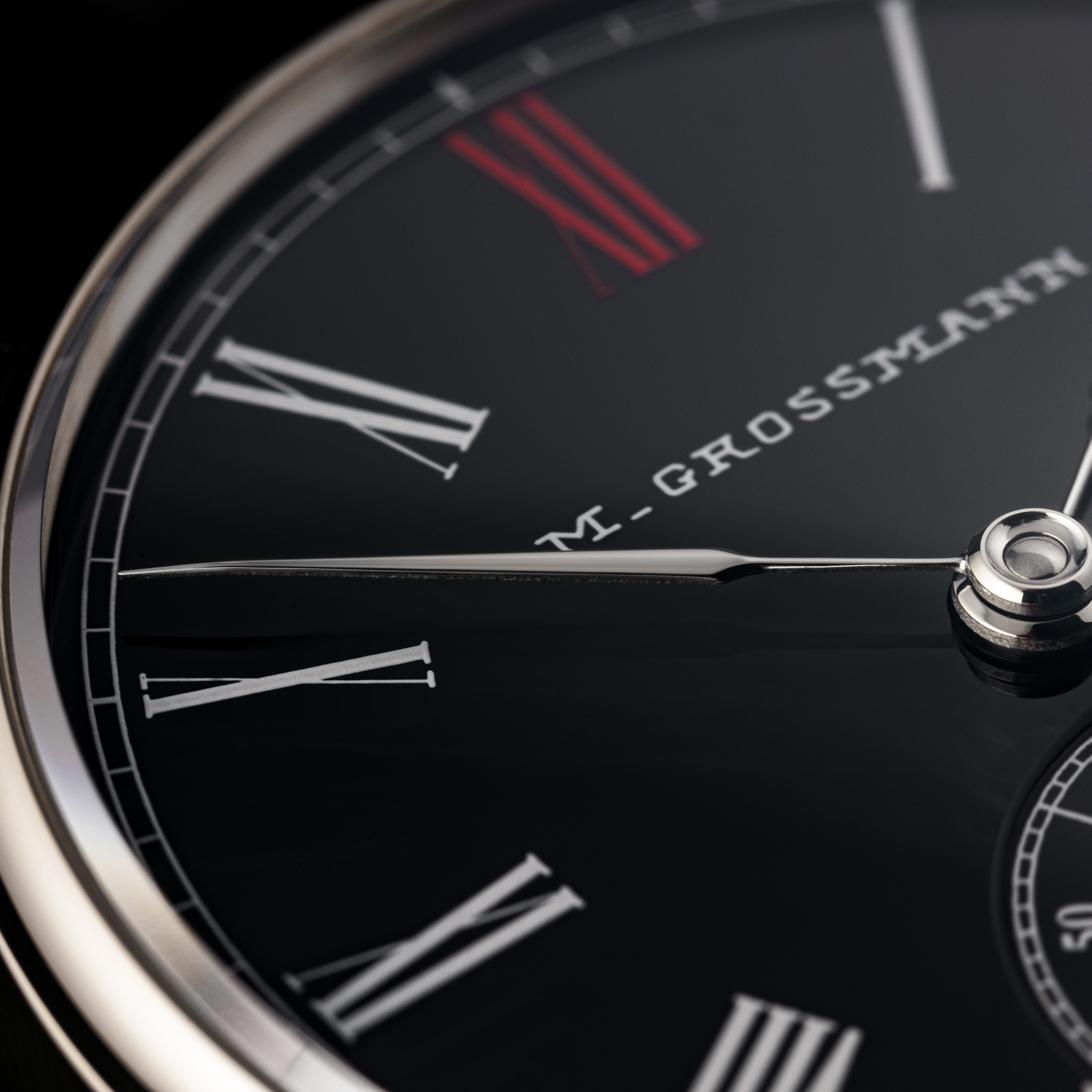
The art of enamelled dials
With the renaissance of the mechanical watch, the enamel dial has gained admirers once again. It is treasured not only for its beauty, but also because people are now aware of what is involved in its creation, a complex process that requires much skill. Enamel is formed from glass and other additives. The enamel granules are pulverised, with metal oxides or ceramic pigments lending them their colour. The enamel is then sieved while dry or applied to a dial blank as part of a blend of enamel powder, water and glue. Following the first round of firing and cooling, enamel powder is once again applied to the front and it is fired again. This process of firing, applying enamel powder and firing again is repeated several times.
Layer by layer, this creates a uniform, shiny surface that can be printed with numerals or indices following the final firing. The finished dial is impressively durable: there are no time limits on enamel and it can last for a thousand years.
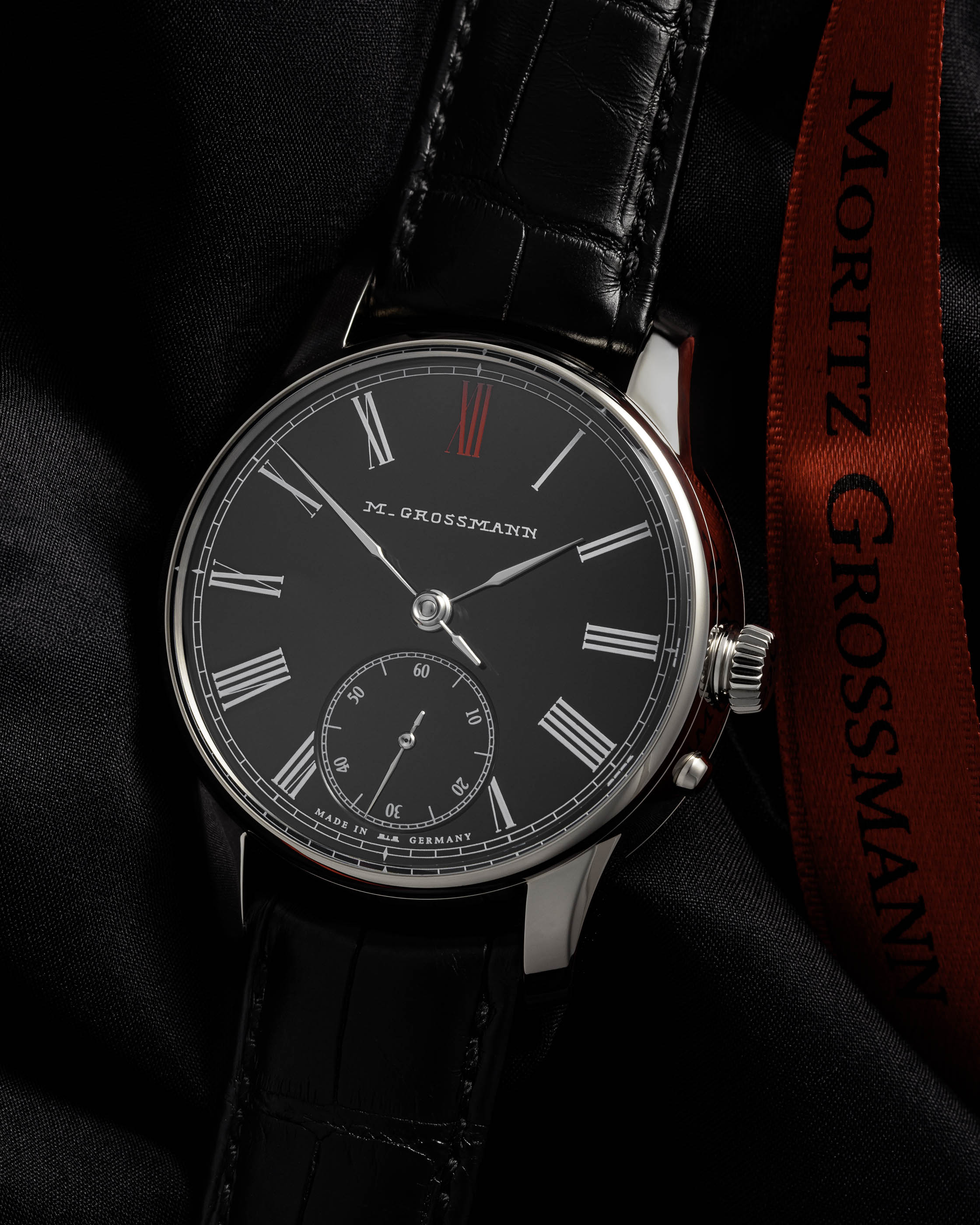
Approximately 90 steps are involved in creating a single dial for Moritz Grossmann
This is the tradition that gave rise to the enamel dial on the ENAMEL ROMAN Vintage by Moritz Grossmann. And this technique was not just used for the colour black, but the numerals, scales and lettering, such as the historic ‘M. Grossmann’ logo, are also made from enamel. These are applied using pad printing and then fired.
In all, around 90 steps are required to complete a single dial. These take several days to complete and at every single stage, there is a risk that the enamel will crack on firing, bubbles will form or the surface will flake. Only a dial that is perfect in every single way will eventually be used in a Moritz Grossmann watch. In such watches, it serves as the canvas for time, above which polished steel hands circle with their finely pointed tips.
The deep black of the dial is a reminder of the power of colour. The perfectly smooth surface is so still that you feel you could dive straight into it. This effect is underpinned by the slimline, finely drawn Roman numerals that contrast sharply with their clear white and the red XII. A simple case in white gold provides the perfect backdrop, with the sides merging seamlessly into the case horns. The transparent case back offers an unrestricted view of a movement that is perfection itself, matching the finish in every detail.
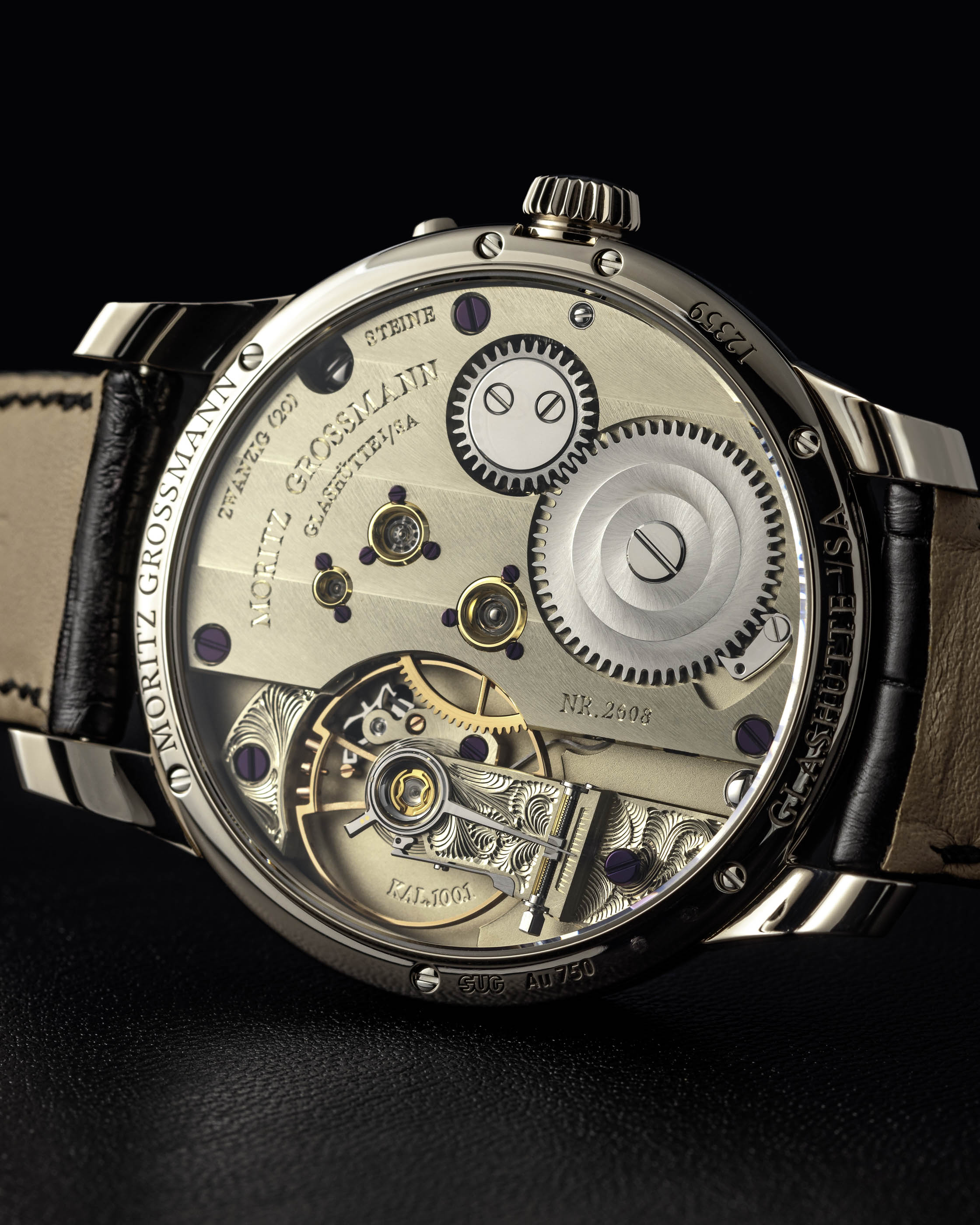
The art of watchmaking from Glashütte: the calibre 100.1
The inside of the ENAMEL ROMAN Vintage is home to the calibre 100.1, a pillar movement with well-proportioned components made from untreated German silver in a high-quality finish. The characteristic 2/3 plate with broad, horizontal ribbing has been signed by a hand engraving. It has a curved cut-out that reveals the distinctive Grossmann balance, held by a stepped, hand-engraved balance cock with the typical fine micrometer screw.
Another special feature of the manufactory movement is the perfected hand setting mechanism, which eliminates two potential problem areas: avoiding the ingress of foreign particles during the adjustment process and altering the hands unintentionally when pushing the crown back into place.
With a short pull on the winding crown, the mechanism switches to hand setting and stops the movement at the same time. The crown immediately returns to its original position, where the hands can now be precisely adjusted. The movement is then restarted using a pusher situated below the winding crown. This simultaneously resets the mechanism to its winding function.
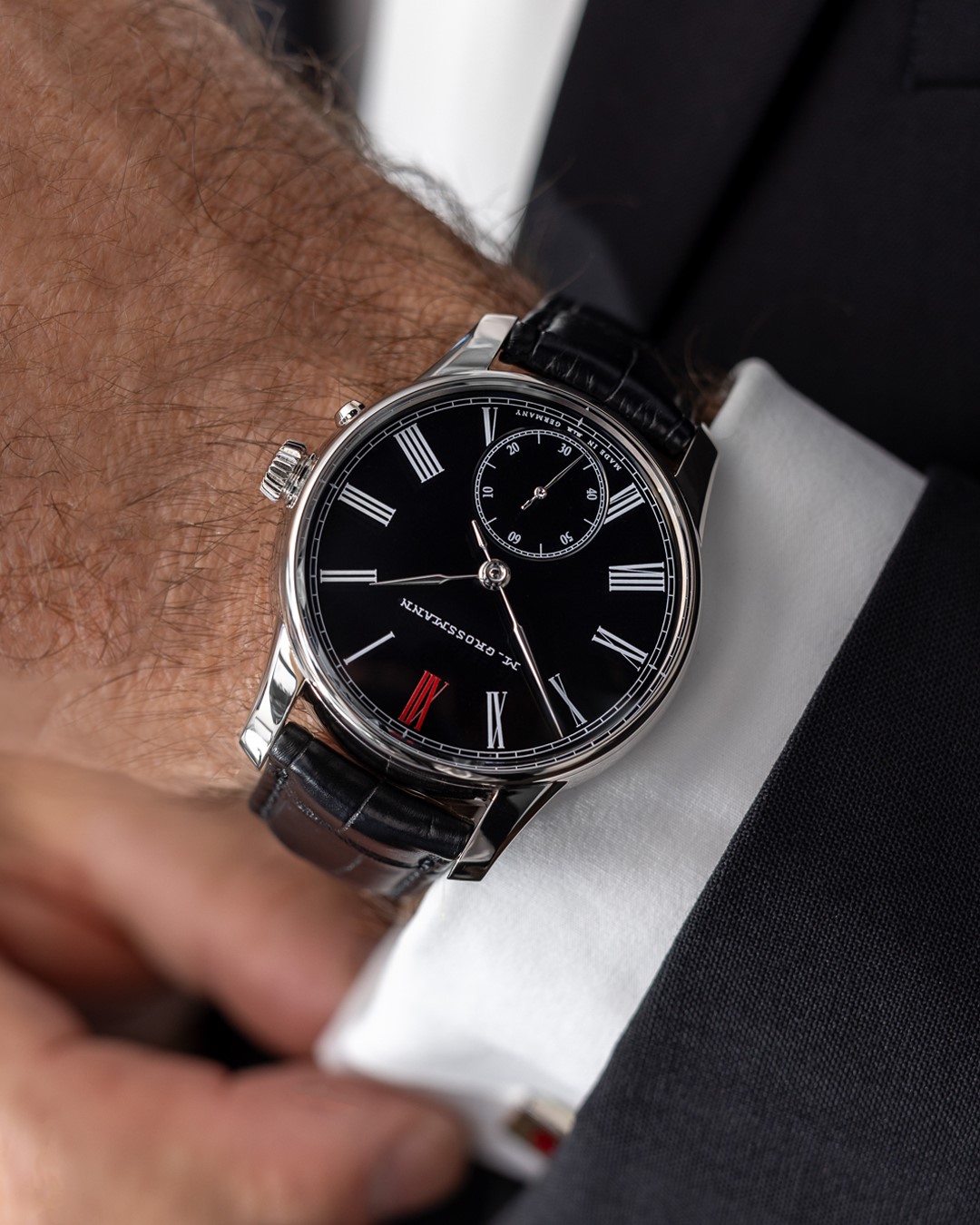
Exclusive special edition
The ENAMEL ROMAN Vintage in honour of the 16th anniversary of the manufactory has a case in white gold, worn on a black alligator leather strap. This special model is limited to eight pieces.
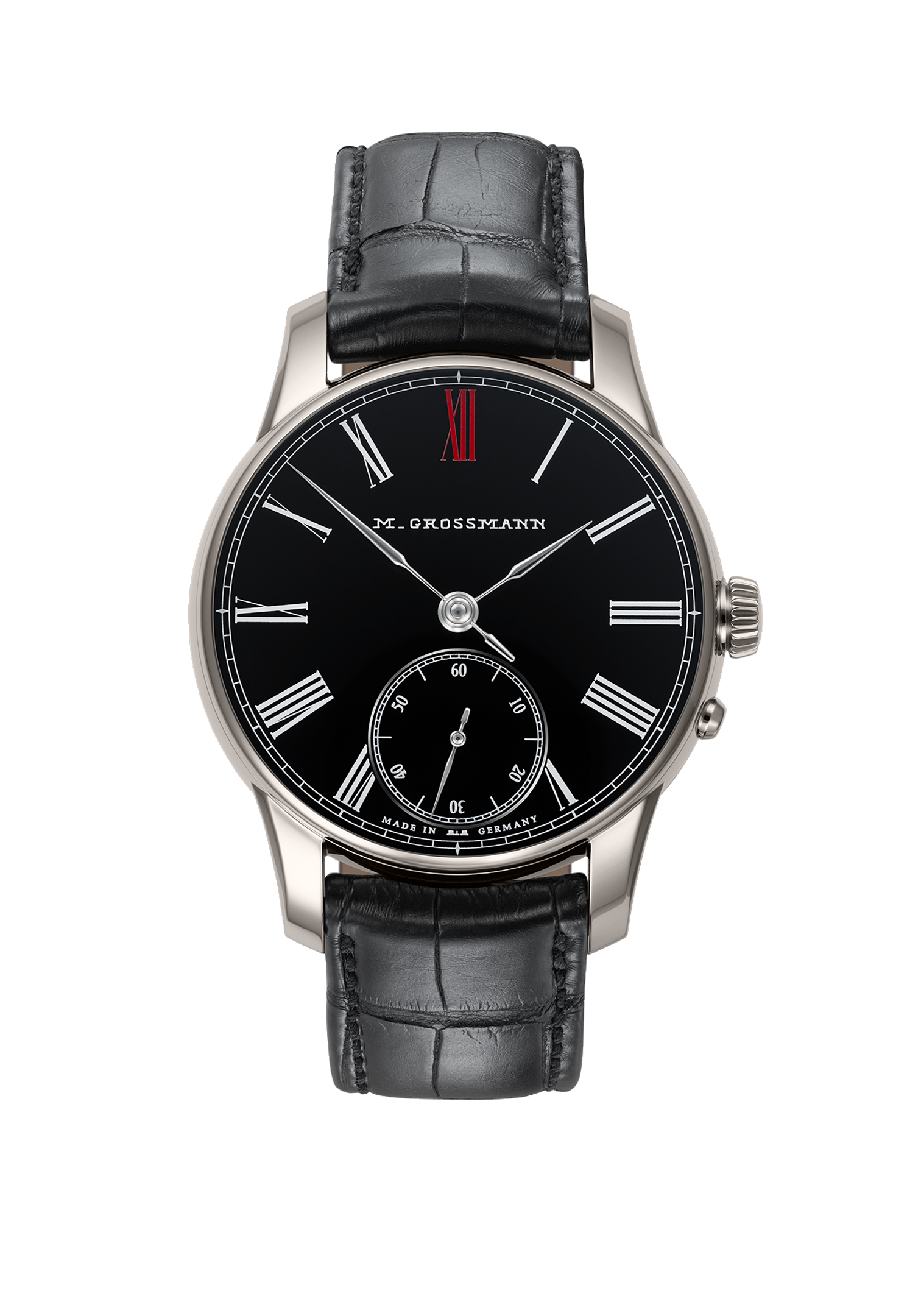
Enamel Roman Vintage
Technical Data
| Version | Limited Edition of 8 pieces | |
| Reference | MG-003717 | |
| Movement | Manufactory calibre 100.1, manual winding, regulated in five positions | |
| No. of parts | 198 | |
| Jewels | 20 jewels, of which 3 in screwed gold chatons | |
| Escapement | Lever escapement | |
| Oscillator | Shock-resistant Grossmann balance with 4 inertia screws and 2 poising screws, Nivarox 1 balance spring with No. 80 Breguet terminal curve, Gustav Gerstenberger geometry | |
| Balance Diameter | 14.2 mm, frequency 18,000 semi-oscillations per hour | |
| Power reserve | 42 hours when fully wound | |
| Functions | Hours and minutes, subsidiary seconds with stop second, Grossmann manual winder with pusher | |
| Special features | Grossmann balance; hand setting override and start of movement with lateral pusher; space-saving modified Glashütte stopwork with backlash; adjustment with Grossmann micrometer screw on cantilevered balance cock; pillar movement with 2/3 plate and pillars made of untreated German silver; hand-engraved 2/3 plate, balance cock and escape-wheel cock hand-engraved; broad horizontal Glashütte ribbing; 3-band snailing on the ratchet wheel; raised gold chatons with pan-head screws; separately removable clutch winding mechanism; stop seconds for hand setting | |
| Operating elements | Crown in 750/000 gold , to wind the watch and set the time, pusher in 750/000 gold to start the movement | |
| Case dimensions | Diameter: 41.0 mm, height: 11.35 mm | |
| Movement dimensions | Diameter: 36.4 mm, height: 5.0 mm | |
| Case | Three-part, precious metal | |
| Dial | Enamel, Roman numerals in white, XII in red | |
| Hands | Manually crafted, polished steel | |
| Crystal/display back | Sapphire crystal, antireflective coating on one side | |
| Strap | Hand-stitched alligator leather with prong buckle in precious metal |