Shopping Cart

Opus Dakar Sundown: A Two-Tone Symphony of Desert Sunset and Fine Skeletonized Horology

JULY 03 2026    |    Novelties

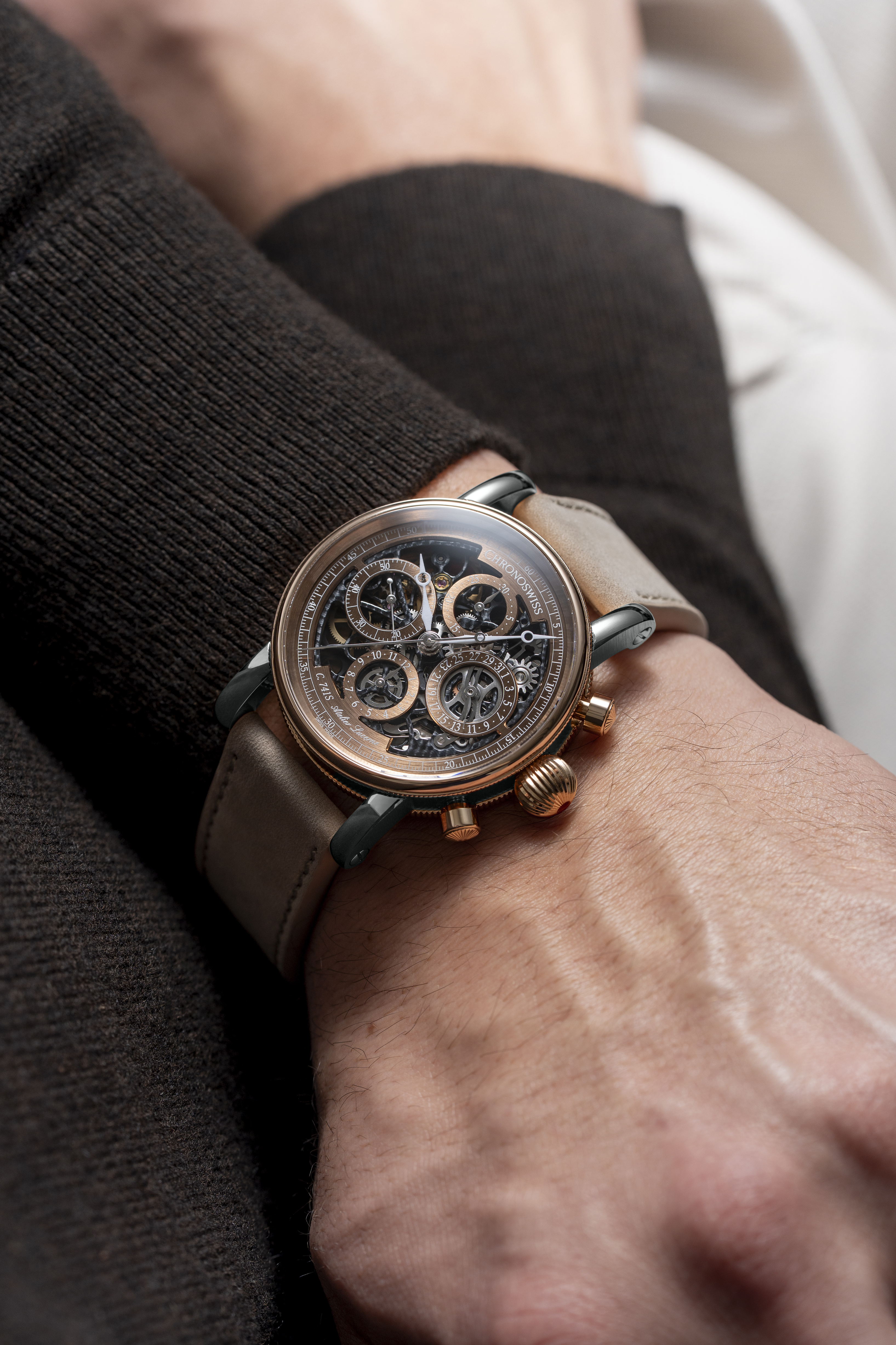
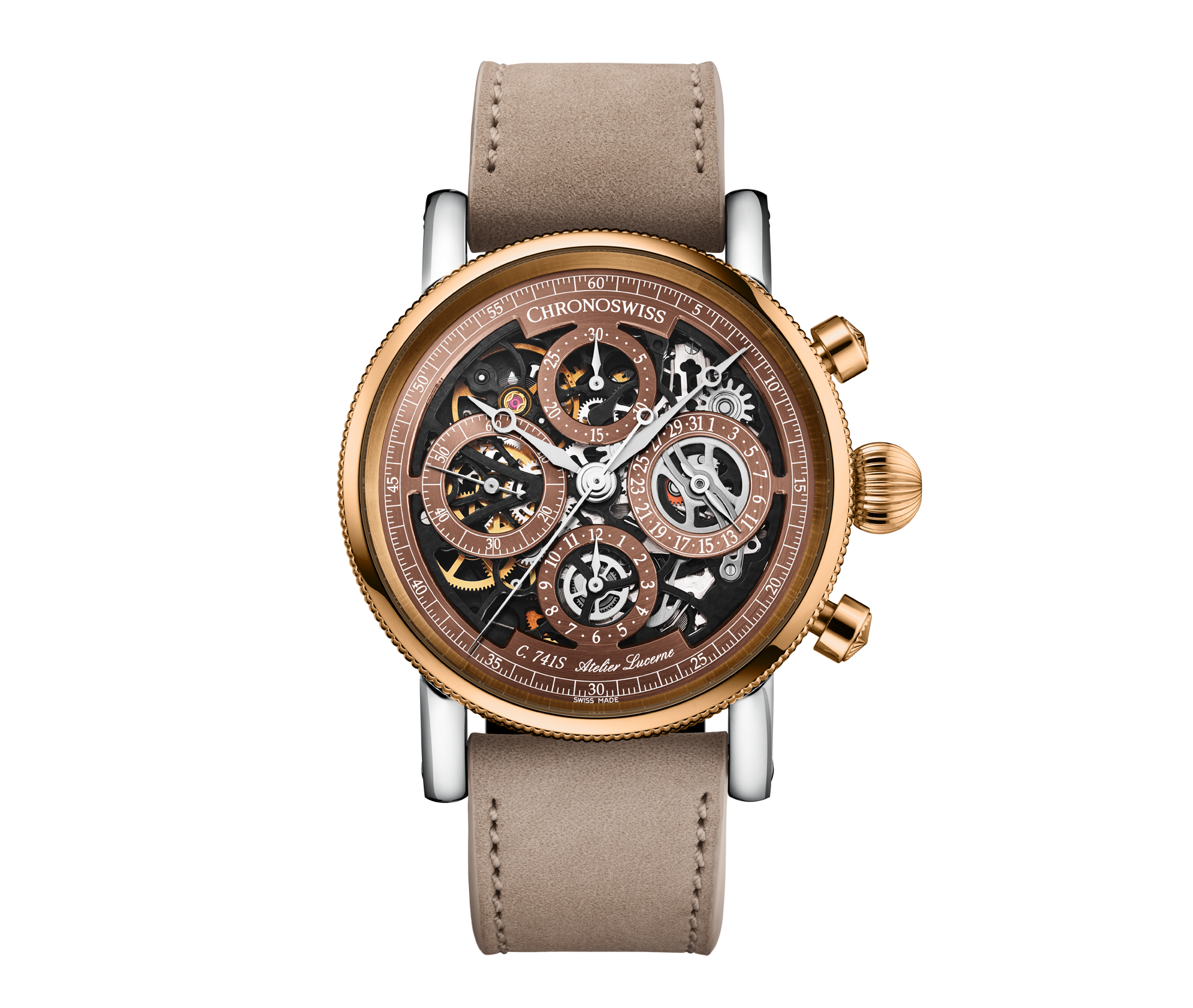
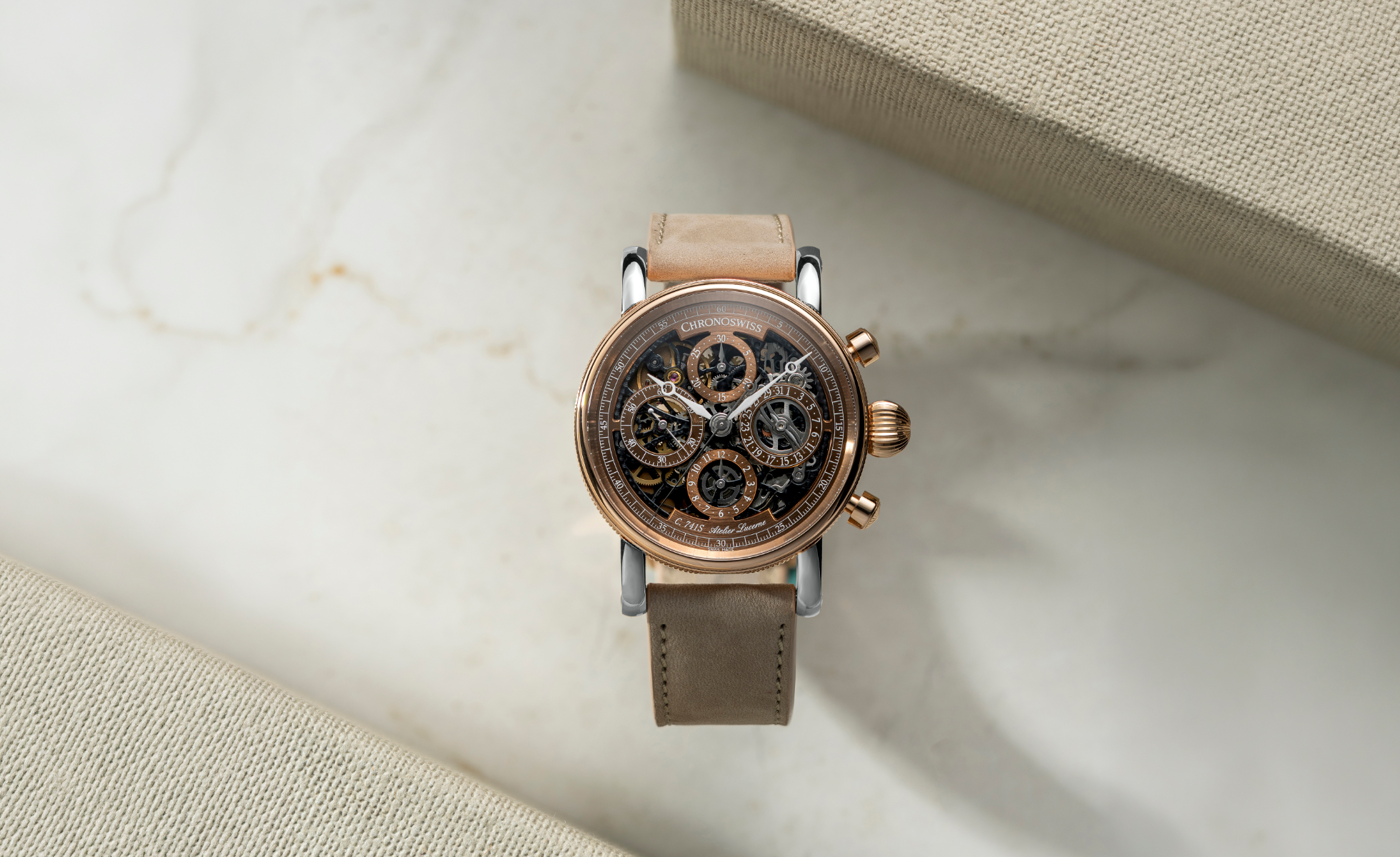
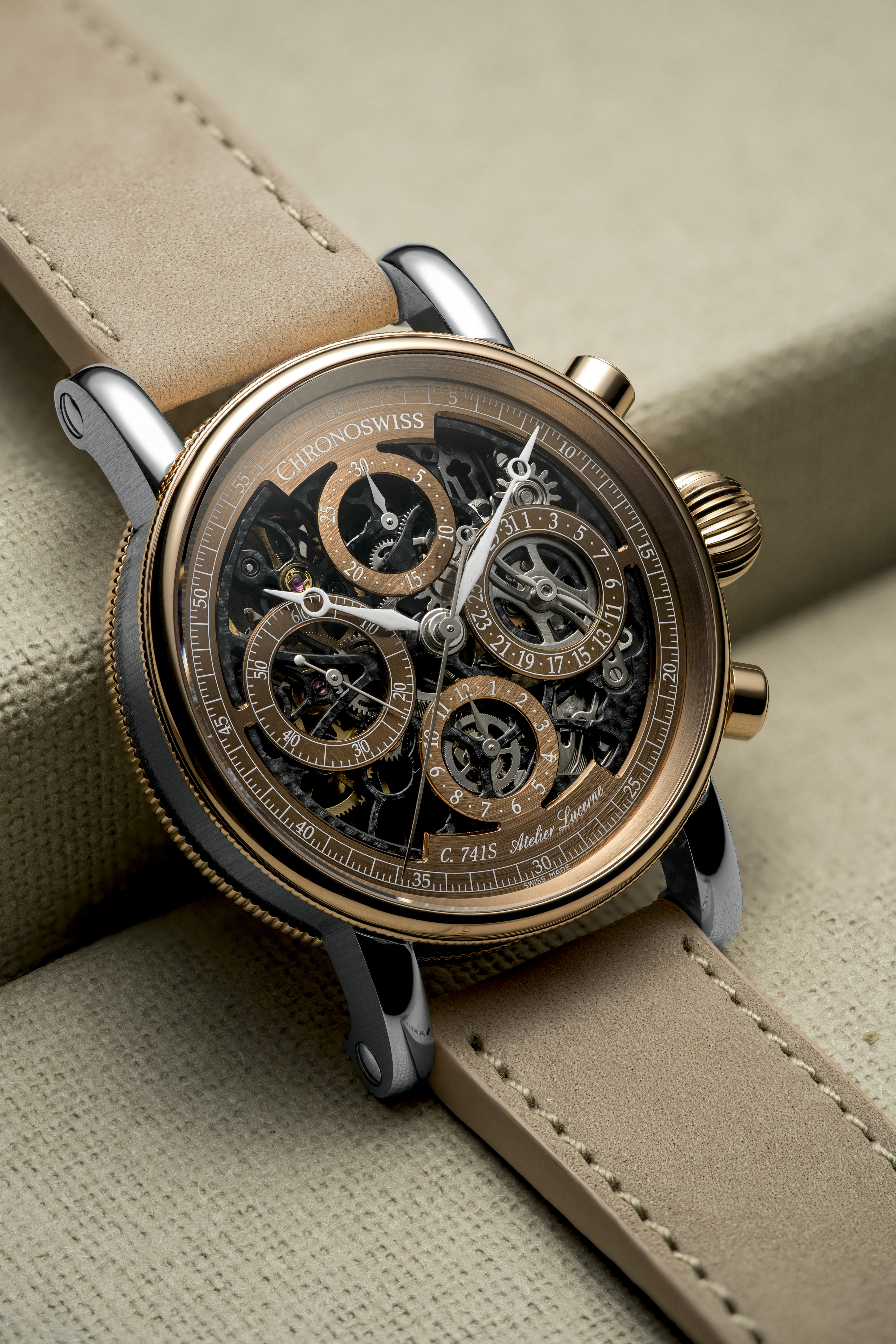
Chronoswiss has officially introduced the Opus Dakar Sundown, a striking new interpretation of the celebrated Opus Dakar that captures the fleeting magic of sunset over the desert. Housed in a distinctive 41mm two-tone case crafted from stainless steel and 18ct red gold, the timepiece masterfully blends the rugged spirit of adventure with refined luxury. The warm glow of precious metal flows seamlessly into the robust steel construction, mirroring the final golden rays dancing across endless dunes. This ultimate celebration of contrasts is beautifully completed by a sand-colored nubuck leather strap that evokes the warm tones of sunlit, weathered terrain.

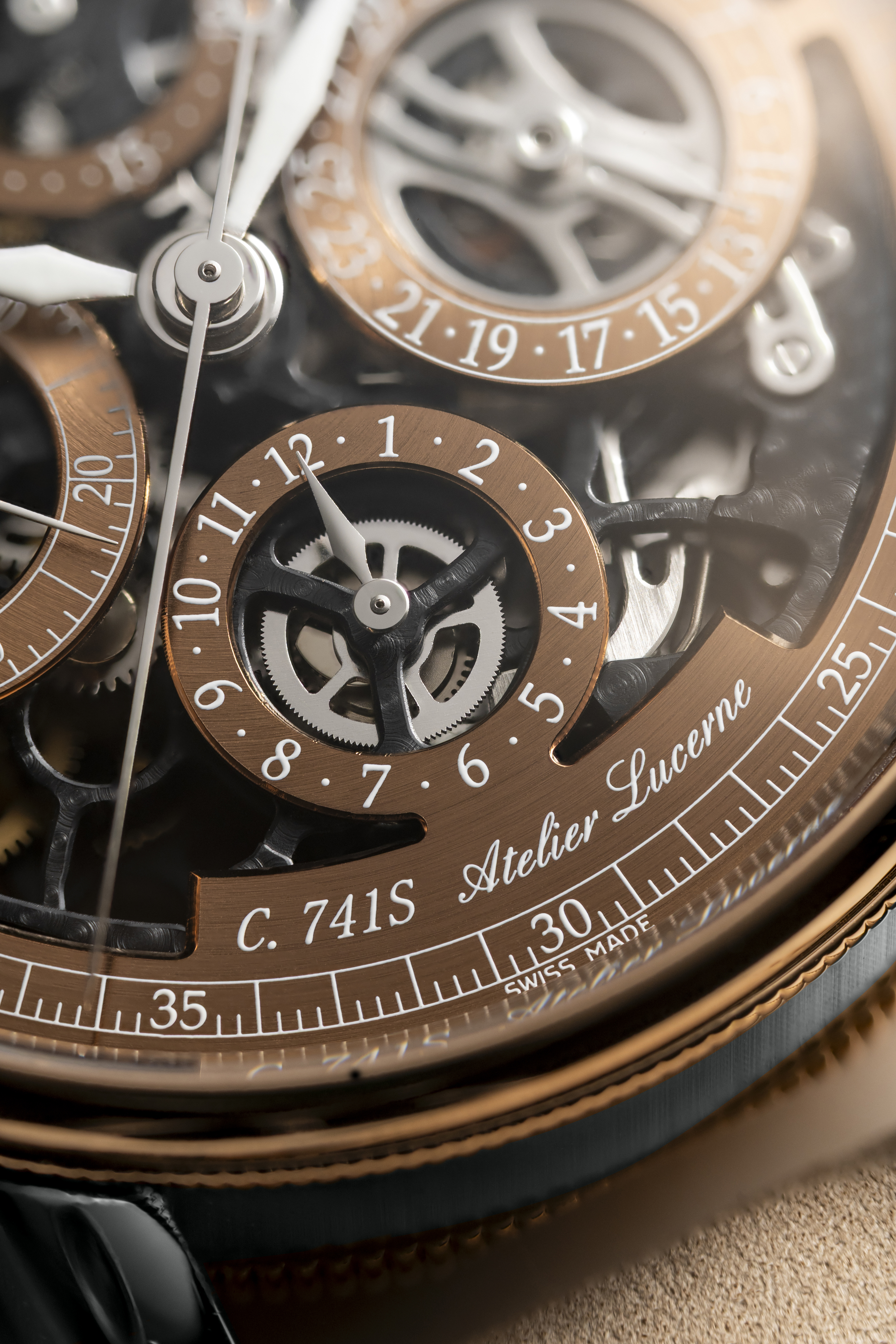
At the heart of the watch beats the Chronoswiss Manufacture Caliber C.741S, a fully skeletonized automatic chronograph movement that transforms every measurement of time into a visual spectacle. Designed for legibility and visual complexity, the central chronograph seconds hand sweeps the openworked dial in harmony with a 30-minute counter at 12 o'clock and a 12-hour counter at 6 o'clock. A running small seconds display at 9 o'clock provides a constant indication of the movement's heartbeat, while a highly unique, analogue pointer date display at 3 o'clock enhances its everyday practicality.

The skeletonized, CVD-coated brown dial draws inspiration from the rich palette of the desert, where warm tones create a composition that is both timeless and adventurous. By exposing the intricate mechanics beneath the surface, every skeletonized bridge, wheel, and component directly contributes to a captivating, mechanical canvas. The hands are crafted in the elegant Breguet Losange shape and rhodium-plated to ensure striking contrast against the dark, galvanic black perlage of the base plate.

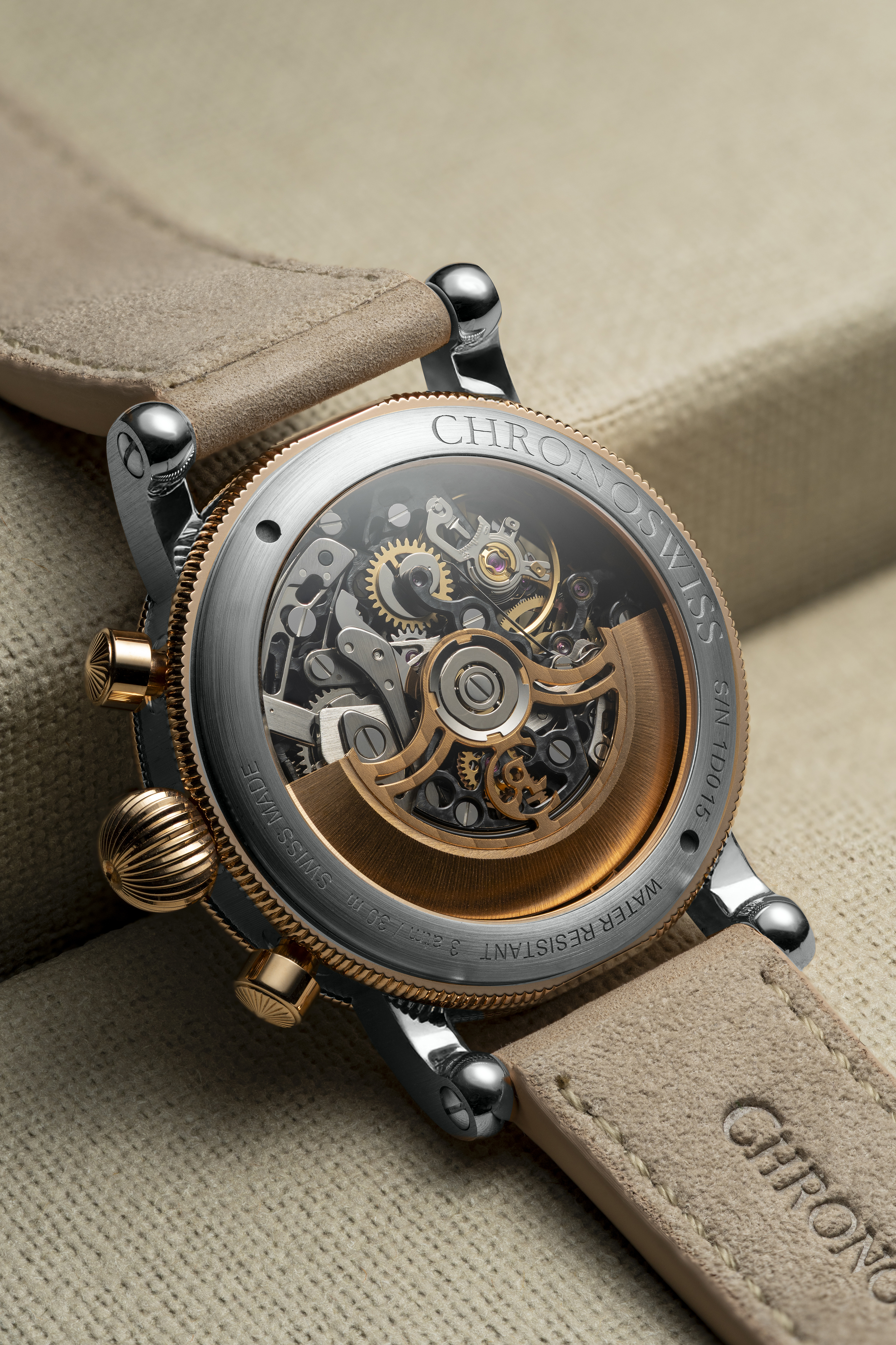
Crafted in solid 23 pieces, the 41mm case features an 18ct red gold bezel with partial knurling, a screw-down case back with a red gold coin-edge ring, and Chronoswiss’s iconic onion crown. The total weight of gold used in this exceptional construction is 21.4 grams. Offering a water resistance of 3 bar (30 meters), the watch is equipped with screw-in lugs utilizing the patented Autobloc system. For over three decades, the Opus collection has embodied the bold spirit of Chronoswiss; the Opus Dakar Sundown brilliantly reimagines this legacy, shaped by craftsmanship and illuminated by one of nature's most spectacular moments.
View Watch Gallery  
Image 1  Image 2 Image 3  Image 4       

Opus Dakar Sundown

Ref. CH-7522.1S-BR

Movement
Caliber Chronoswiss Caliber C.741S, Automatic, Skeletonized
Diameter 30 mm (13 1/4")
Height 7.90 mm
Jewels 25
Power Reserve Approx. 46 hours
Frequency 4 Hz / 28,800 A/h
Balance & Spring Glucydur, three-legged; Nivarox I balance spring
Fine Adjustment Via excenter cam
Shock Protection Incabloc
Special Features Skeletonized and gold plated rotor with Côtes de Genève, ball bearings; polished pallet lever, escape wheel, and screws; skeletonized bridges and base plate with perlage, galvanic black
Case & Exterior
Construction Solid 23-piece case construction; Stainless Steel / 18ct Red Gold; satin finish and polished
Bezel 18ct red gold bezel with partial knurling; curved, double coated anti-reflective sapphire crystal
Case Back Screw-down case back with 18ct red gold coin edge ring, satin finish and sapphire crystal
Crown & Pushers 18ct red gold onion crown; Pushers in 18ct red gold
Dimensions Ø 41 mm; Height: 14.80 mm; Screw-in lugs with patented Autobloc system
Gold Weight Total weight of Gold used: 21.4 g
Water Resistance 3 bar (30 meters)
Strap Sand-colored Nubuck leather strap
Dial & Hands
Display Sweep hours and minutes, running seconds, analogue date, sweep chronograph seconds, 30-minute counter, 12-hour counter
Dial Artistry Skeletonized, brown CVD-coated dial
Hands Breguet Losange shape, rhodium plated

Related Articles

MARCH 24 2025    |    Watches and Wonders 2025

Constant Force Tourbillon 11, yellow gold edition - A celebration of watchmaking ingenuity

The 41.5 mm diameter Constant Force Tourbillon 11 watch in 18-carat yellow gold, released by Arnold & Son as a limited edition of 11, is driven by a hand-wound mechanical movement. Equipped with two barrels to give a 100-hour power reserve, this timepiece was entirely developed and built at the manufacture in La Chaux-de-Fonds. It is fitted with a constant force mechanism visible on the enamel dial and is regulated by a tourbillon that can be seen on the back. The architecture of this calibre is inspired by that of the timekeeping instrument driven by the first tourbillon created by Abraham-Louis Breguet in 1808, based on a chronometer movement designed by John Arnold. This first tourbillon regulator, now in the British Museum, was given to John Roger Arnold by the Paris-based watchmaker in honour of his scientific collaboration and friendship with his father. The Constant Force Tourbillon 11 timepiece, designed to mark the end of the 260th anniversary celebrations of John Arnold’s legacy, pays tribute to the watchmaker’s ingenuity and his close association with Abraham-Louis Breguet.

The greatest watchmakers of the Age of Enlightenment often knew each other. Some of them exchanged views and appreciated each other despite language barriers and political obstacles. And this was the case with John Arnold and Abraham-Louis Breguet. These two watchmakers, undoubtedly the most productive of the second half of the 18th century, forged a friendship that nothing could shake, not even the throes of war between the two countries or the French Revolution. Aware of their respective talents, during Abraham-Louis Breguet’s frequent trips to London between 1789 and 1791, they shared their views and knowledge of the principles of timekeeping, furthering the science of timekeeping, which in their eyes definitely knew no frontiers.

View More
JUNE 11 2026    |    Novelties

Angelus Instrument de Mesures: Triple Scale Monopusher Chronograph

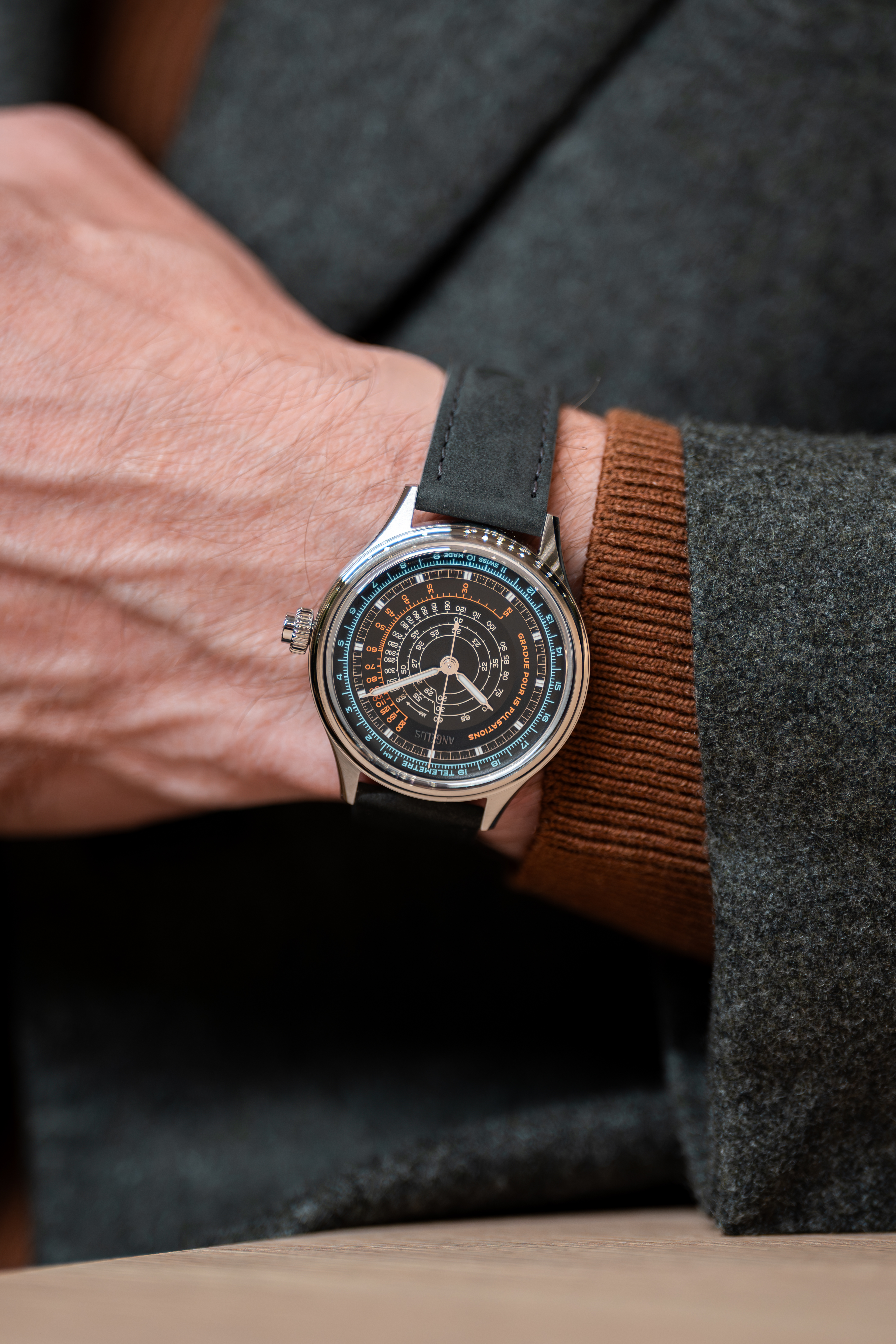
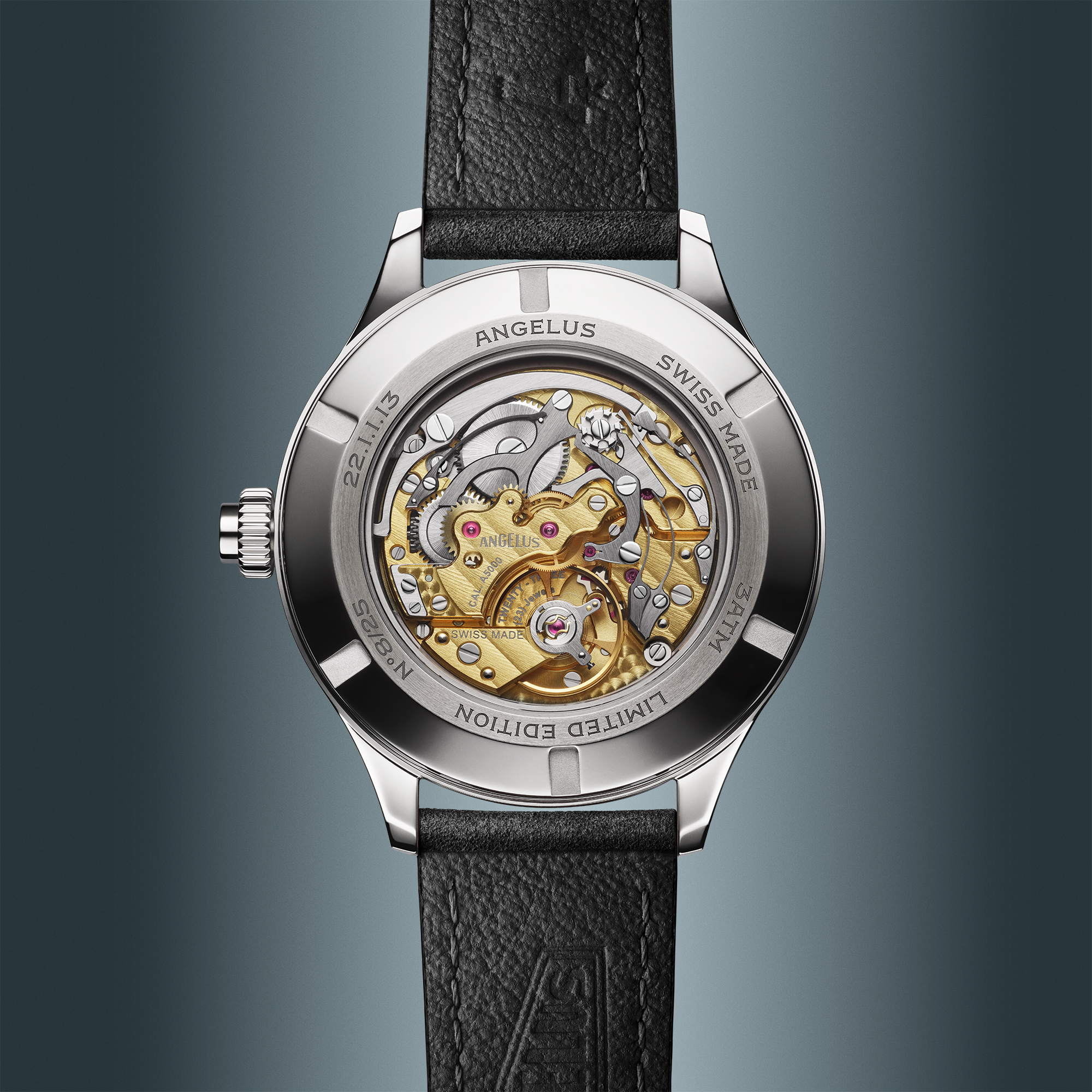
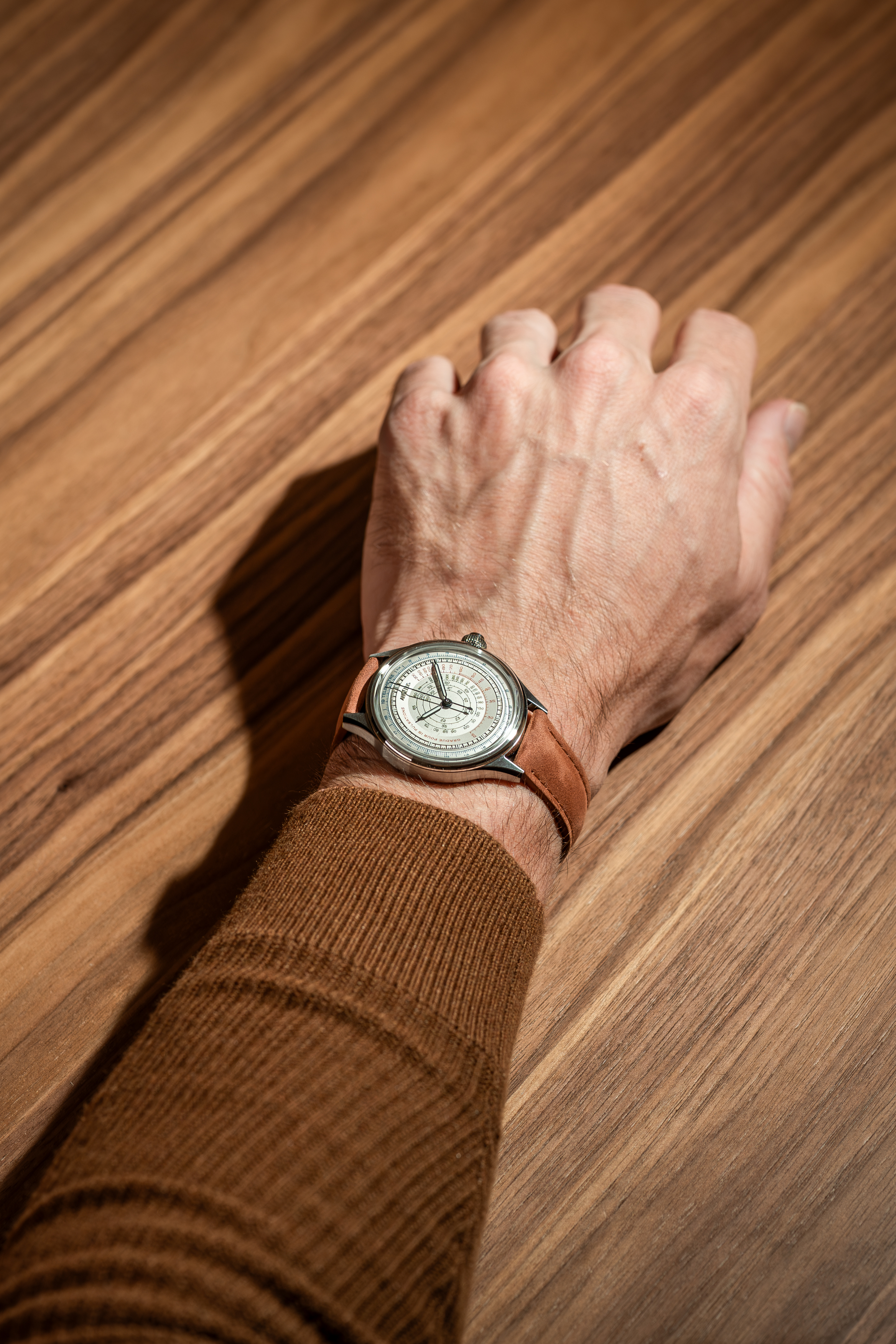
Angelus unites the chronograph's key functional scales—telemeter, pulsometer, and tachymeter—in a single design. True to its heritage as a maker of functional timepieces, Angelus brings together the expertise developed through its previous instruments in the Instrument de Mesures. Produced in two limited editions of 25 pieces, this watch is a genuine instrument of measurement, designed to calculate elapsed time, the speed of sound, distance travelled and heart rate. Using a single chronograph hand, it integrates three functions, each with its own dedicated scale. Housed in a 39 mm steel case, its three-dimensional dial is both highly legible and meticulously graduated, giving the Instrument de Mesures the character of an authentic tool watch with a distinctive vintage charm and singular identity.

One Instrument, Multiple Measurements
Integrating these three scales alongside the essential minute track required a particularly sophisticated design approach. The amount of information to be displayed, combined with the need for legibility and clarity, led Angelus to adopt a distinct colour code for each function. This arrangement is reinforced by a three-dimensional dial construction, featuring a domed centre and outer edge connected by a sloping intermediate section. The telemetric scale is situated on the highest level at the periphery of the dial. The pulsometer extends across the angled intermediate section, and the tachymeter, in the form of a spiral, is located closest to the hands.

The In-House A5000 Chronograph Calibre
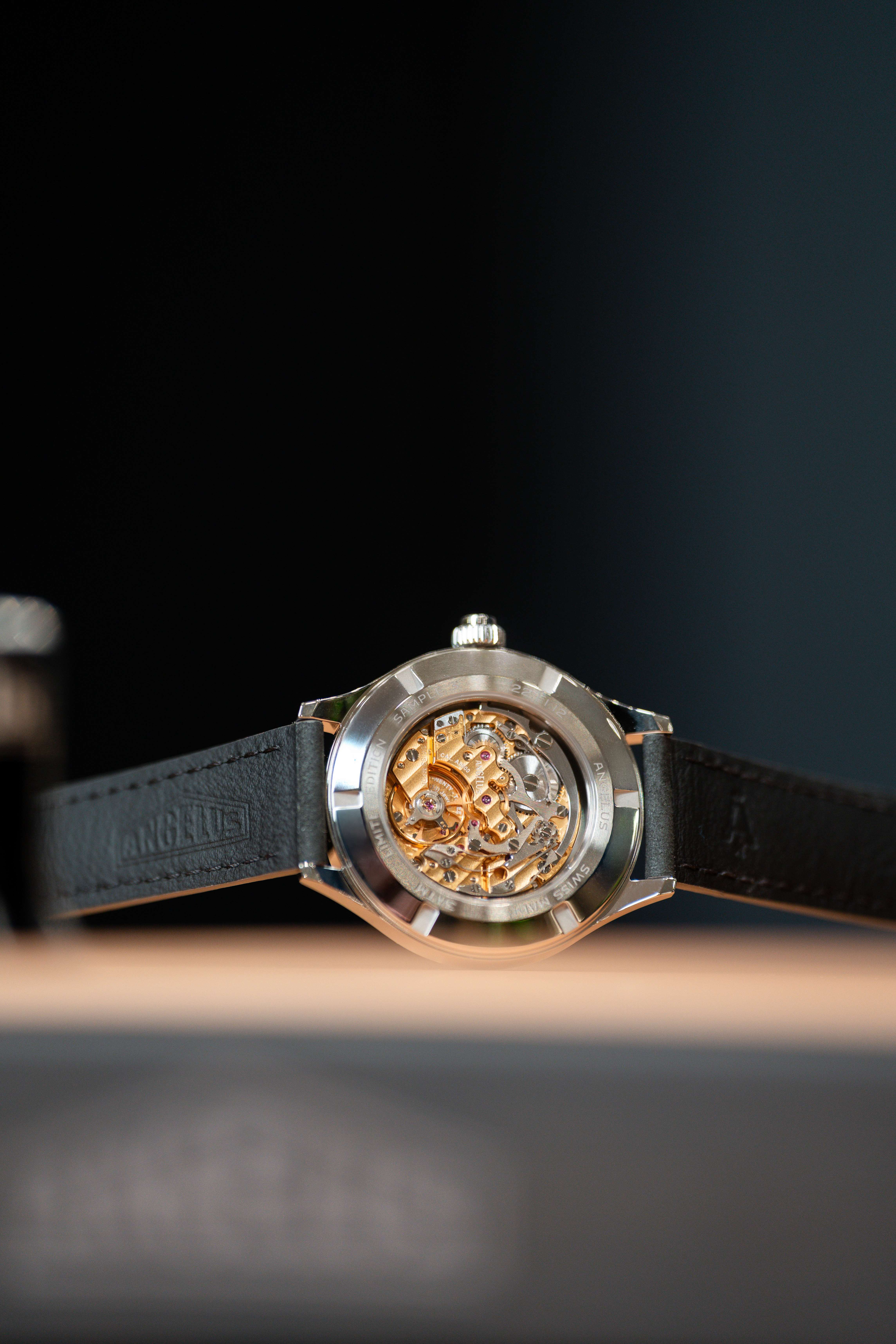
The Instrument de Mesures is powered by Angelus's in-house A5000 chronograph calibre. Its classical architecture showcases numerous intricately shaped components, providing an ideal canvas for high-end finishing. Faithful to the great traditions of chronograph watchmaking, the A5000 incorporates a column wheel and a horizontal clutch, both defining features of traditional chronographs.


View Watch Gallery
Angelus Instrument de Mesures

Angelus Instrument de Mesures

Angelus Instrument de Mesures

Angelus Instrument de Mesures
View More
APRIL 07 2026    |    Watches and Wonders 2026

The HM Pietersite: A Tribute to the Spirit of Exploration and the Art of the Ultra-Thin

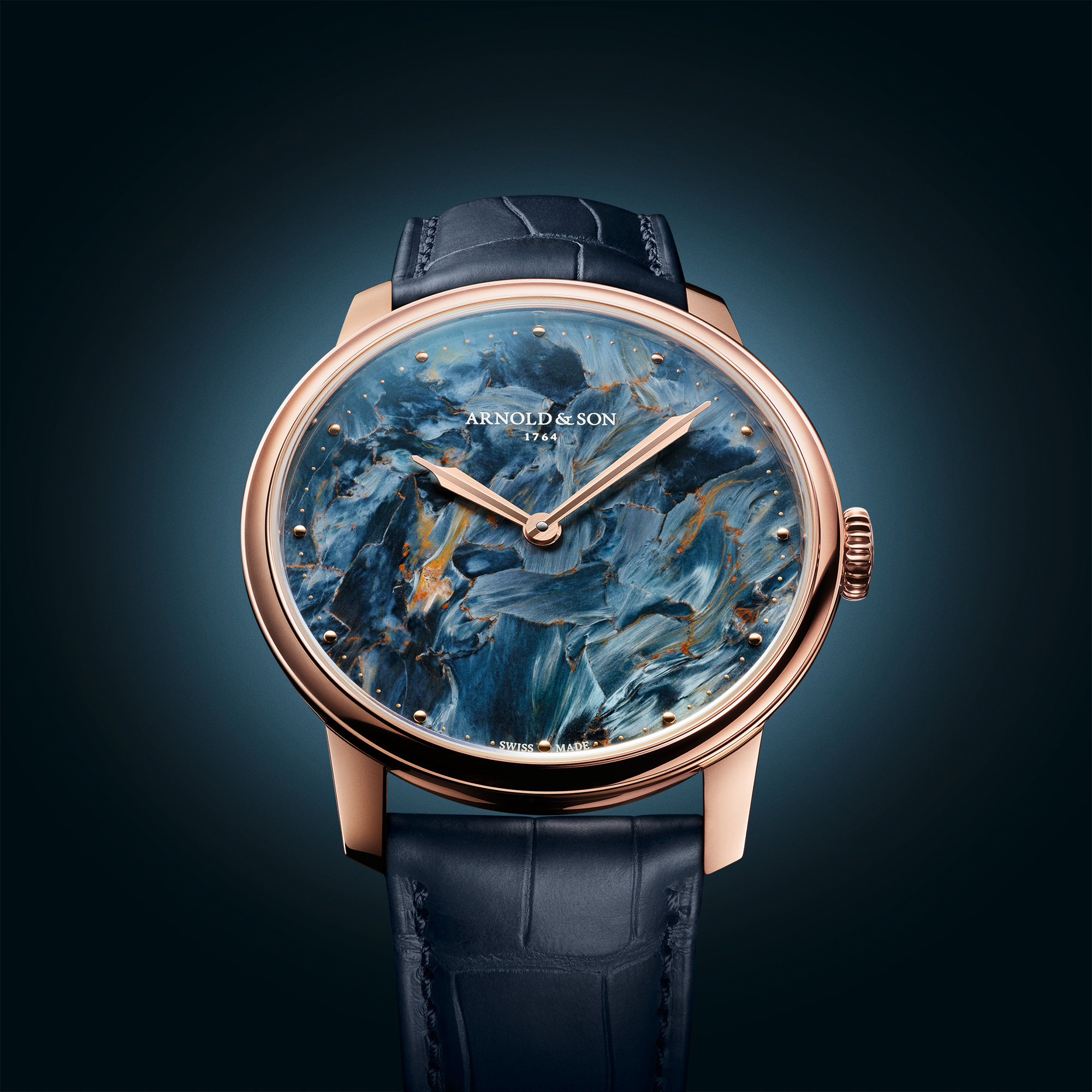
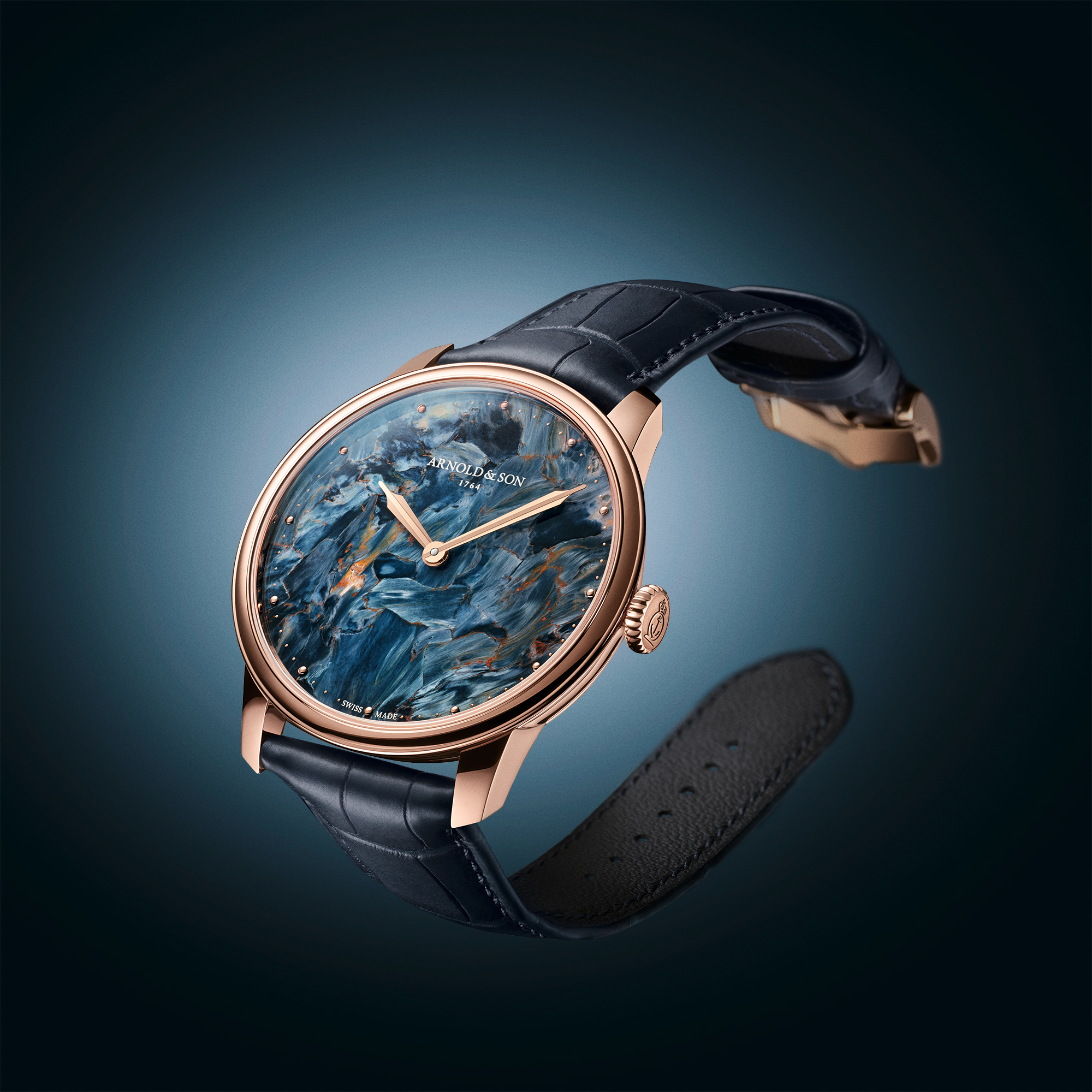
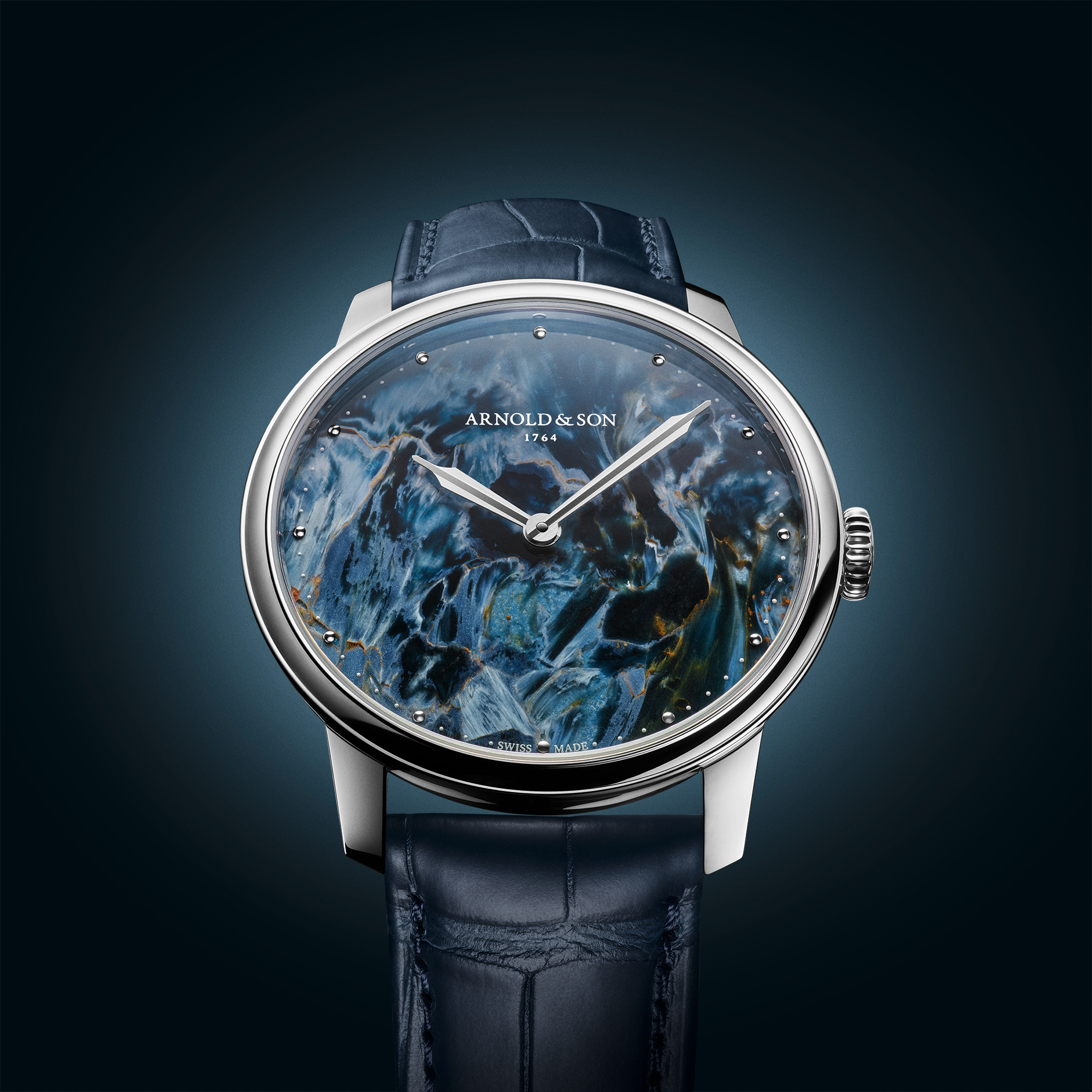
Arnold & Son presents two new evocative versions of its ultra-thin HM model, featuring dials crafted from Namibian pietersite. Often called the "stone of storms," this decorative mineral belongs to the chalcedony family and was first discovered by Sid Pieters in the early 1960s. Each unique dial displays delicate, swirling patterns that recall the turbulent skies and foaming waves of Cornwall, the English birthplace of founder John Arnold. This design pays tribute to the ingenuity of the legendary watchmaker while celebrating the spirit of those who maintain their course in a challenging world.

The designation "HM" was intentionally chosen to reflect the watch's focus on displaying only hours and minutes, while simultaneously serving as a historical nod to the British Royal Navy. In naval tradition, HM stands for "His or Her Majesty’s," a title that appeared in the 17th century and was later formalized as HMS. By transposing this reference to watchmaking, Arnold & Son connects the precision of modern horology with England's maritime history, specifically the era when John Arnold’s marine chronometers enabled the exploration of new lands.

Encased in a choice of 18-carat red gold or stainless steel, the HM Pietersite is a masterpiece of elegance and restraint. The case measures a refined 39.5 mm in diameter with a remarkably slim profile of just 7.82 mm. To complement the dreamlike, diaphanous patterns of the pietersite dial, the timepiece is paired with a matte ink-blue alligator leather strap and a traditional pin buckle crafted from the same metal as the case. These limited editions are produced in extremely small quantities, with only 8 pieces available in red gold and 18 in steel.

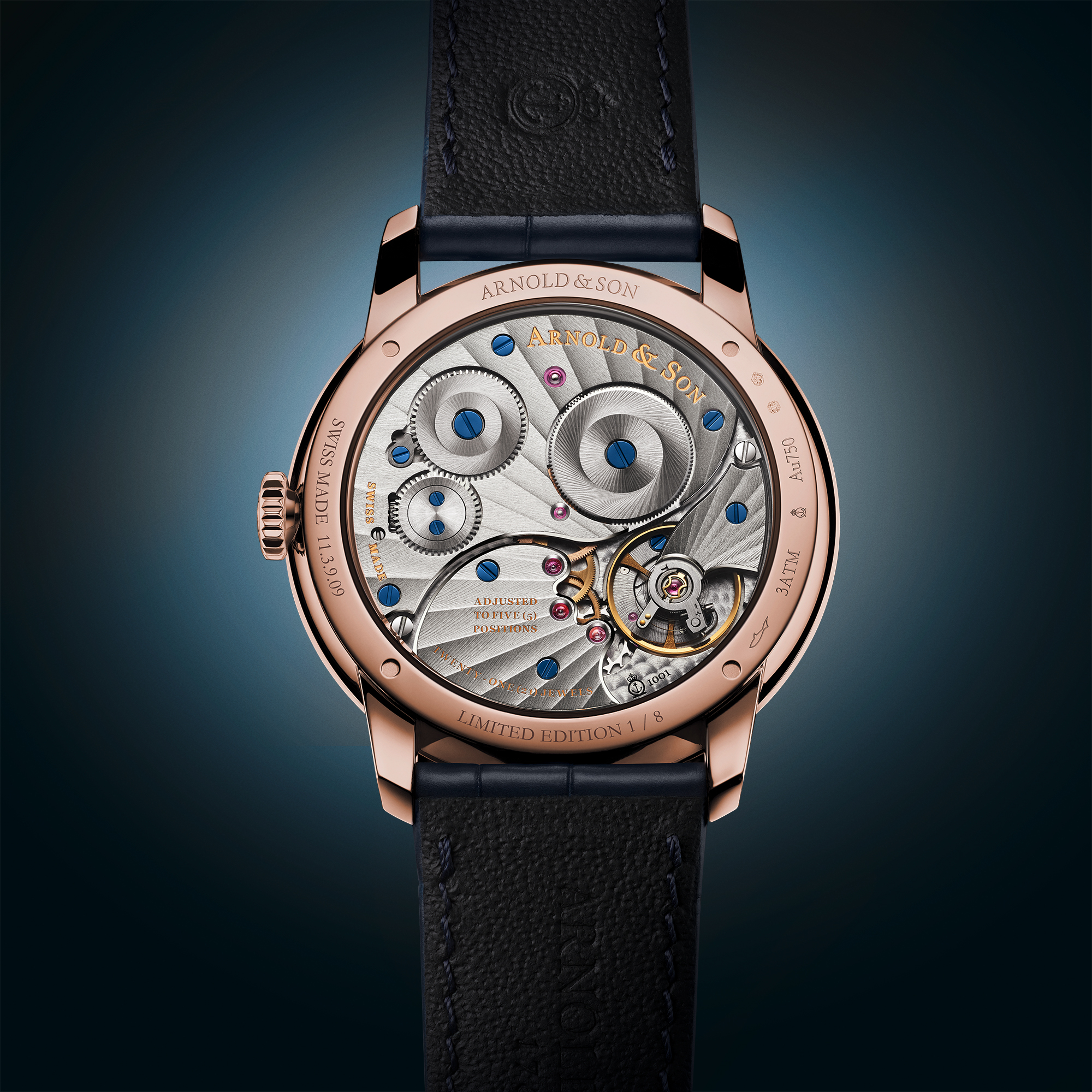
At the heart of this timepiece lies the ultra-thin, in-house A&S1001 manual-winding calibre. Visible through a sapphire crystal case back, the movement is a showcase of luxury finishing, featuring a rhodium-plated main plate with circular graining and bridges adorned with radiating Côtes de Genève. Despite its slender height of only 2.70 mm, the movement offers exceptional performance with a generous 90-hour power reserve. Every detail, from the snail-finished wheels to the blued screws with polished heads, reflects the most exacting standards of Swiss watchmaking.

View Watch Gallery  
Image 1  Image 2 Image 3  Image 4       
View More
APRIL 08 2026    |    Watches and Wonders 2026

Tinkler 1958: Precision at a Quarter Turn

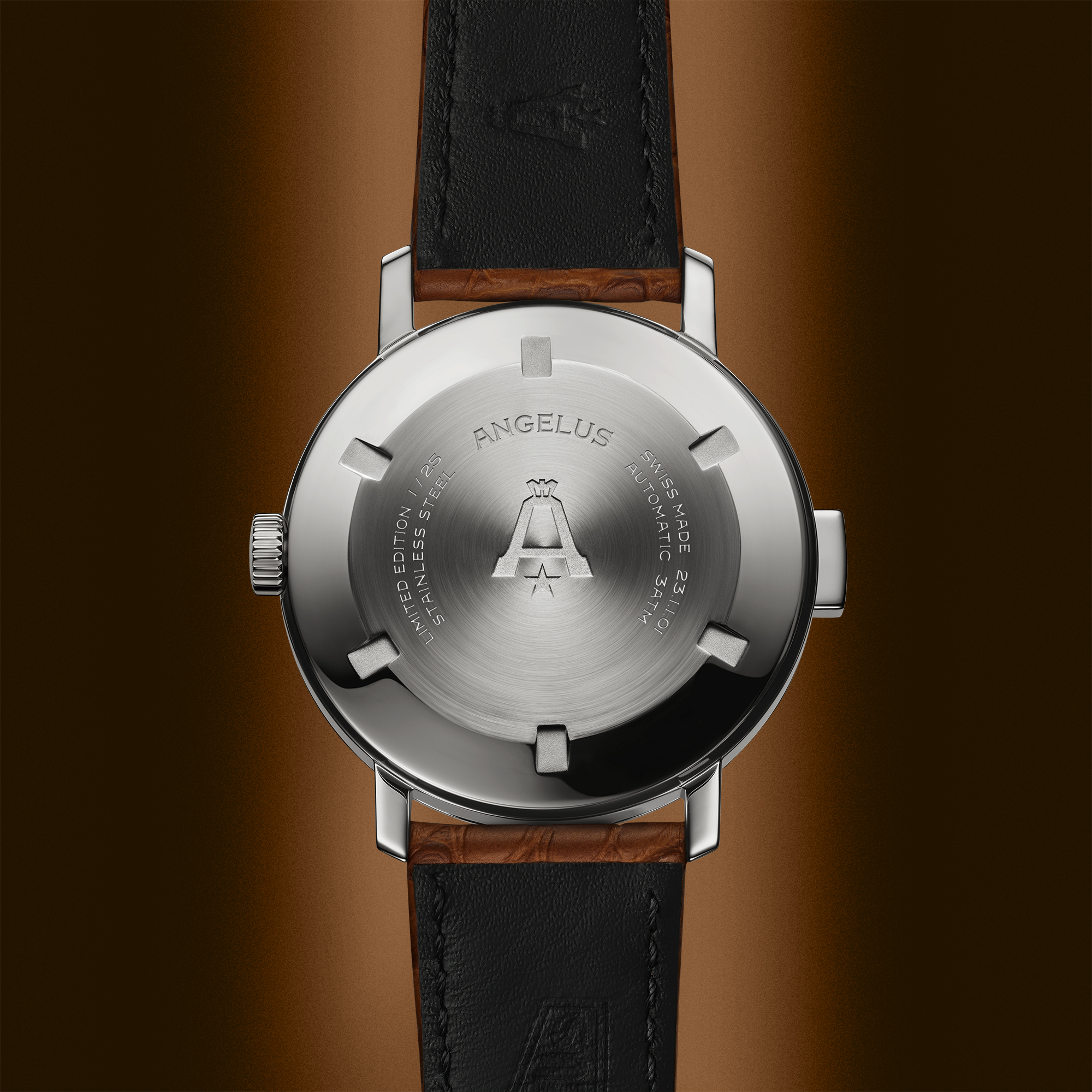
A faithful tribute to the original model, the Tinkler 1958 repeater celebrates Angelus’s rich heritage of striking watches. Driven by a self-winding quarter-repeater movement, this double limited edition, available in gold or steel, continues the tradition of measuring instruments that built the manufacture’s reputation. From its establishment in 1891, the name Angelus has been synonymous with the chiming of a bell, a legacy reinforced by one of the Maison's first patents for a silent strike governor in 1896. Since then, repeater mechanisms have remained at the heart of Angelus collections, even being adapted into Braille-repeating watches for blinded soldiers during the First World War.

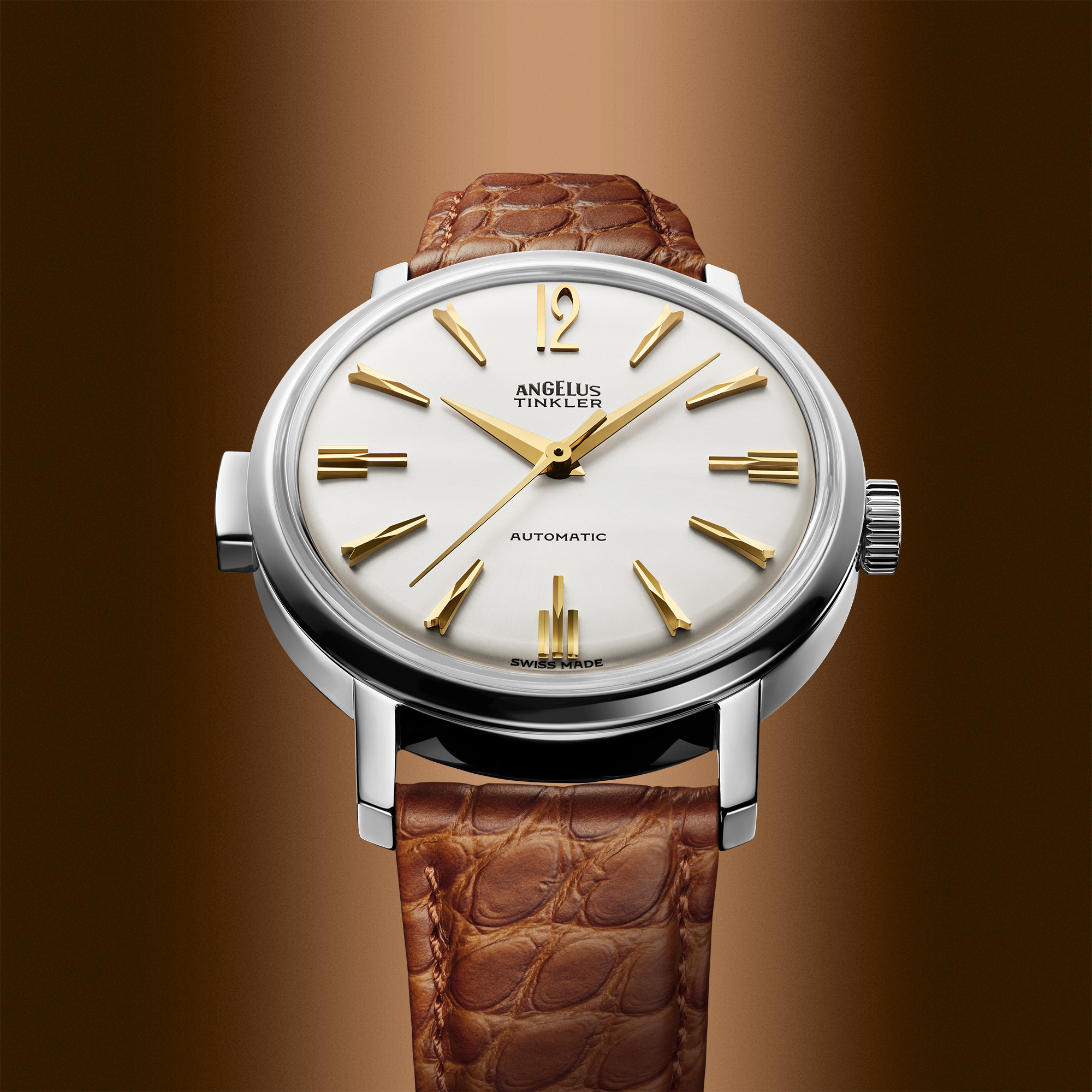
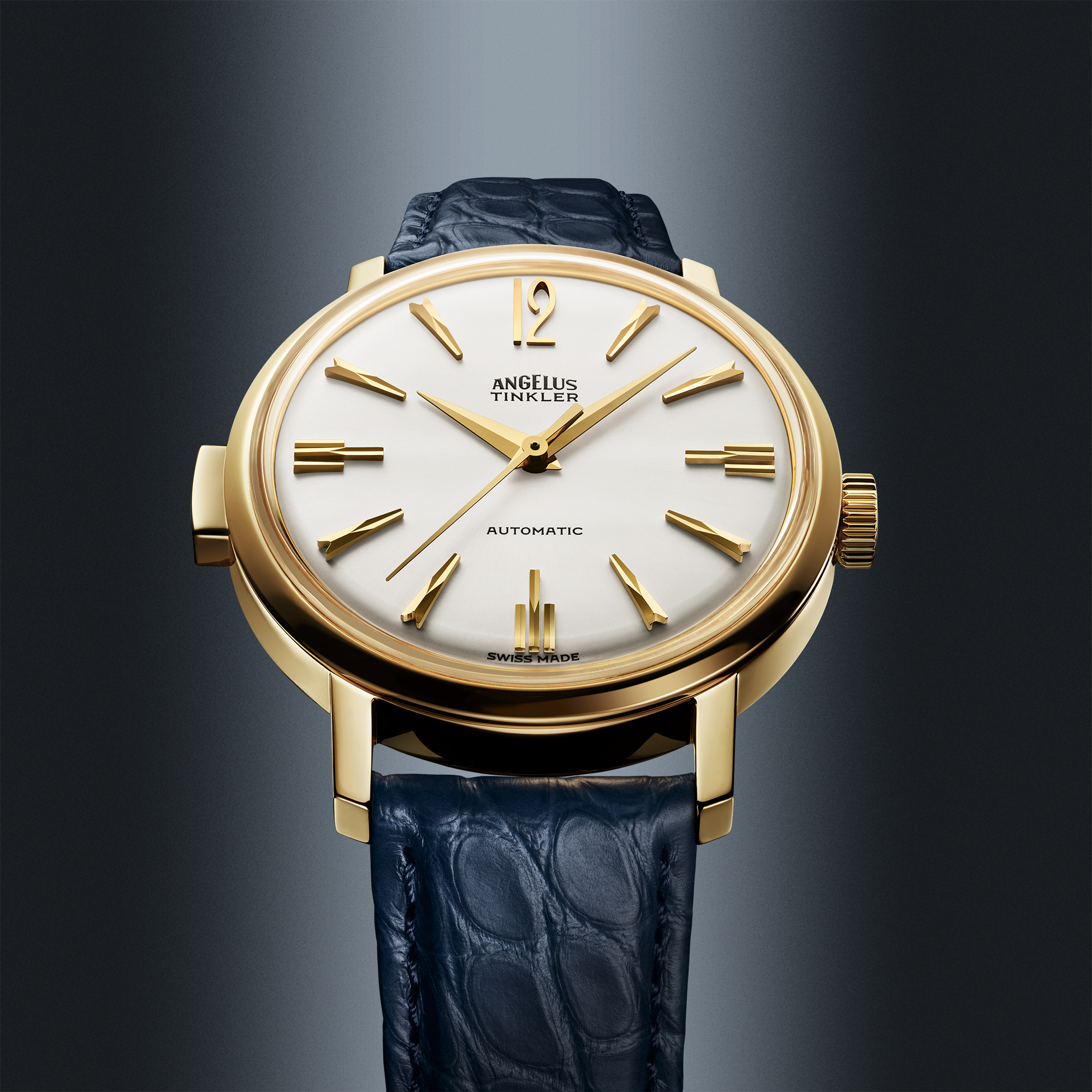
Inspired by this glorious history, Angelus is reissuing one of its rarest and most refined models: the Tinkler, based on the original 1958 edition. In 1958, Angelus filed a patent for a striking wristwatch, which was immediately followed by the original Tinkler—a pioneer of water-resistant, self-winding quarter-repeater watches. The new 38-mm case charms with a decidedly 1950s aesthetic that is clean, understated, and elegant. At 9 o’clock, the crown is balanced by a pusher that activates the quarter repeater, serving as a functional and historical hallmark of this legendary model.

The Tinkler 1958 edition is driven by the new Angelus A600 calibre, a mechanical self-winding movement that beats at 4Hz and offers a 70-hour power reserve. On request, the pusher at 9 o’clock triggers a sequence where each hour is marked by a clear strike on the first gong, followed by a double strike on two gongs to signal each quarter hour. The movement's finishing demonstrates the watchmaker's extreme attention to detail, featuring a snail-finished main plate, palladium-plated bridges adorned with Côtes de Genève, and a tungsten sunburst oscillating weight.

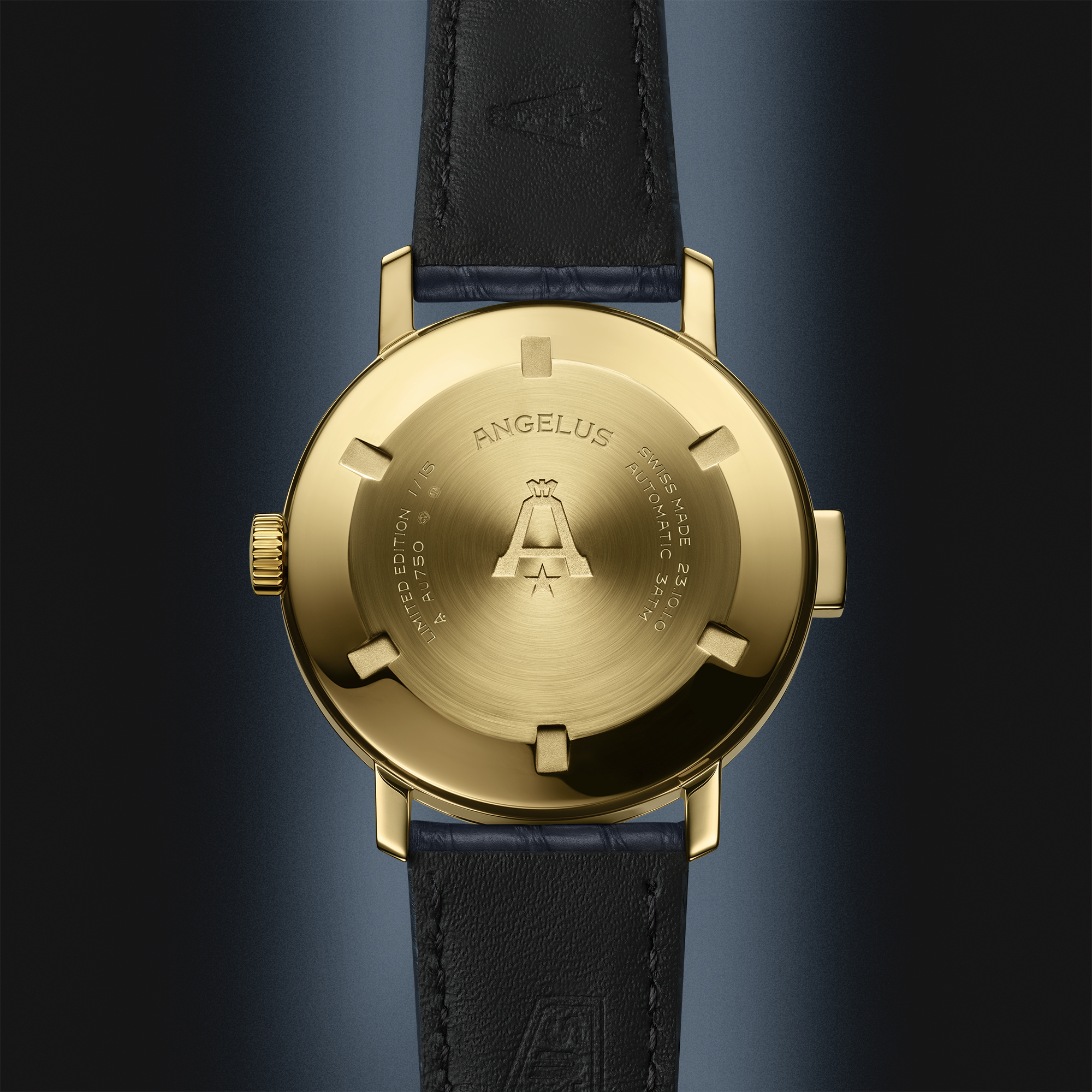
This new release is part of the La Fabrique line, where Angelus continues its legacy as a maker of specialty watches designed for specific activities or professional uses. The Tinkler 1958 is limited to 15 pieces in 18-carat yellow gold and 25 pieces in stainless steel, each paired with an alligator flank leather strap—ink blue for the gold version and saddle brown for the steel. Combining a modernist-style numeral 12 with exclamation-shaped hour markers at the quarter positions, the watch serves as a modern embodiment of a daring yet functional tradition.

View Watch Gallery  
Image 1  Image 2 Image 3  Image 4       
View More
AUGUST 19 2025    |    Novelties

Greubel Forsey Launches the Nano Foudroyante: A New Chapter in Watchmaking Innovation

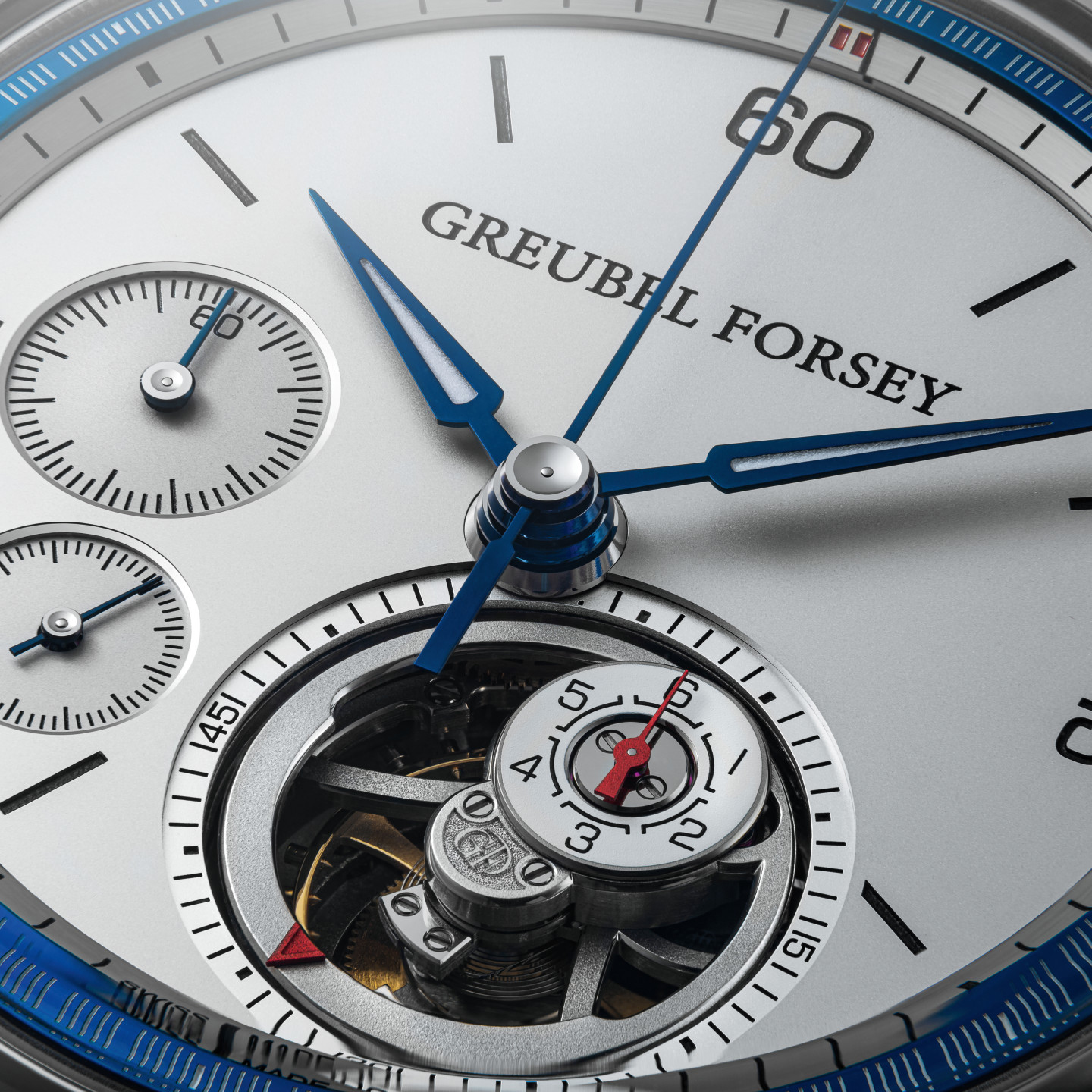
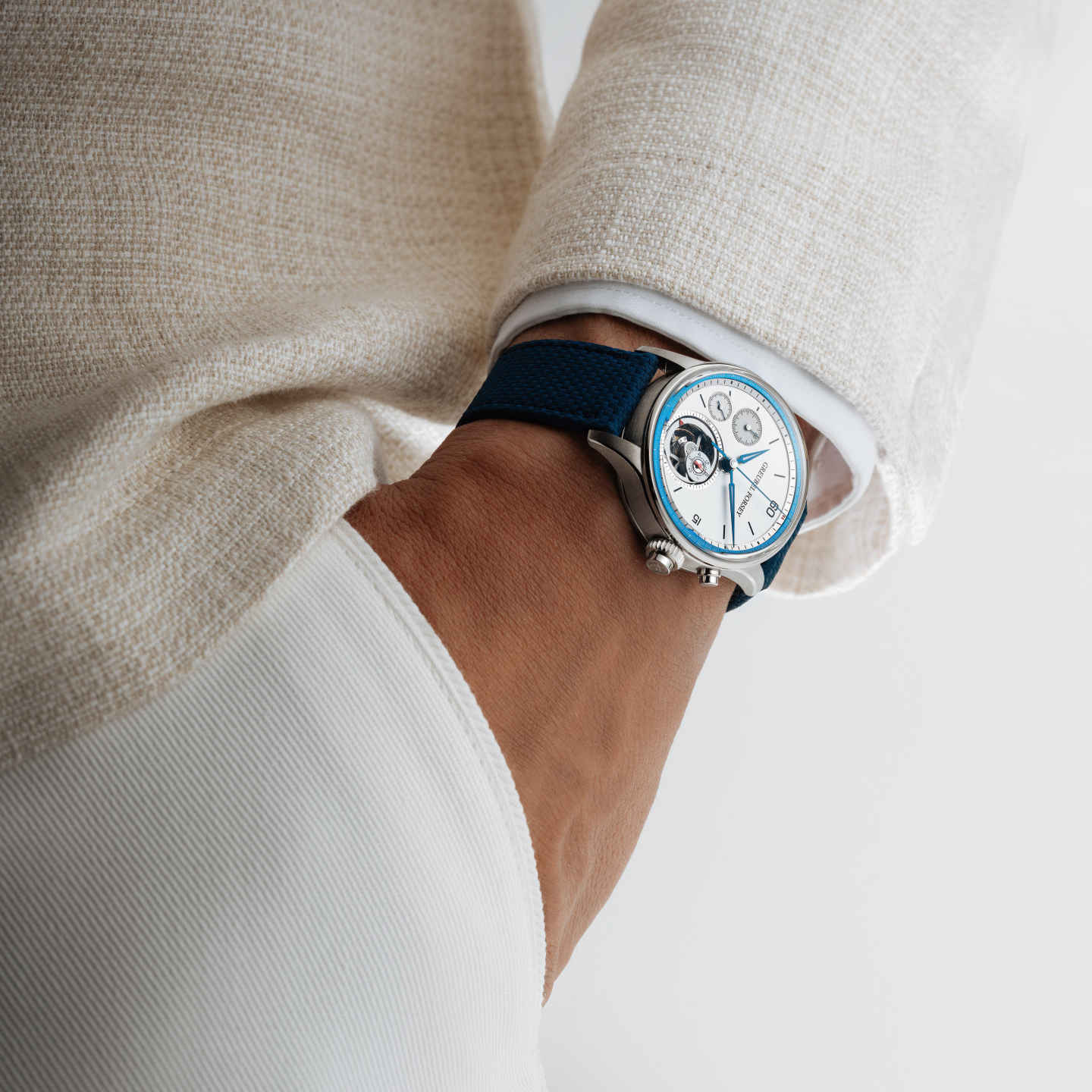
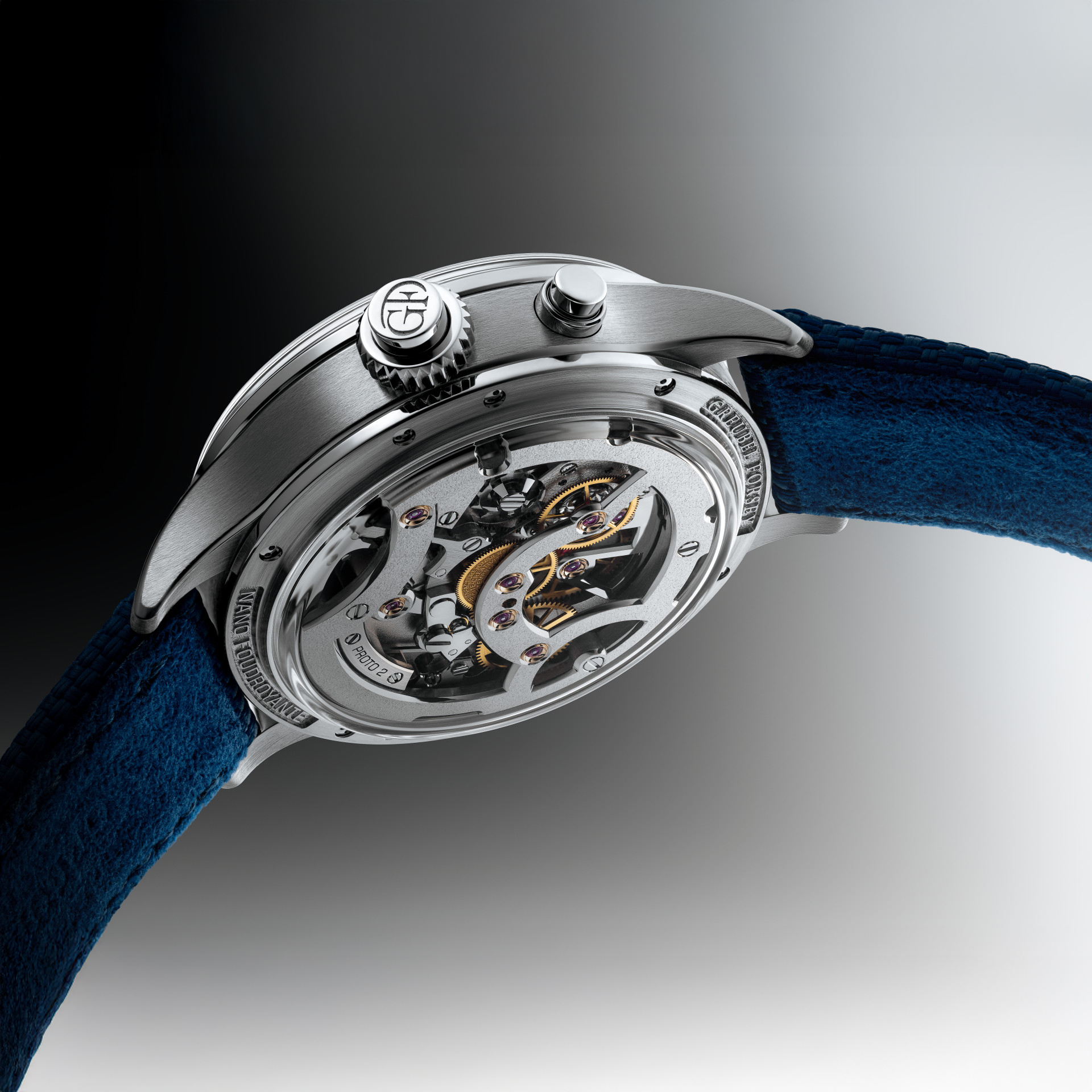
Greubel Forsey has officially released the Nano Foudroyante, a groundbreaking timepiece that blends cutting-edge nanomechanics with refined craftsmanship. Limited to just 22 pieces, this watch marks a major milestone for the brand, evolving from its earlier Experimental Watch Technology (EWT) concept into a fully developed and independent creation.

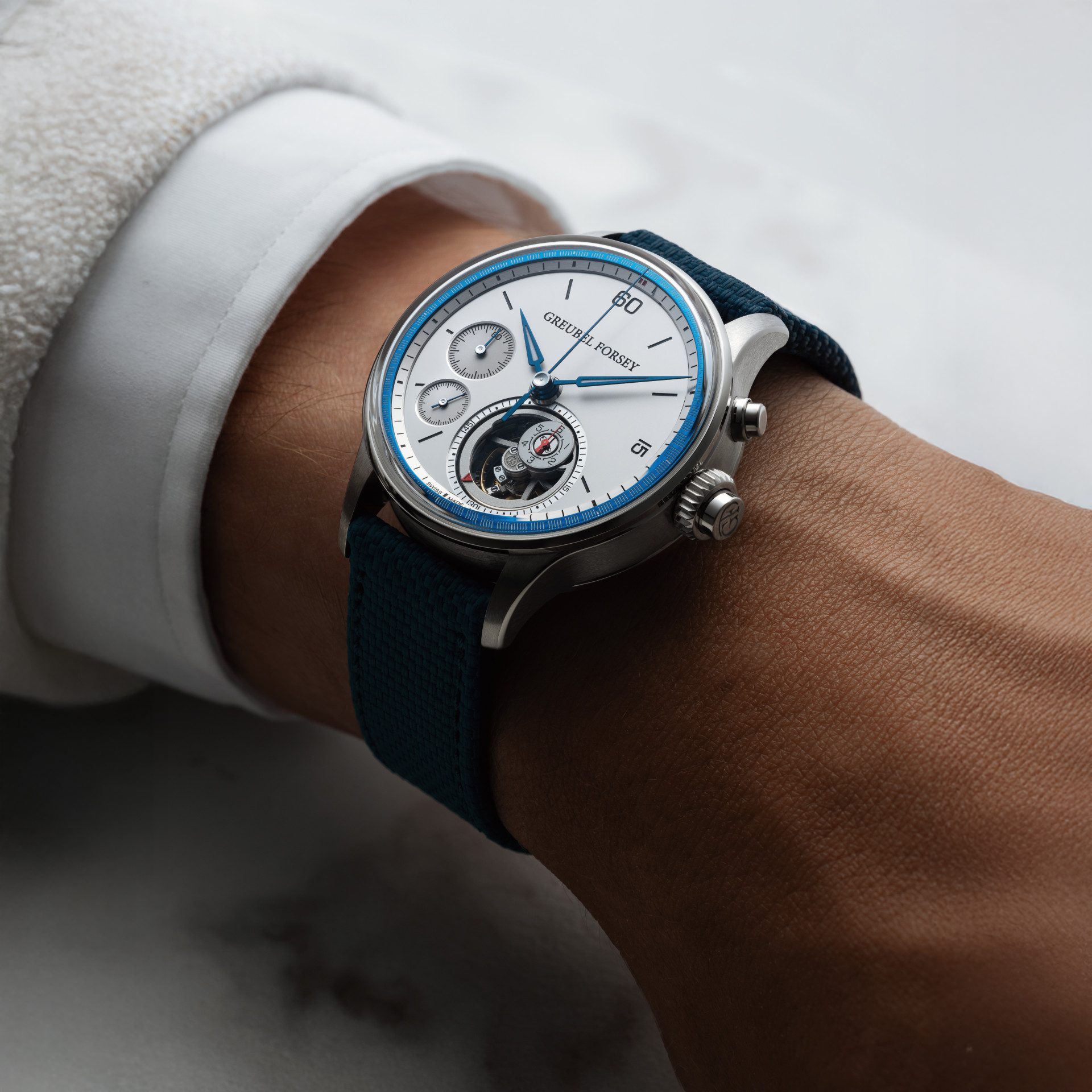
The Nano Foudroyante is crafted entirely in white gold and features a rhodium-finished dial with a blue minute track, blued steel hands, and a white foudroyante dial for enhanced legibility. A blue textured rubber strap completes the look, giving the watch a modern and sporty edge.

What sets this timepiece apart is its use of nanomechanics—a revolutionary approach that allows the foudroyante complication to operate using just 16 nanojoules of energy per jump. That’s 1,800 times less than traditional designs. The complication divides each second into six parts, with a red-treated hand rotating once per second, driven directly by the balance wheel. There’s no traditional gear train, just a series of ultra-efficient, low-inertia wheels.

The Nano Foudroyante also features Greubel Forsey’s first flying tourbillon, with the foudroyante dial always facing twelve o’clock for easy reading. Despite its complexity—428 components in total—the movement fits into a compact 37.90mm case, making it the smallest Greubel Forsey watch ever made.

This release is a bold statement of innovation and intent, offering collectors a rare opportunity to own one of the most advanced mechanical watches ever created..
 

View Watch Gallery  
Image 1  Image 2 Image 3  Image 4  
View More
ENDLESS DISCOVERY IN YOUR INBOX
Join our mailing list to receive insider updates on our latest collections, invites to private events, and other personalized offerings.